
He Didn't Lose Interest. He Lost Control of It.
Five reasons the parents with a closet full of things that were "bored of by Tuesday" have been solving the wrong problem — and why it was never his attention span.
He Didn't Lose Interest. He Lost Control of It.
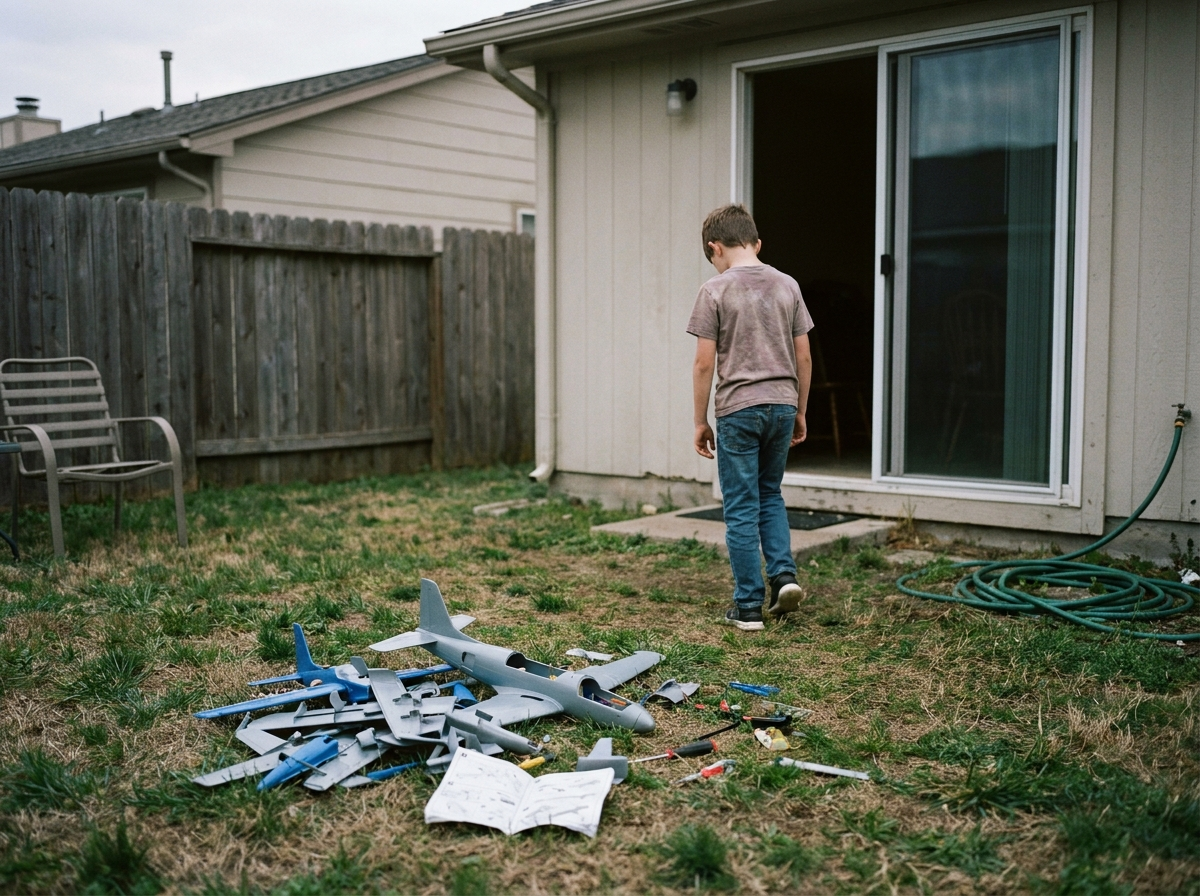
Watch him the next time something you bought him dies. It goes wrong. He can't feel why it went wrong. He can't fix it. And he walks away without saying anything, the way kids do when something isn't worth the argument.
You've been calling that a short attention span for two years. It isn't. That's a nine-year-old quitting something he has no way to get better at. Losing interest and losing control are two different problems, and almost every parent in this situation has merged them into one and then quietly blamed the kid. Or themselves.
Here's what's actually true: every time he quit, the thing in his hands gave him nothing to hold onto. That's a solvable problem, and it has nothing to do with who he is.
A Flat Piece of Glass Gives His Hands Nothing.
Every article says the same thing: the fix is something he does with his hands, outside. That part is right. Here's the part nobody adds.
A toy only counts as "hands" if his hands have something to do. Glass gives them nothing. No push, no pull, nothing to feel. So when the plane wobbles he has no idea which input caused it, and he can't correct, and he's done inside two minutes. That's why the app toys drift back to the phone. That's why the model kit died the minute the building stopped.
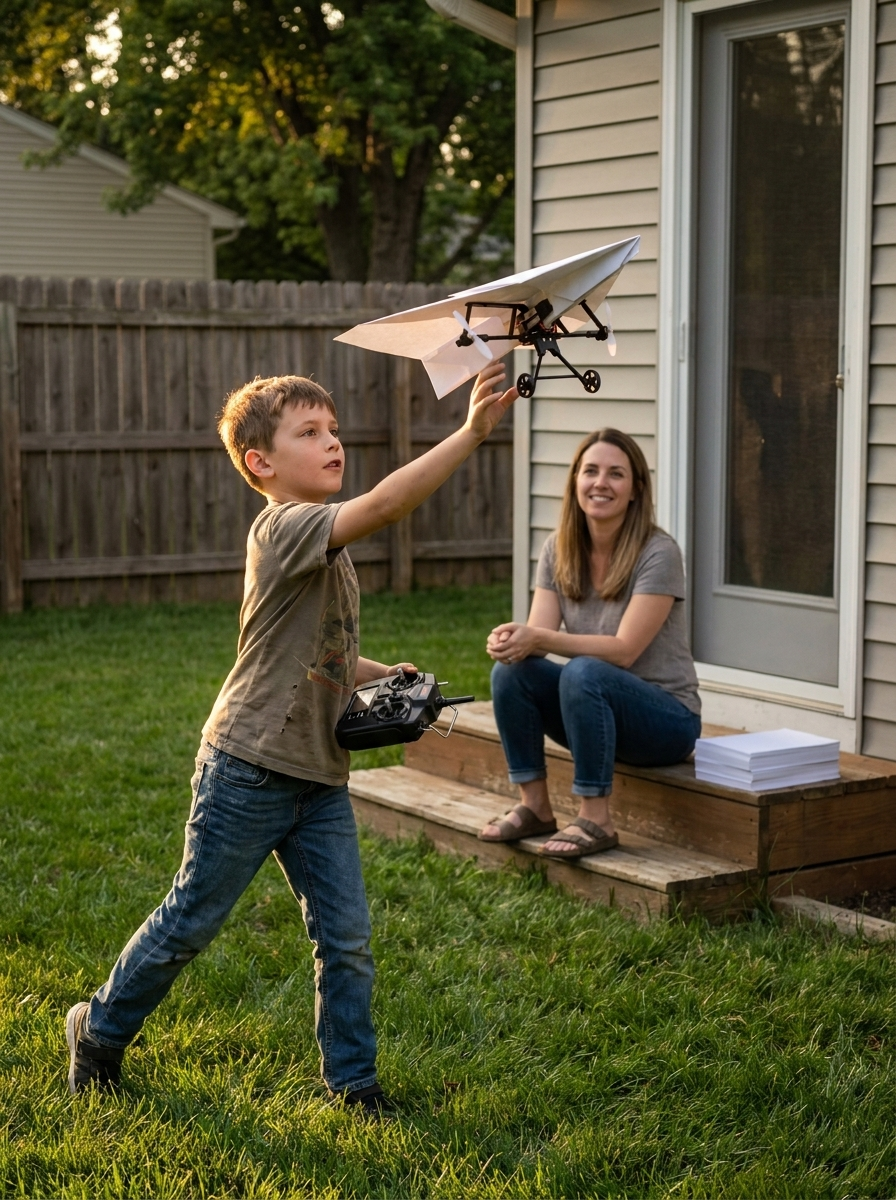
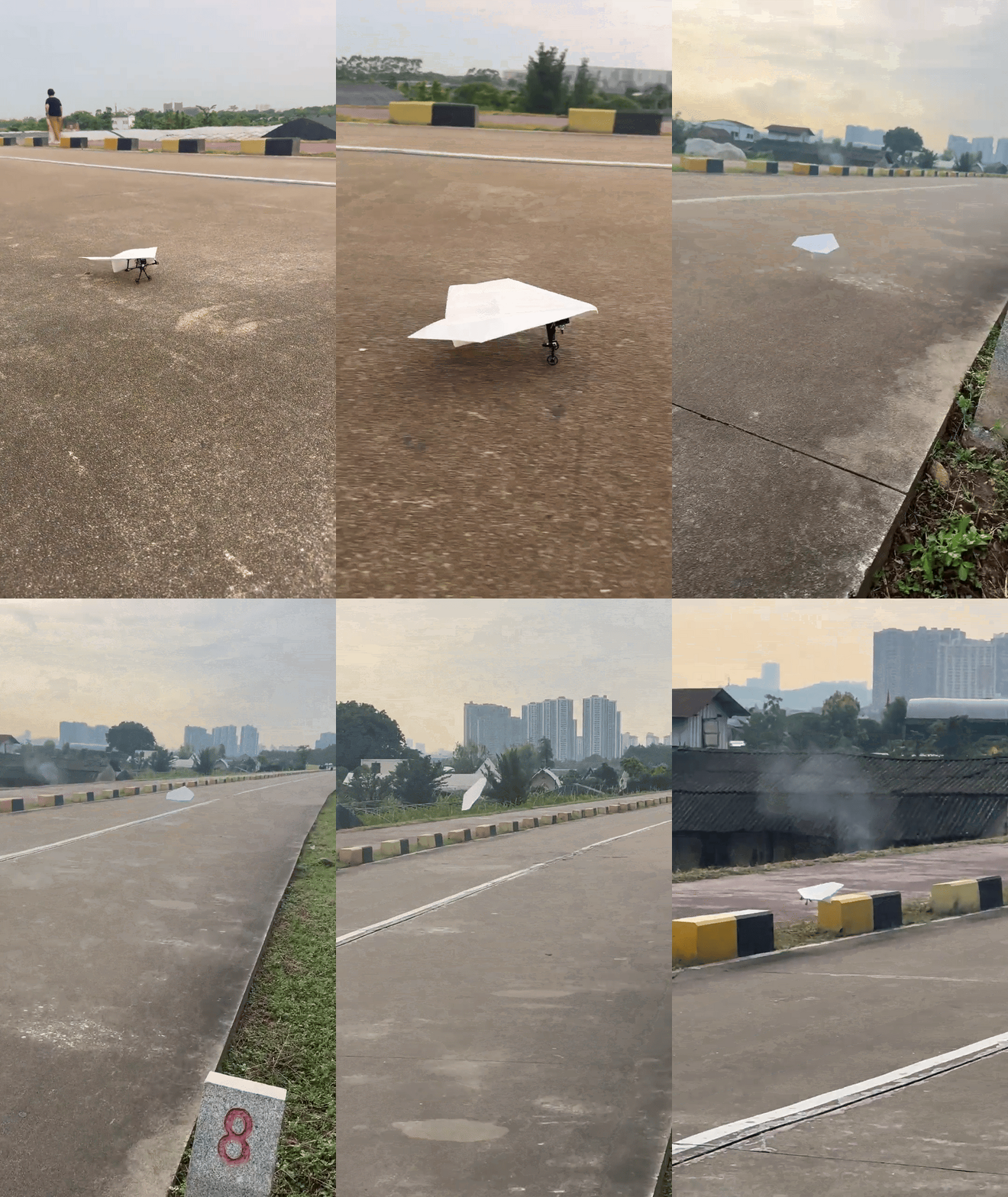
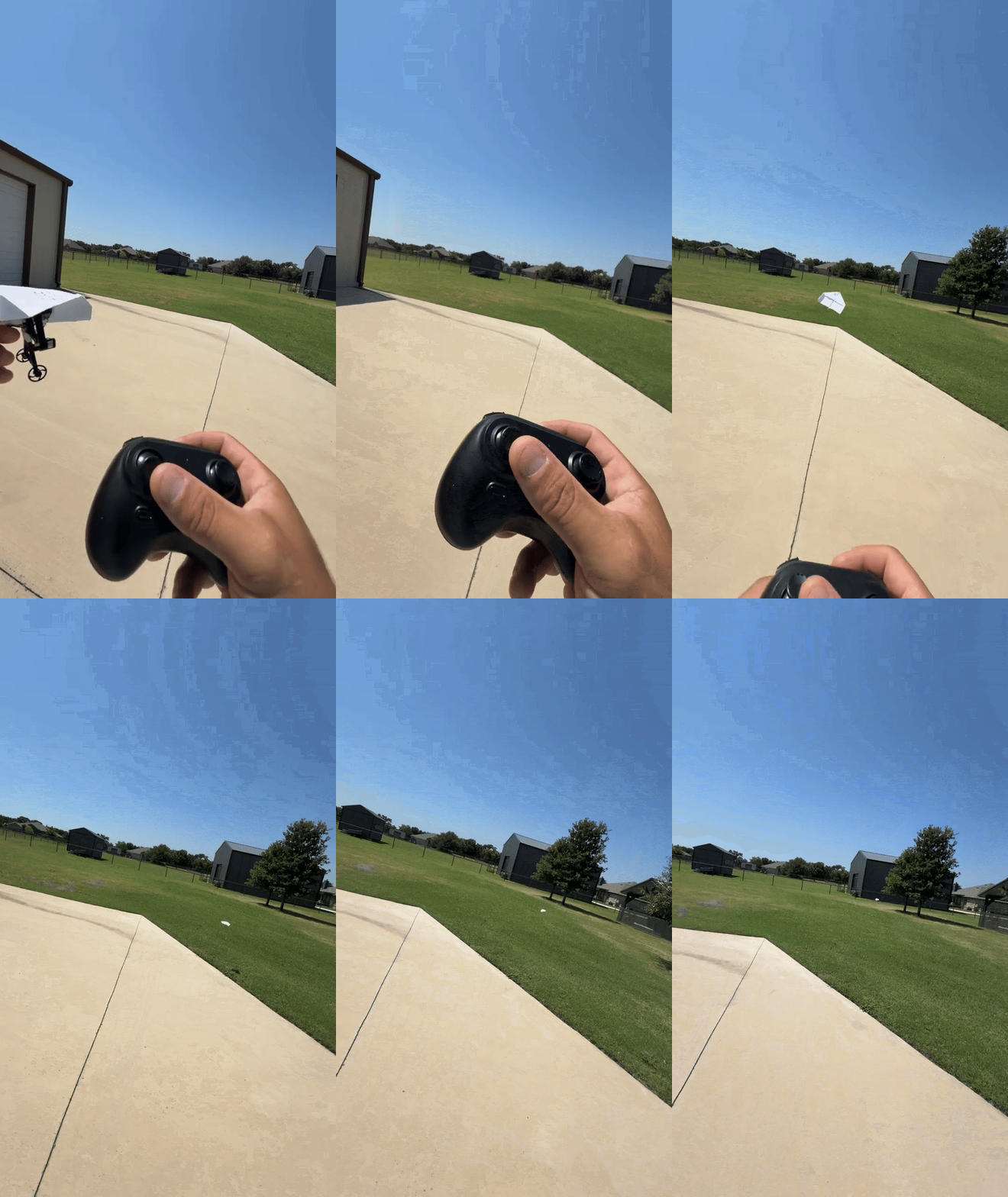
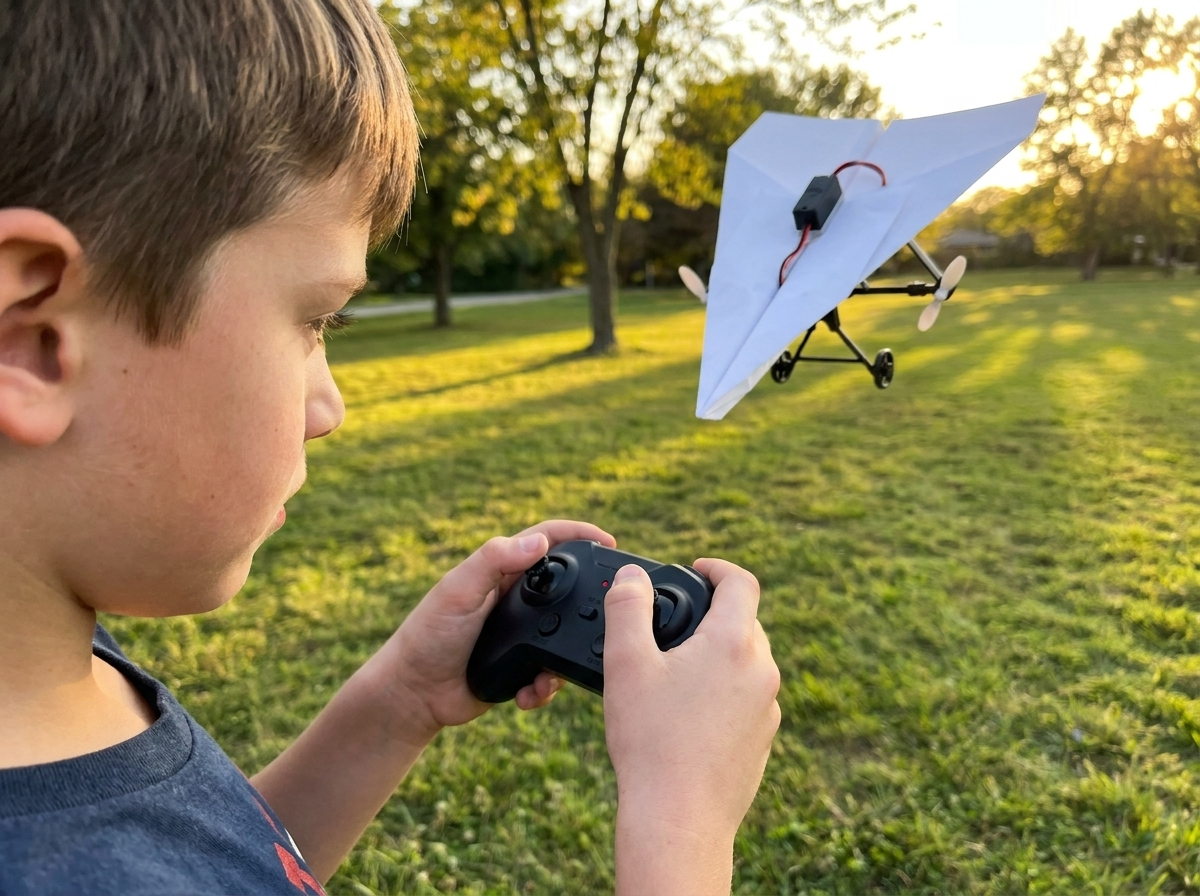
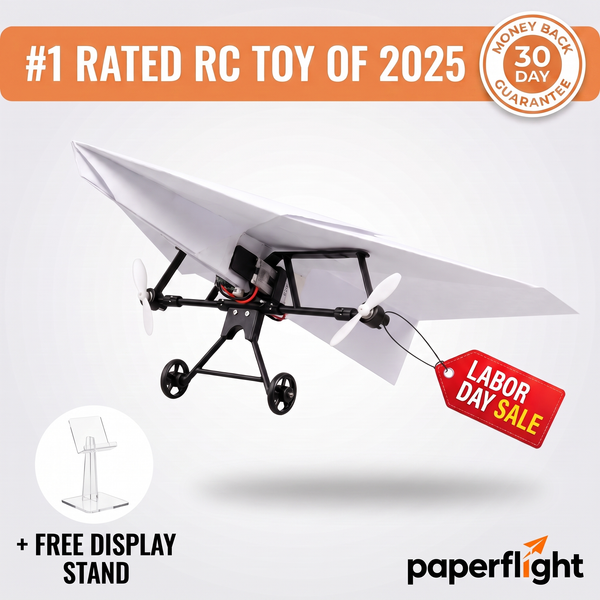
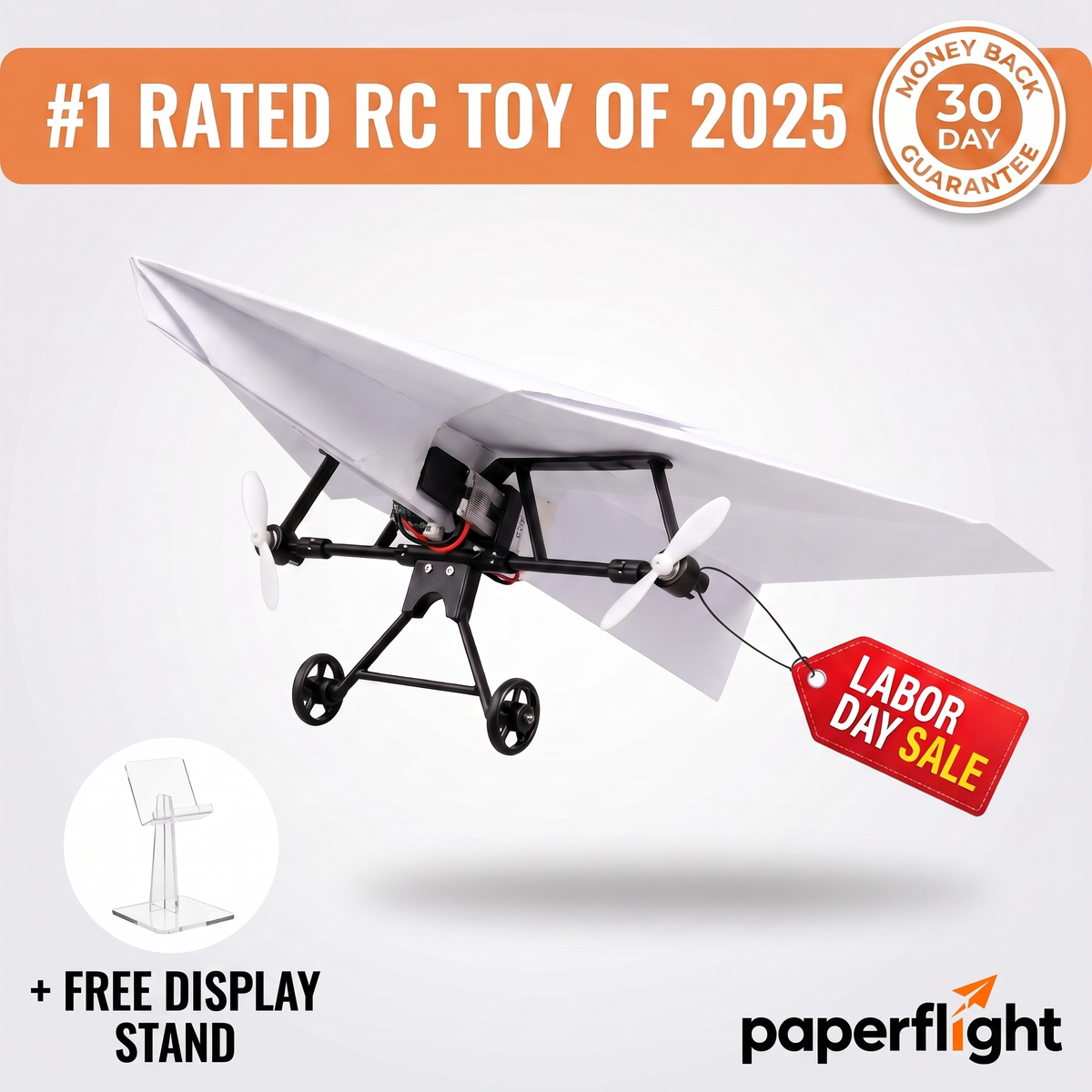
PaperFlight puts two sticks in his hands with real travel under his thumbs. Left is power, right is steering — the exact shape his thumbs have known since he was four. Under the nose sits a small motor unit with a propeller out on each side and a gyro inside that holds the wings level, so a folded sheet of paper flies straight instead of corkscrewing. He pushes, it answers, he corrects. That instant answer is the one quality a screen has always had and none of his toys ever did.
The "Screen-Free" Toy Came With a Screen.
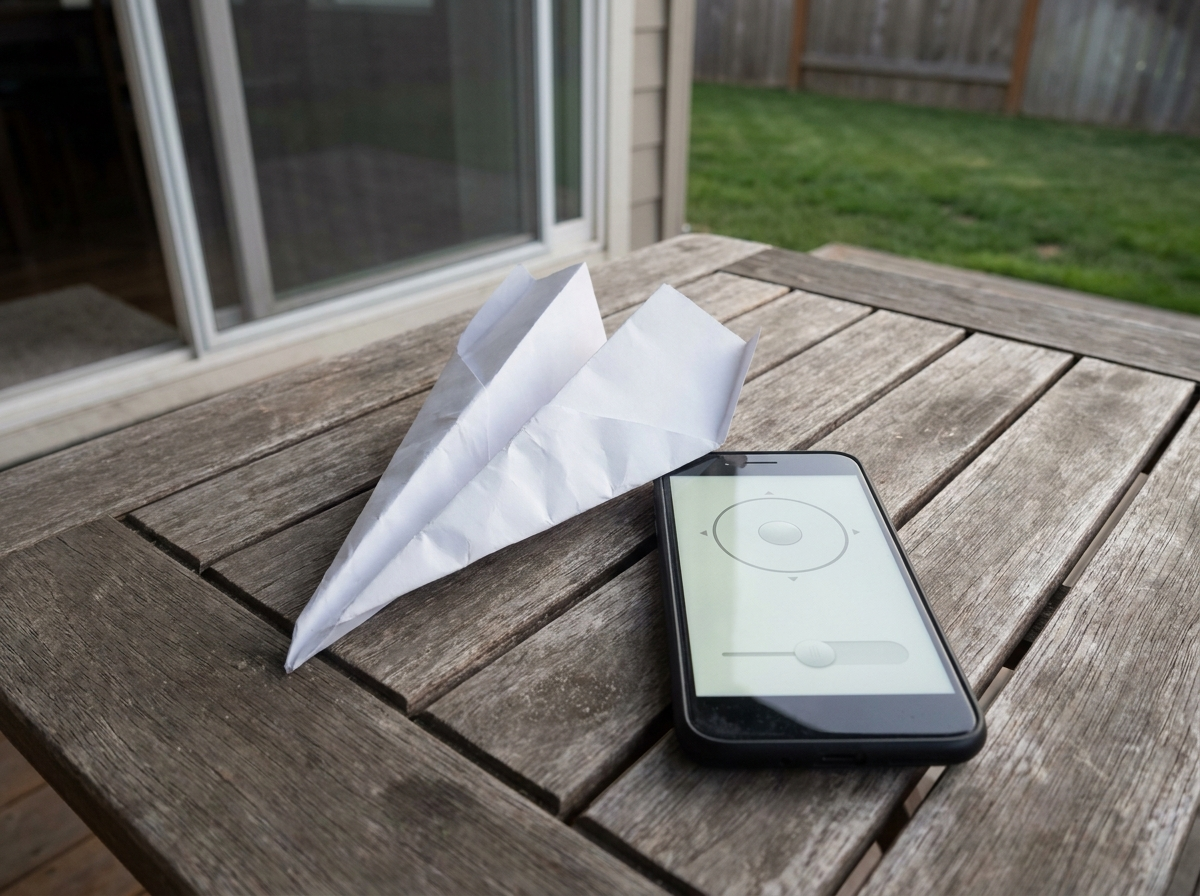
This is the one that stings, and most people don't notice it until months later. You ordered the screen-free toy. It needed an app. So the thing you bought to get him off a screen handed him one the second it came out of the box.
Go look at what was on the table when he walked away. Not the toy — the toy was in your hands, because you were out there finishing it alone. It was the phone. He stood there with his thumb sliding around on glass, trying to steer by tilting it in the air with the speed on a slider under the same thumb, one-handed, outdoors. Adults can't do that. Then he handed it back and went inside and you told yourself it's kids these days.
PaperFlight has no app, no account, no pairing and no phone at any point. The remote is in the box and it does two things. Turn it on, hand it over, step back.
Screens Off at Seven. The Fight Starts at 7:01.
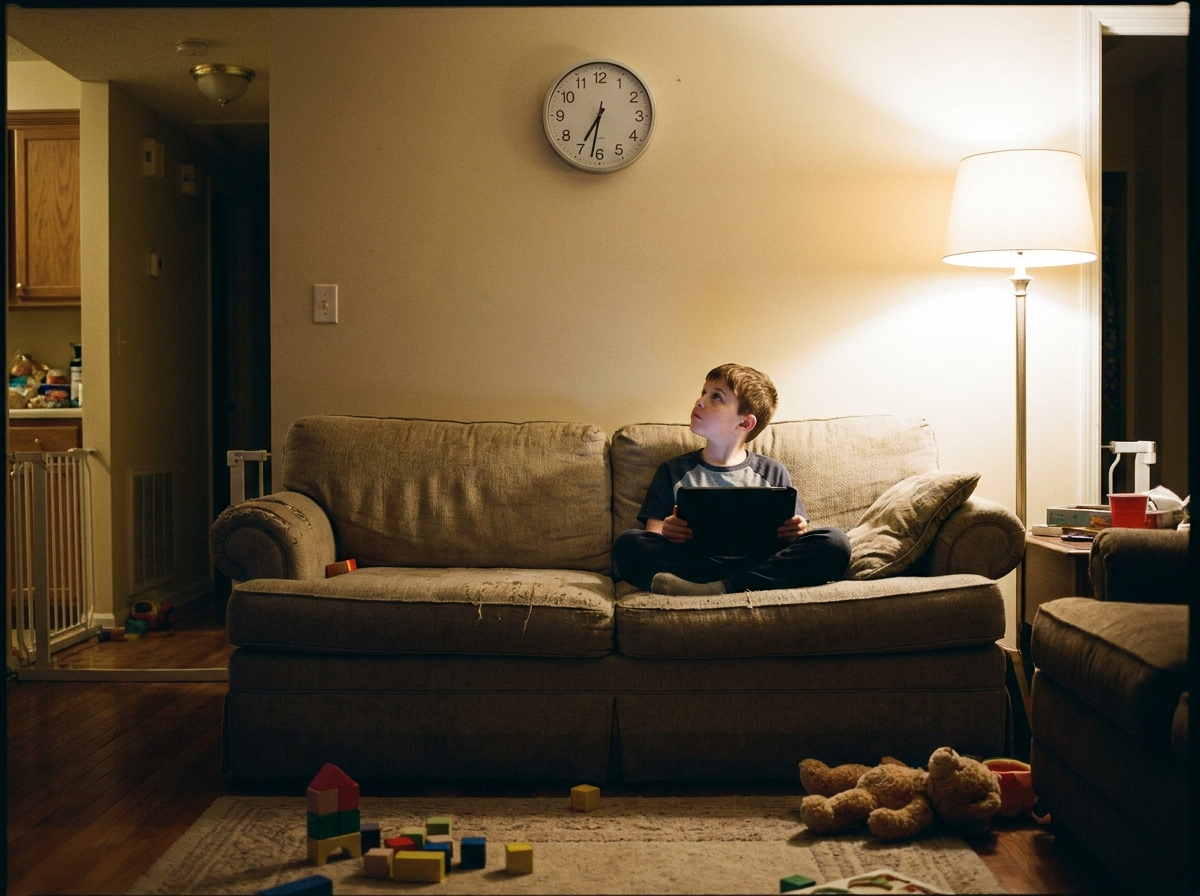
You've already climbed this ladder. Bought the toy that looked techy enough he'd care. Paid for the "educational" apps so the screen time could count as learning — it was the same screen with a worksheet on it. Told yourself the building games were basically engineering. Then did what every article says and set a limit.
Do you know what a limit actually buys you? A fight at 7:01. Every night. And a kid who watches the clock instead of playing, because he's just waiting for it to come back. A limit doesn't take the screen away. It moves the argument and makes the screen the thing he's counting down to.
None of those rungs touched the actual problem, which is that a screen answers his hands instantly and nothing else you've given him does. You don't need a better timer. You need to change what's in his hands — and then the outside part takes care of itself, because he'd rather be doing the thing that answers him.
$31.95. Watch What He Does With the First Crash.
You don't have to believe any of this. You have to watch one crash.
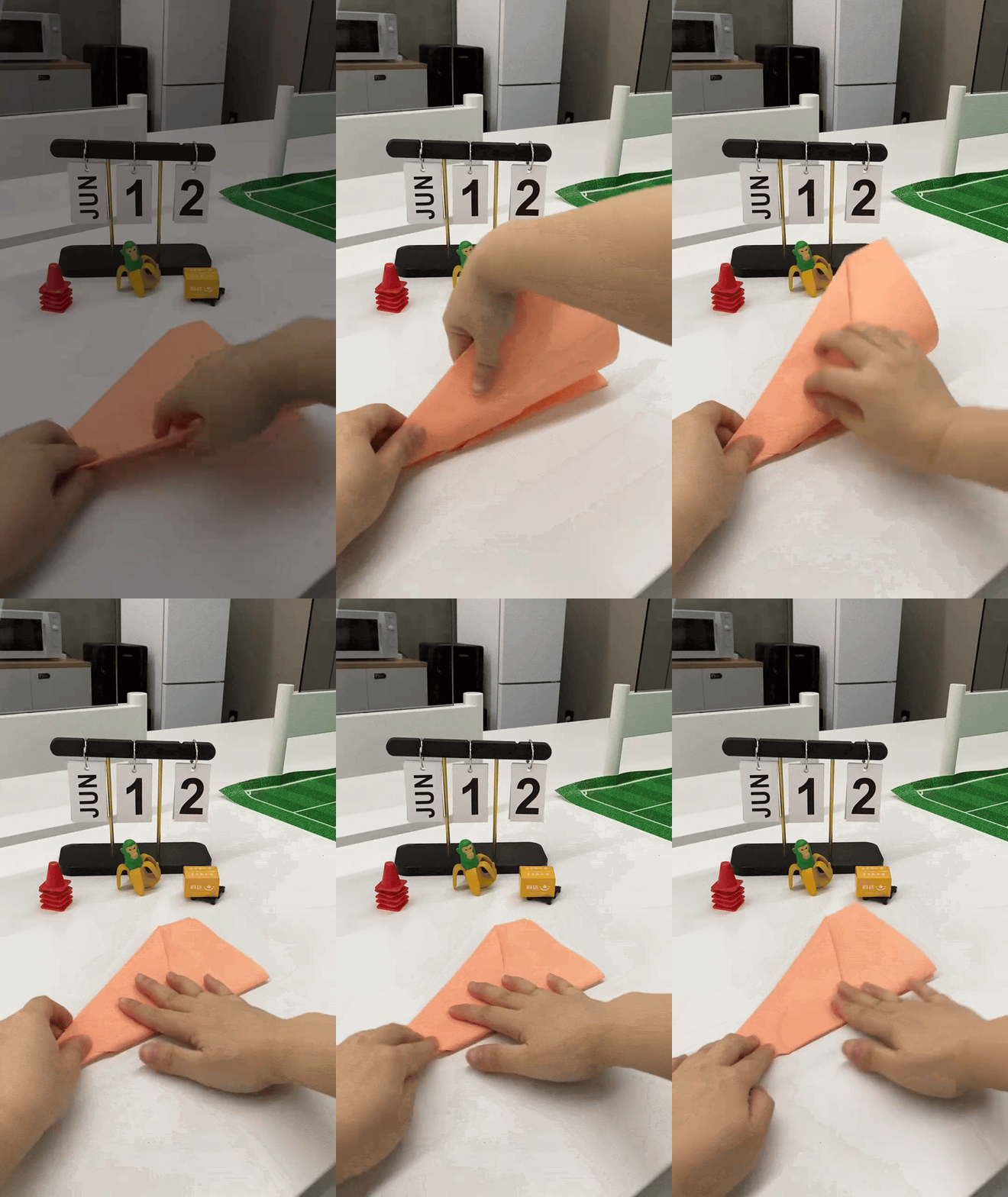
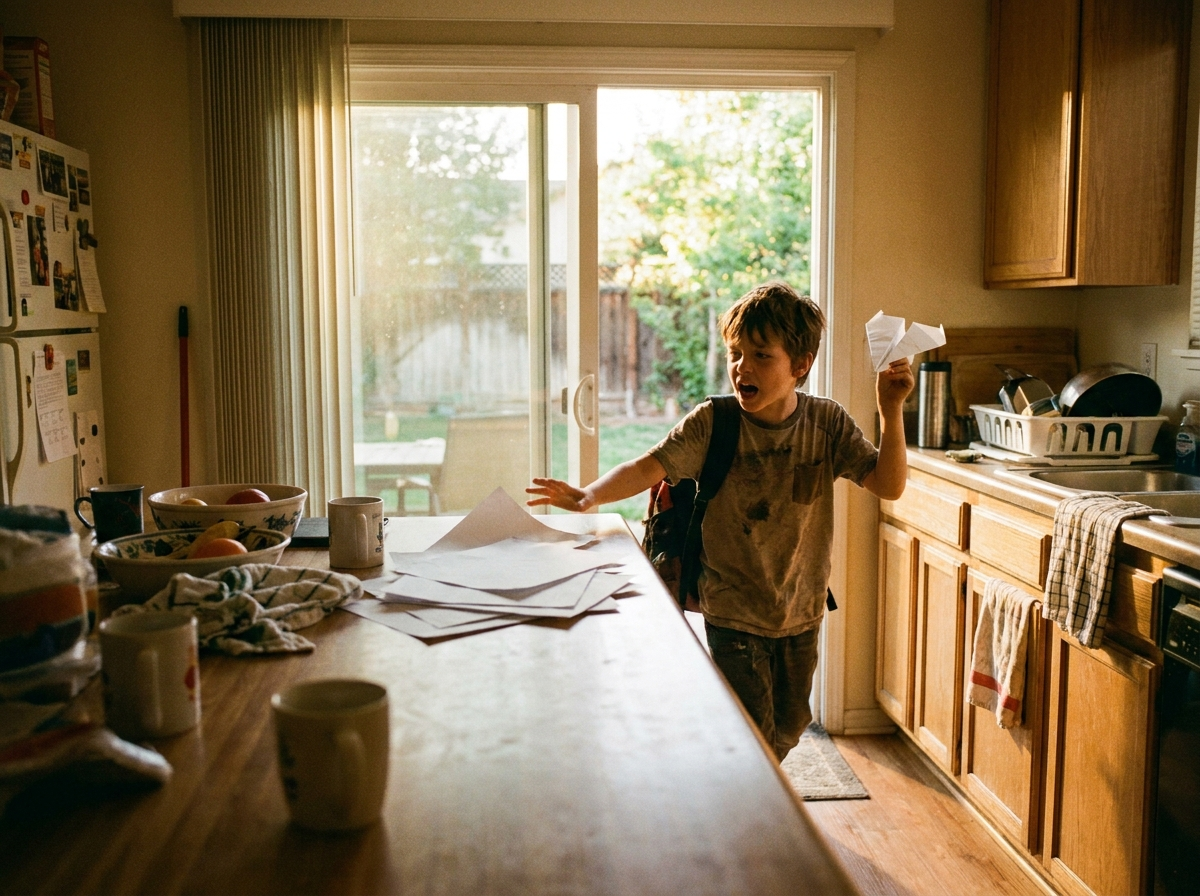
Give him two sticks and a sheet of paper. He folds a plane, clips the motor under the nose, and puts it into the grass inside the first minute — they all do. Then one of two things happens. He walks away, and you send it back inside 30 days and you're out nothing. Or he says "more paper" and runs inside to get it. That's the entire test, and it's the one every other toy in that closet failed — not because he's hard to please, but because when those broke there was nothing to do next.
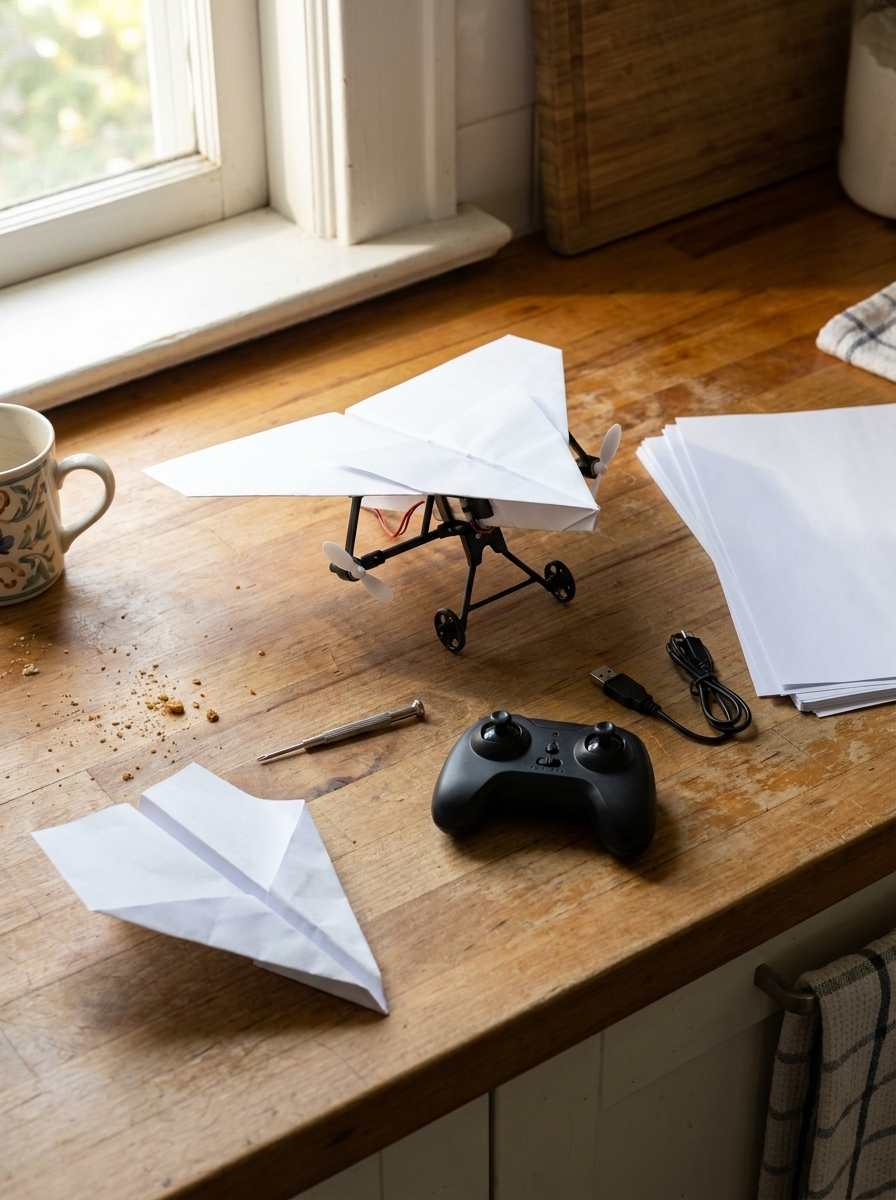
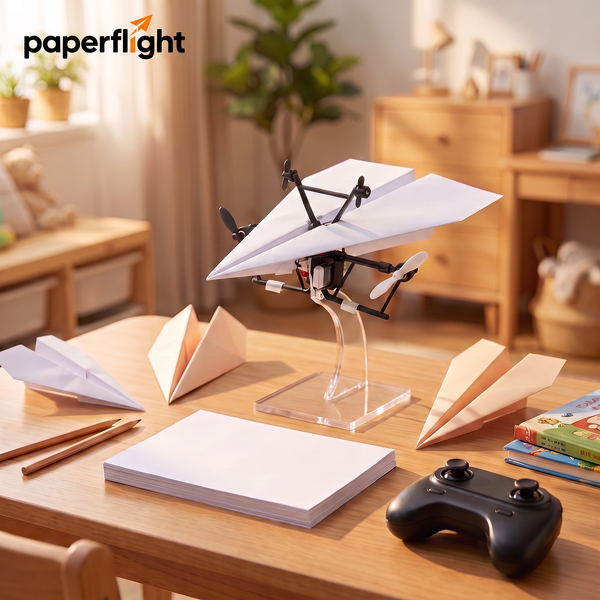
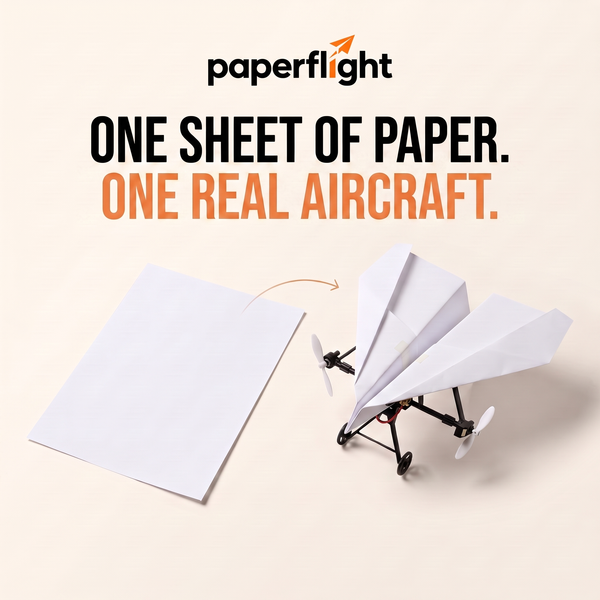
$31.95 during the Early Fall Sale, half off with free shipping. In the box: the motor module, the two-stick remote, a rechargeable battery, USB cable, detachable landing gear with wheels, a small screwdriver, a display stand and the manual. No paper — he uses the printer drawer, and that's the entire reason it works. Get two at $54.95 so you're not stealing his remote, and because the younger one or the cousin is going to want a turn.
A twin-propeller power module with a gyro stabilizer that clips onto any paper plane he folds — flown with a real two-stick remote. Crash it, fold another, fly again. No app. No phone. No glass.
Why 50% off in September? Every kit that ships now is one we're not racing to deliver in the December crush. Early shoppers get the price. When the holiday rush starts, it goes back up — that's the whole story.
That's the app-controlled kit — the one he has to fly with your phone. PaperFlight gives him the exact same moment — a plane he folded himself, climbing — with two real sticks in his hands instead of glass, and nothing to reorder when it hits the ground.
$31.95 during the Early Fall Sale — half off, free shipping, and 30 days to change your mind. Two sticks with real travel, a plane he folds himself, and a first crash that starts the next flight instead of ending the toy.
Get PaperFlight — 50% Off →