
The Only Plane in the Garage You're Not Scared to Crash.
Five reasons frugal builders are flying a $32 clip-on twin-prop pod more than anything on the garage wall — and what it honestly can't do.
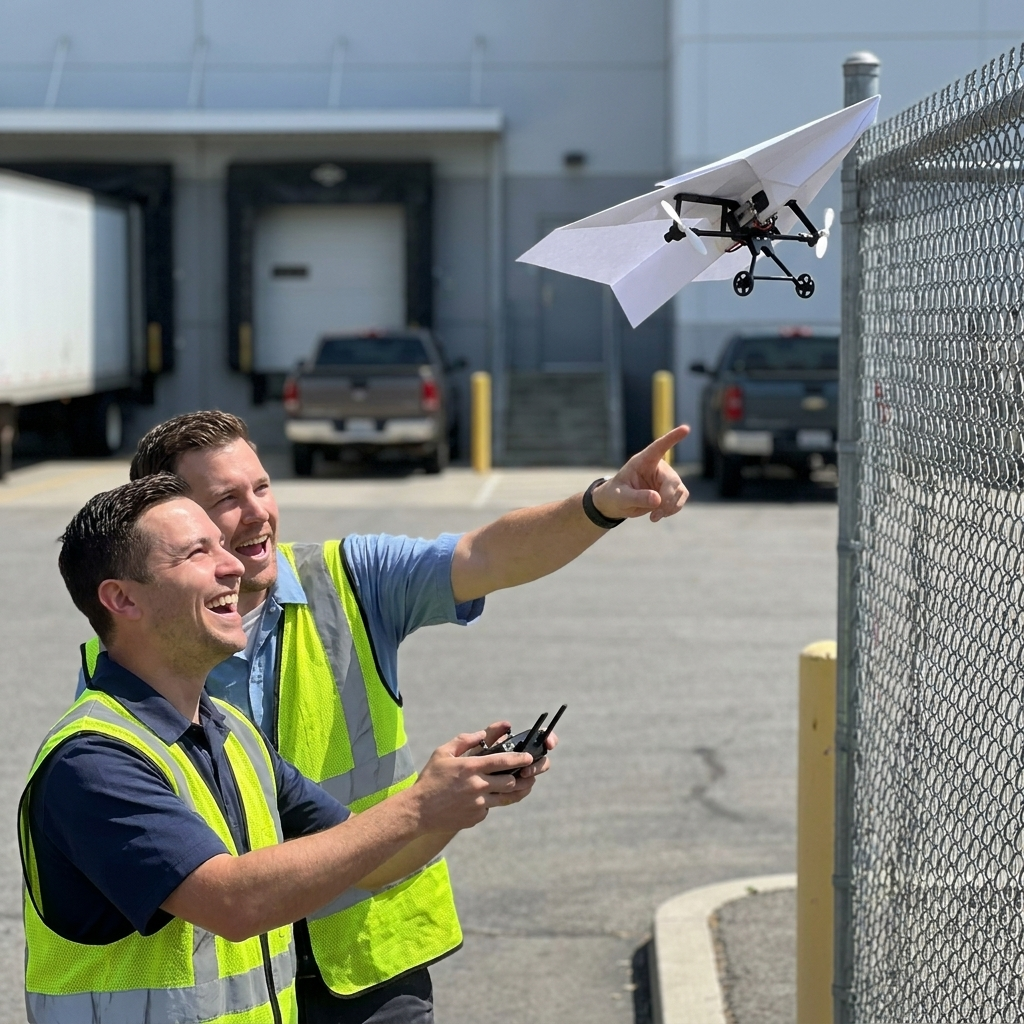
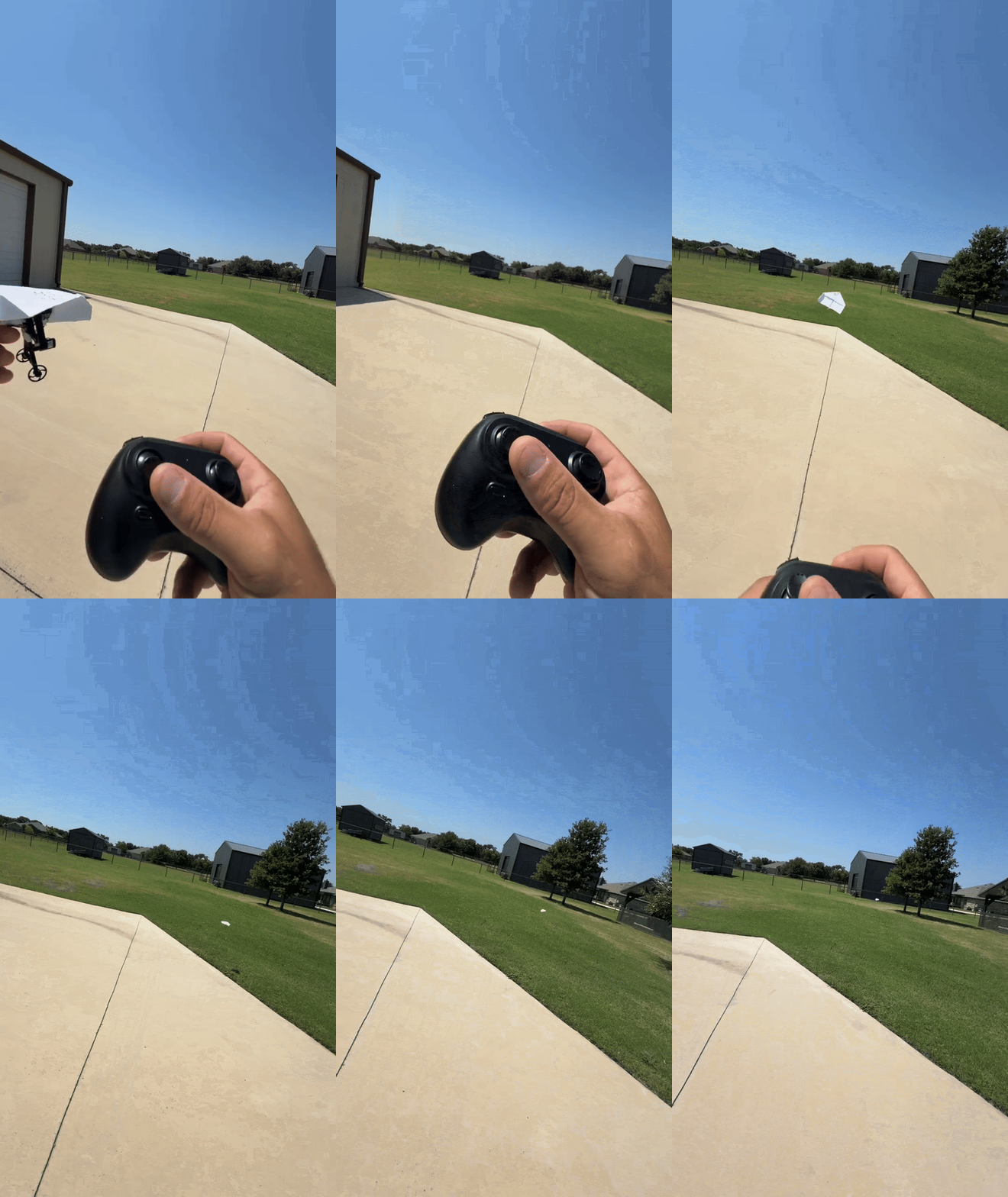
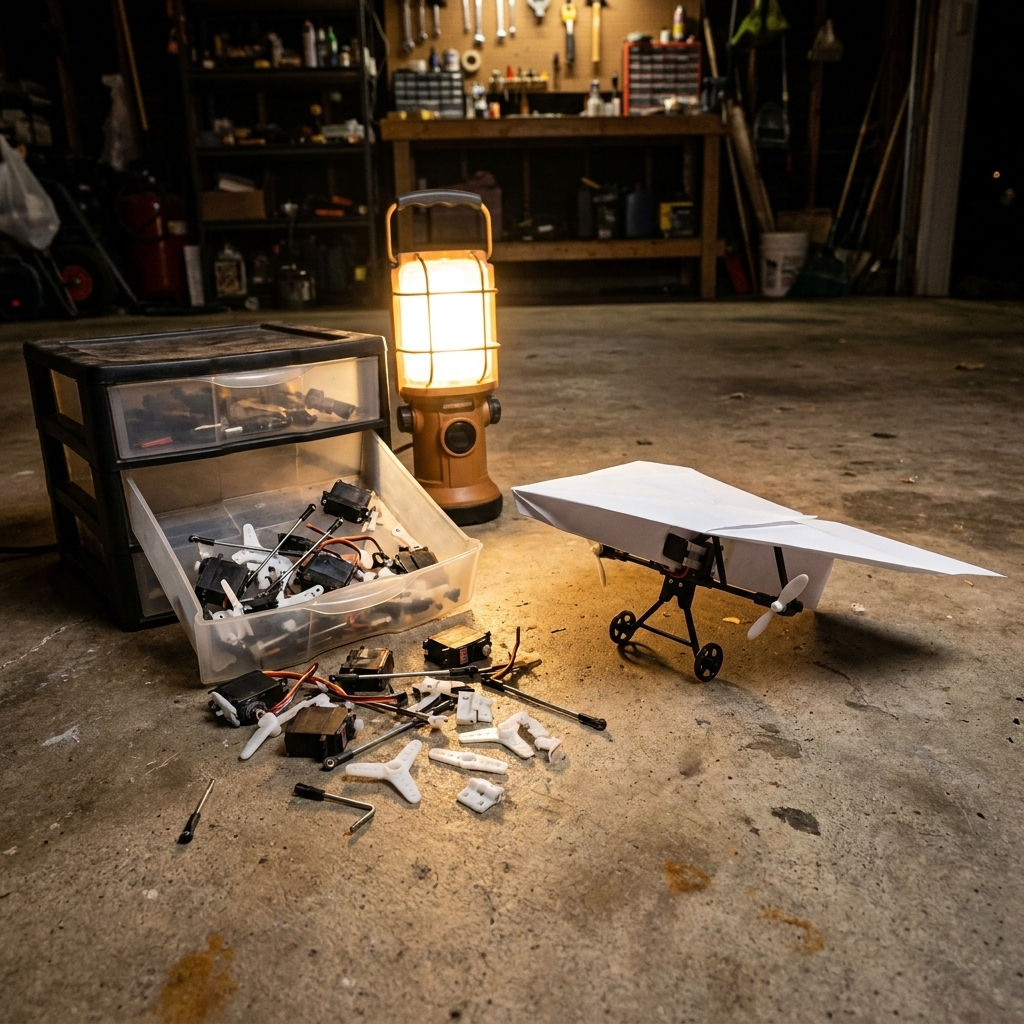
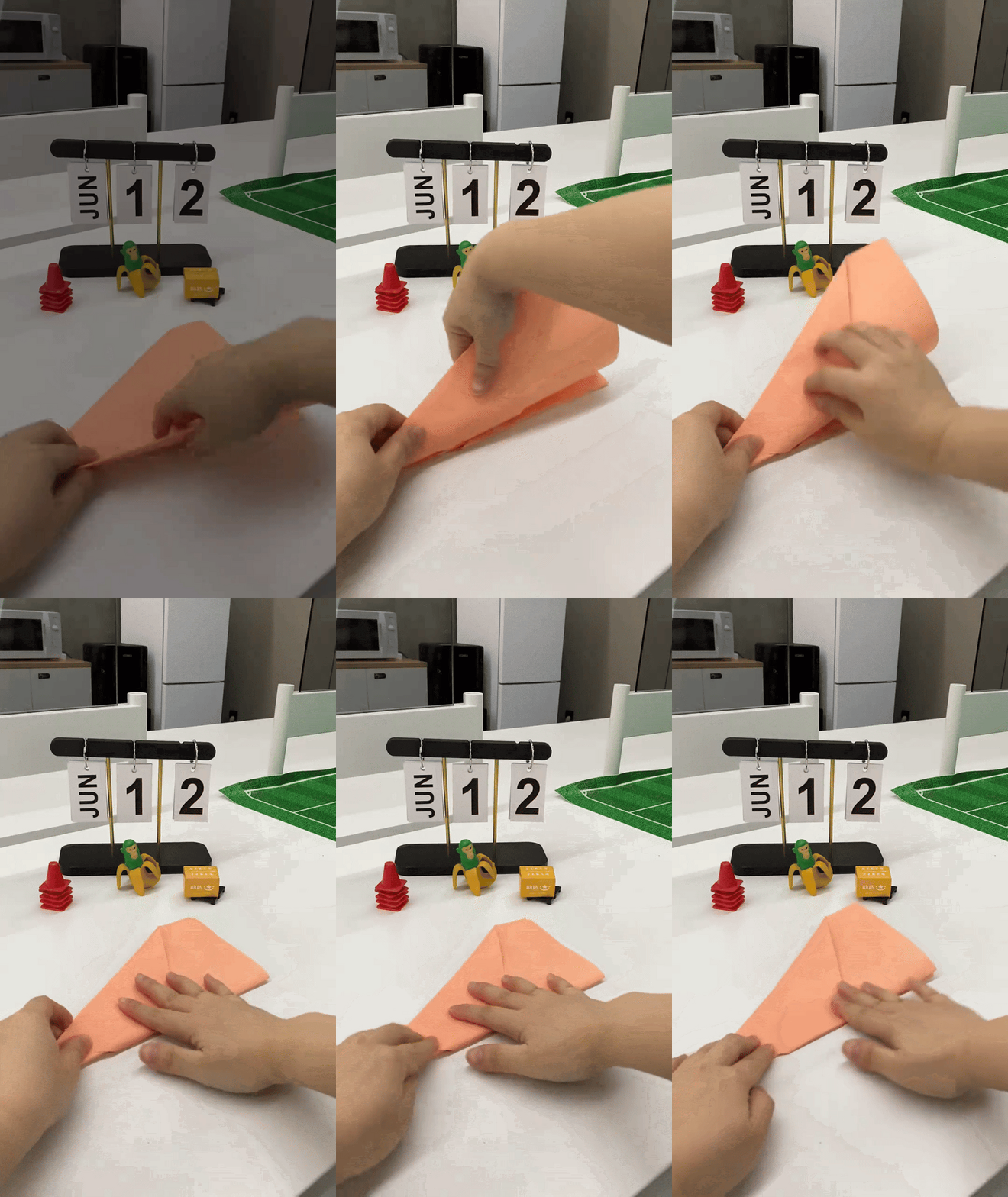
Stop Measuring Cost Per Plane. Start Measuring Cost Per Crash.
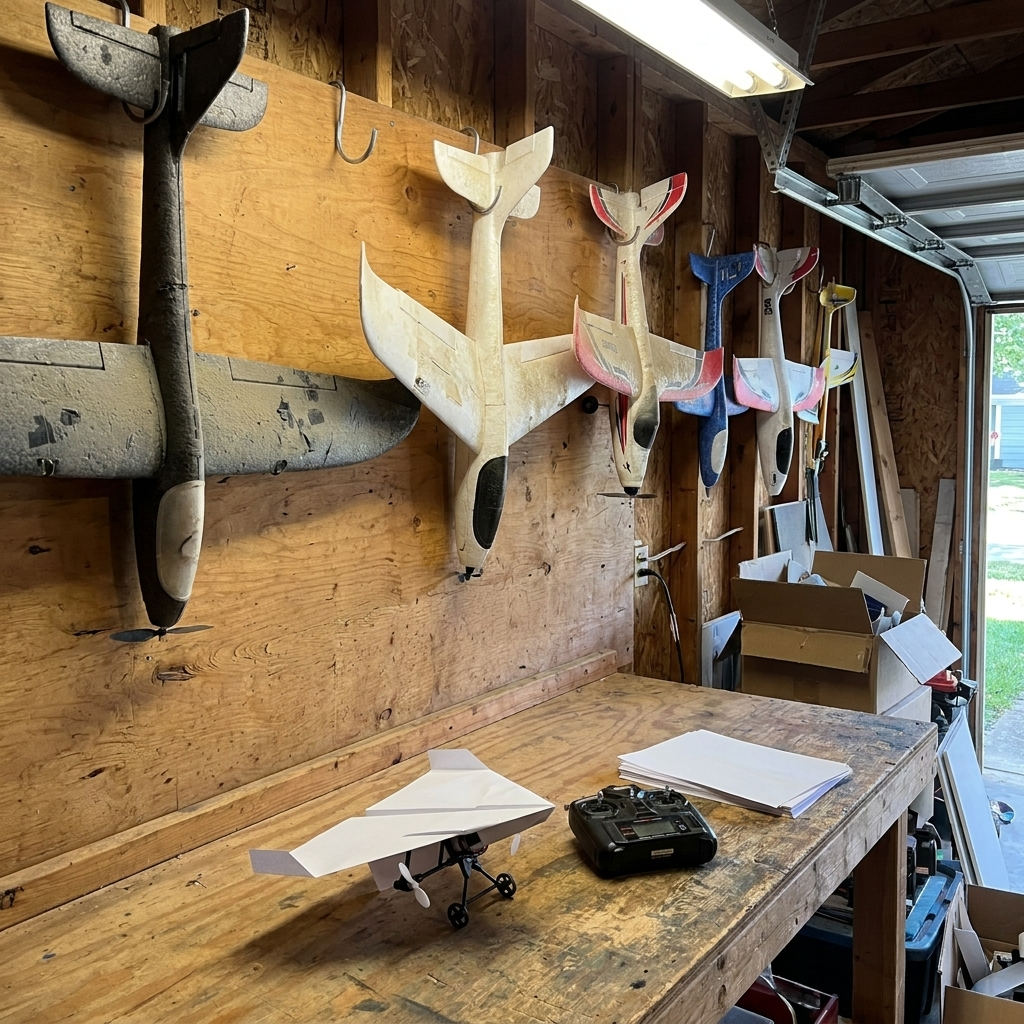
Count the planes on your wall you haven't flown since the last one went into the ditch. They fly fine. Each one is just three weekends of building you're not ready to lose. That's the quiet cost of this hobby: the better you build, the less you fly.
Run the numbers on every plane you've owned and a pattern jumps out. Every one of them puts the expensive part in the impact. The balsa wing that was the whole plane. The motor at the wing root. The heavier foam you built to survive crashes, which just burned out bigger motors. Better electronics make the crash more expensive. Tougher airframes need more power. Either way, the crash is where the money goes.
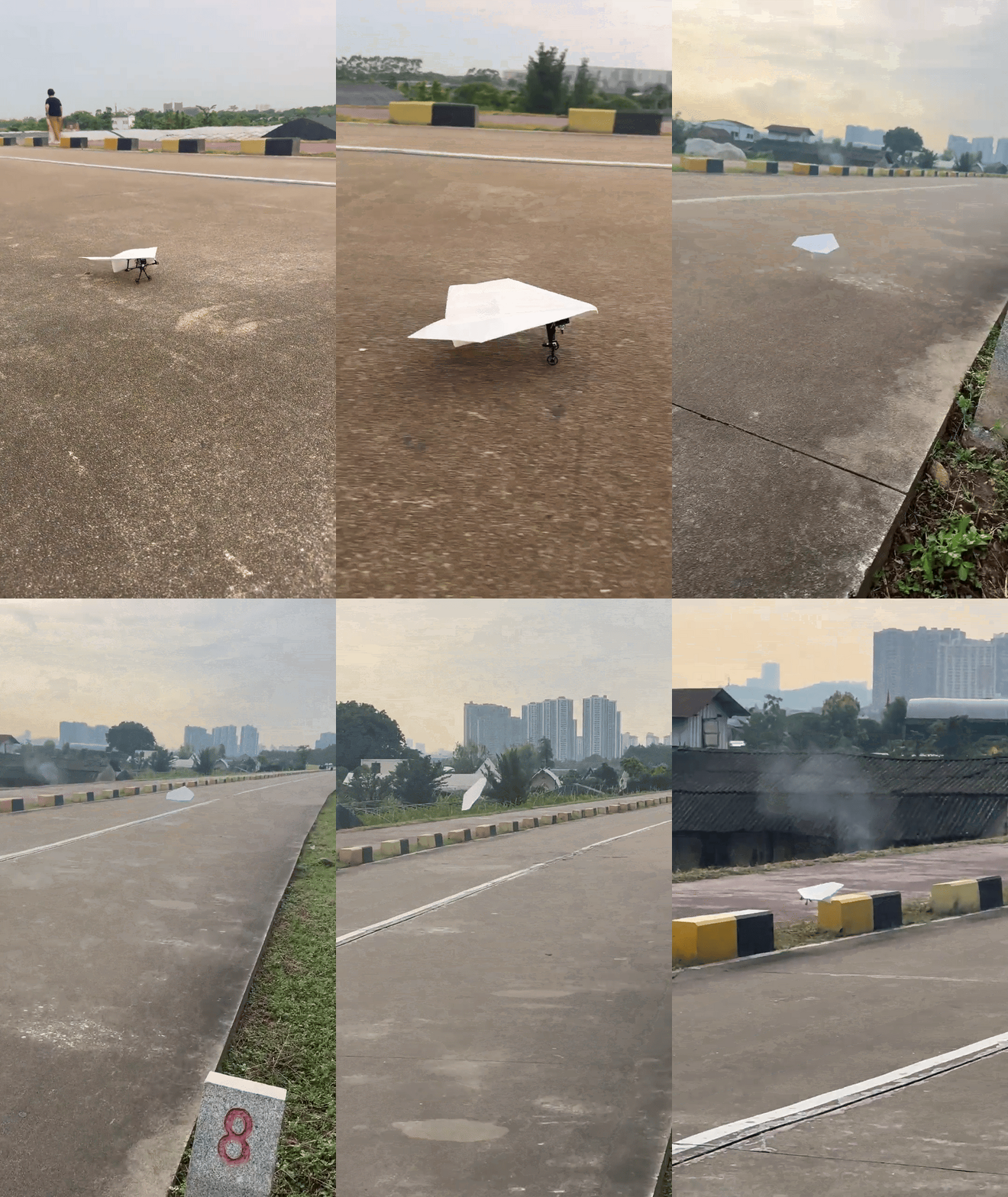
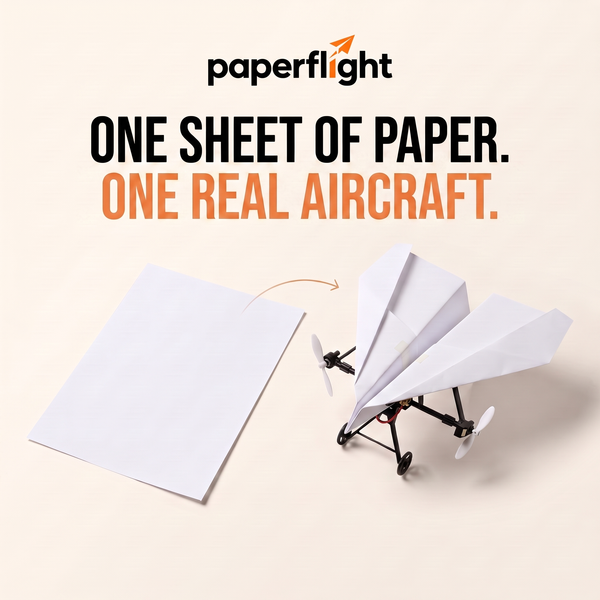
PaperFlight flips it. A small twin-prop pod clips under the nose of a sheet of printer paper. The paper is the crumple zone. Put it in the grass, unclip the pod, fold a fresh airframe on the tailgate in about a minute, and fly again. The motors come off before they pay for anything.
No Servos. No Linkages. Nothing Hanging Off the Tail to Strip.
Sort your parts drawer by type instead of by plane. Hinges. Pushrods. Servo gears. Control horns. Clevises. Every failure in it lives in the steering system — the thinnest wire and smallest gears on the aircraft, hung off the tail of a plane that lands nose-first. Metal-gear servos don't fix that. They move the failure one part down the chain.
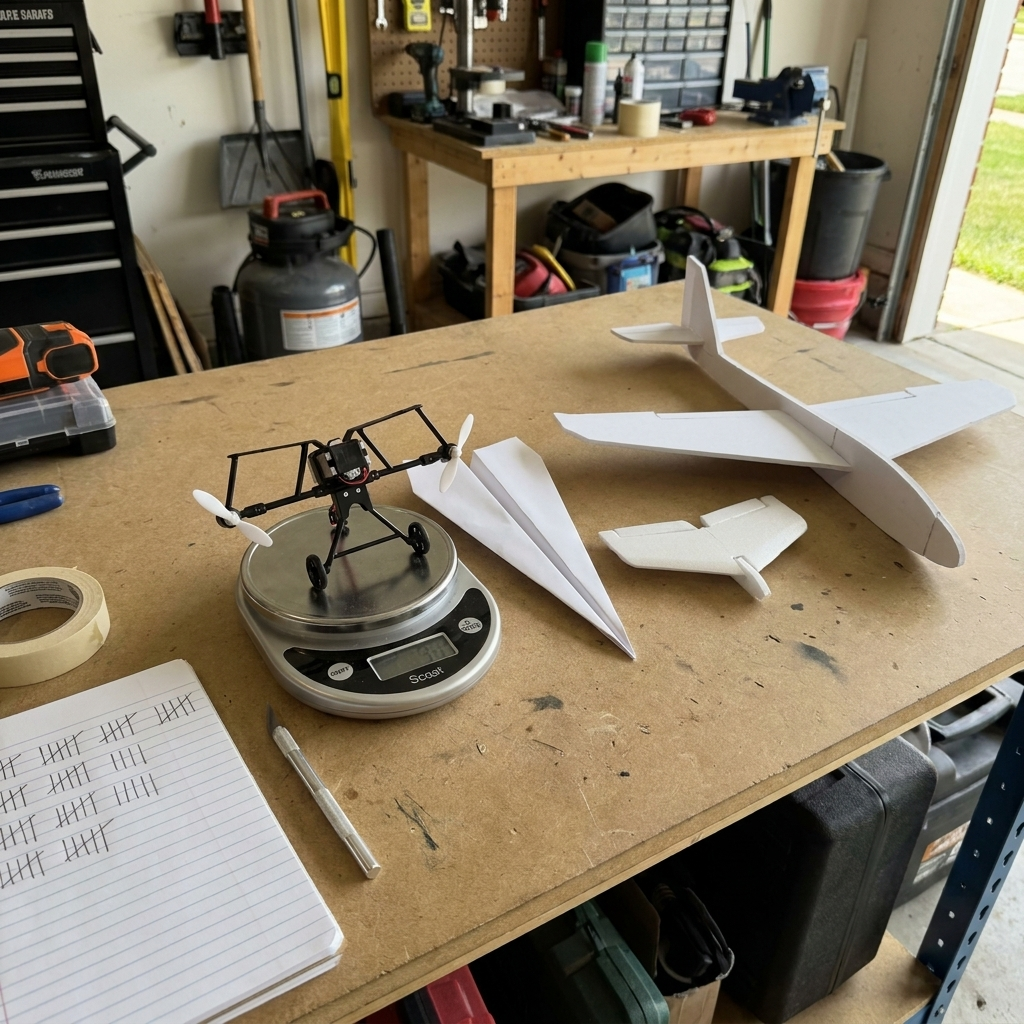
This pod has none of it. A crossbar across the nose carries a prop at each end, both pulling forward. To turn, it spins one faster than the other. No rudder, no elevator, no pushrod. The whole steering system is the two motors you already have.
That's why a two-foot nose-in doesn't turn into a rebuild. The airframe crumples, the pod pops off, and there's nothing on the tail to check because there's no tail.
A Gyro That Catches the First Third of a Second. Not a Flight Controller.
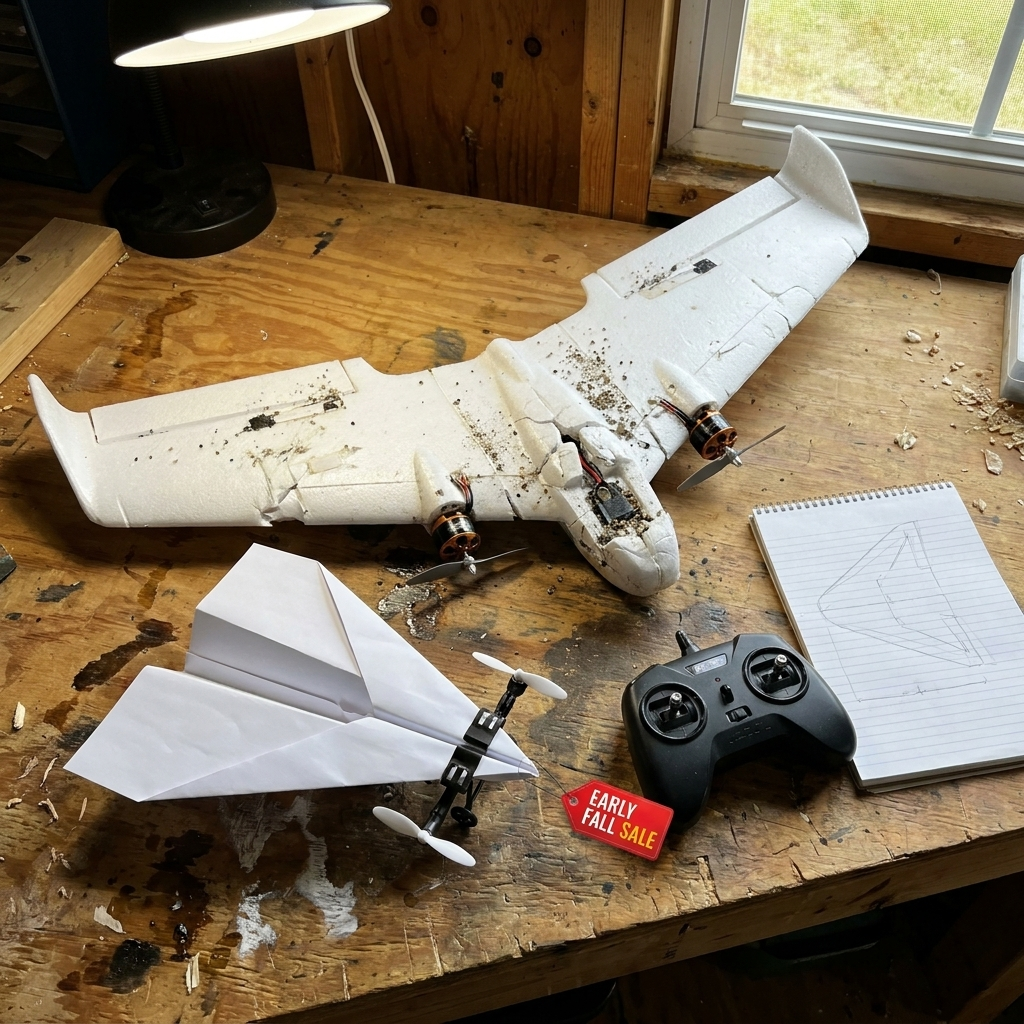
If you've built light twins, you've had one tilt left and snap over before your thumb moved. Count the frames and it's about a third of a second from wing-drop to unrecoverable. Reaction time is roughly a quarter second on a good day. That's not a trim problem, and it isn't your hands.
Most cheap twin setups give you motors and nothing else. The pricier ones route stabilization through a phone app. This pod has a gyro in it. It doesn't fly the plane for you and it won't save a bad CG. It just notices the wing dropping and answers faster than a thumb can, so you're still in the air to answer the rest.
That makes it a cheap way to find out what's actually wrong with a twin layout: fold the planform on paper, clip the pod on, full throttle. A failed test costs one sheet instead of one build.
It's a Test Engine, Not a Power System. Here's What It Lifts, and What It Doesn't.
You've glued power systems into airframes, crashed the airframe, and cut the electronics back out with a knife. Or built every design around one motor so each new idea meant starting over. The electronics end up married to one plane at a time.
This pod clips on and clips off. Fly it on one airframe, crash it, unclip it, clip it to the next. Nothing rewired. The airframe becomes the variable and the power stays the same, so you're actually learning something about the wing.
The honest part: it only lifts what it can lift. A printer-paper airframe flies, climbs and loops. The pre-cut EPP foam wing on the product page flies, slower and steadier, and handles a breeze better. A heavier scratch foam-board glider won't get off the ground. Plan your airframes around that and it does exactly what it says.
$31.95. Fly the Maneuvers You've Been Saving for “When You're Better.”
If you're scared to crash it, you'll never learn to fly it. You know that. It just doesn't help when the plane in your hands is ninety dollars and a weekend, so you fly flat circles and never try the loop. At a sheet of paper a crash, the loop goes into the asphalt twice and comes around clean the third time.
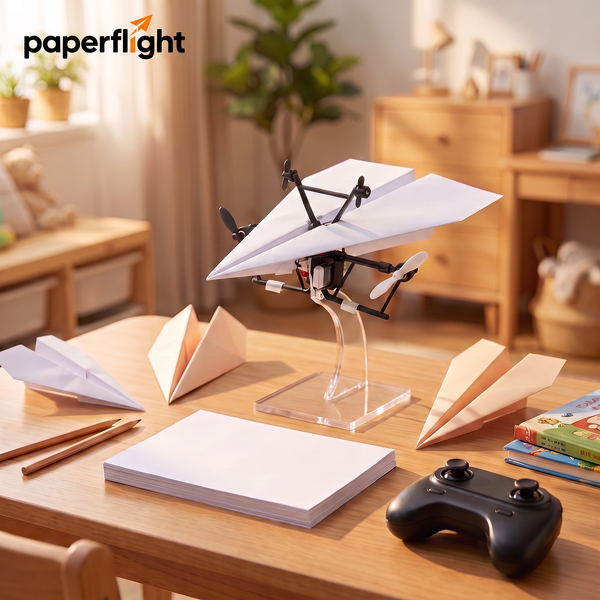
PaperFlight is $31.95 during the Early Fall Sale, half off with free shipping. Twin-prop pod with gyro, two-stick remote, rechargeable battery, USB cable, detachable landing gear with wheels, a screwdriver, a display stand and the manual. Two kits are $54.95 if the guy you fly with wants one.
The honest limits, because you'll find them anyway: it's a toy module, not hobby-grade gear, and it won't do what a four-channel plane does. The remote is a compact two-stick unit, not a Spektrum. It needs open space and won't fly in real wind. The battery is short. The props are the one hard part near the impact, so keep spares. And it wrecks paper constantly, which is the entire point.
A clip-on twin-propeller pod with a gyro that turns any paper airframe into an RC plane, flown with a two-stick remote. Steers with the props, no control surfaces. The paper takes the crash; the pod clips off and moves to the next airframe.
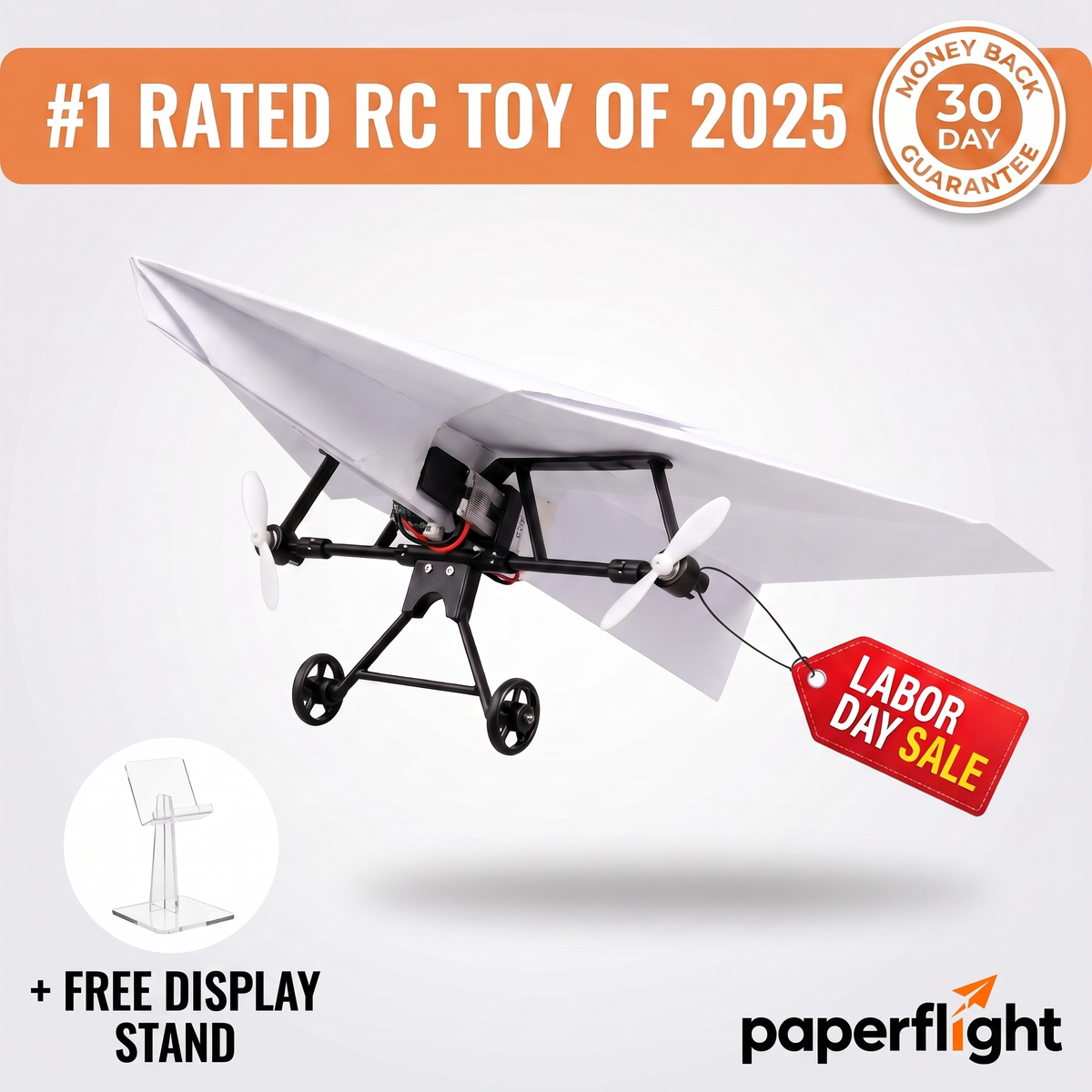
Why 50% off in September? Every kit that ships now is one we're not racing to deliver in the December crush. Early shoppers get the price. When the holiday rush starts, it goes back up — that's the whole story.
$31.95 during the Early Fall Sale — half off, free shipping, and 30 days to change your mind. No servos, no linkages, a gyro that catches the snap, and an airframe that costs one sheet of paper. Take the crash off the expensive part.
Get PaperFlight — 50% Off →