
Every Kit You've Bought Was One Experiment. This One Is a New Experiment Every Time They Fold.
Five reasons homeschool families are turning a one-day flight lesson into a Friday that runs for weeks — and why it's the first science purchase that isn't finished by lunch.
Every Box Was One Experiment. Once It Ran, There Was Nothing Left to Change.
You know the shelf. The crystal kit that grew nothing. The circuit that lit once. The rocket that needed a launch pad you didn't have. The volcano that worked beautifully and then was a crusty bowl in the sink. And the ones where “a couple of the experiments didn't work, so it felt like a waste of money.”
Here's why they all ended the same way, the ones that worked and the ones that didn't: each box held one experiment with one answer. If it worked, you were done. If it didn't, you were also done, because there was nothing in the box to change and try again. The kit wasn't boring. It was finished.
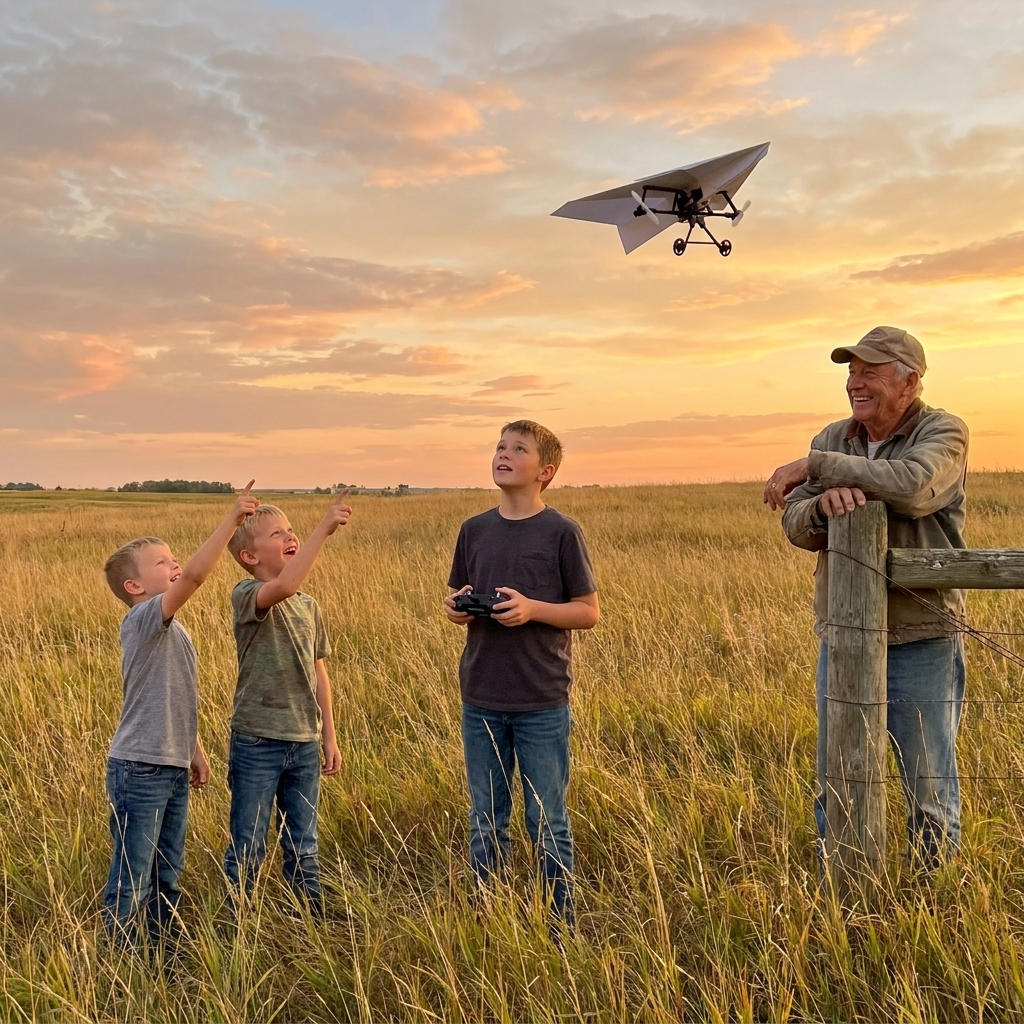
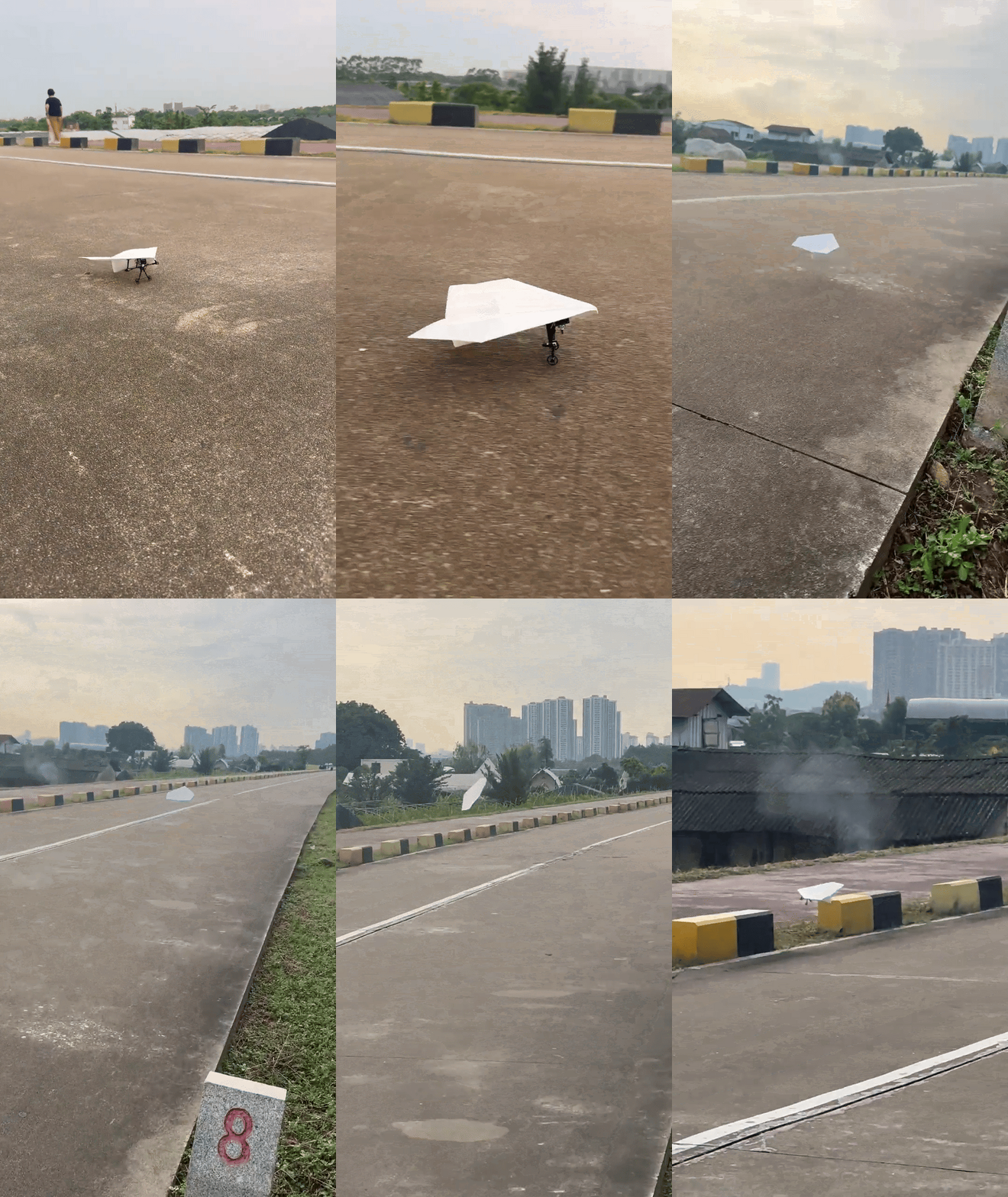
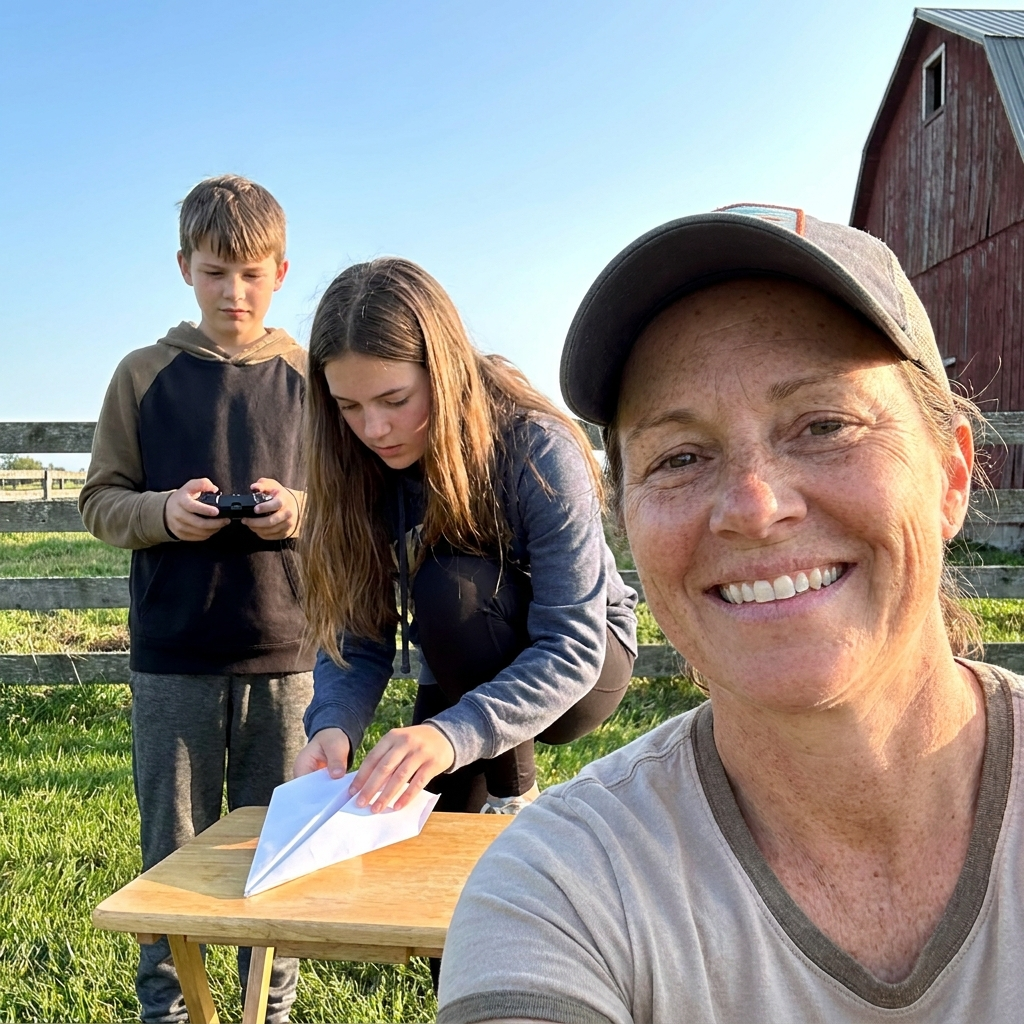
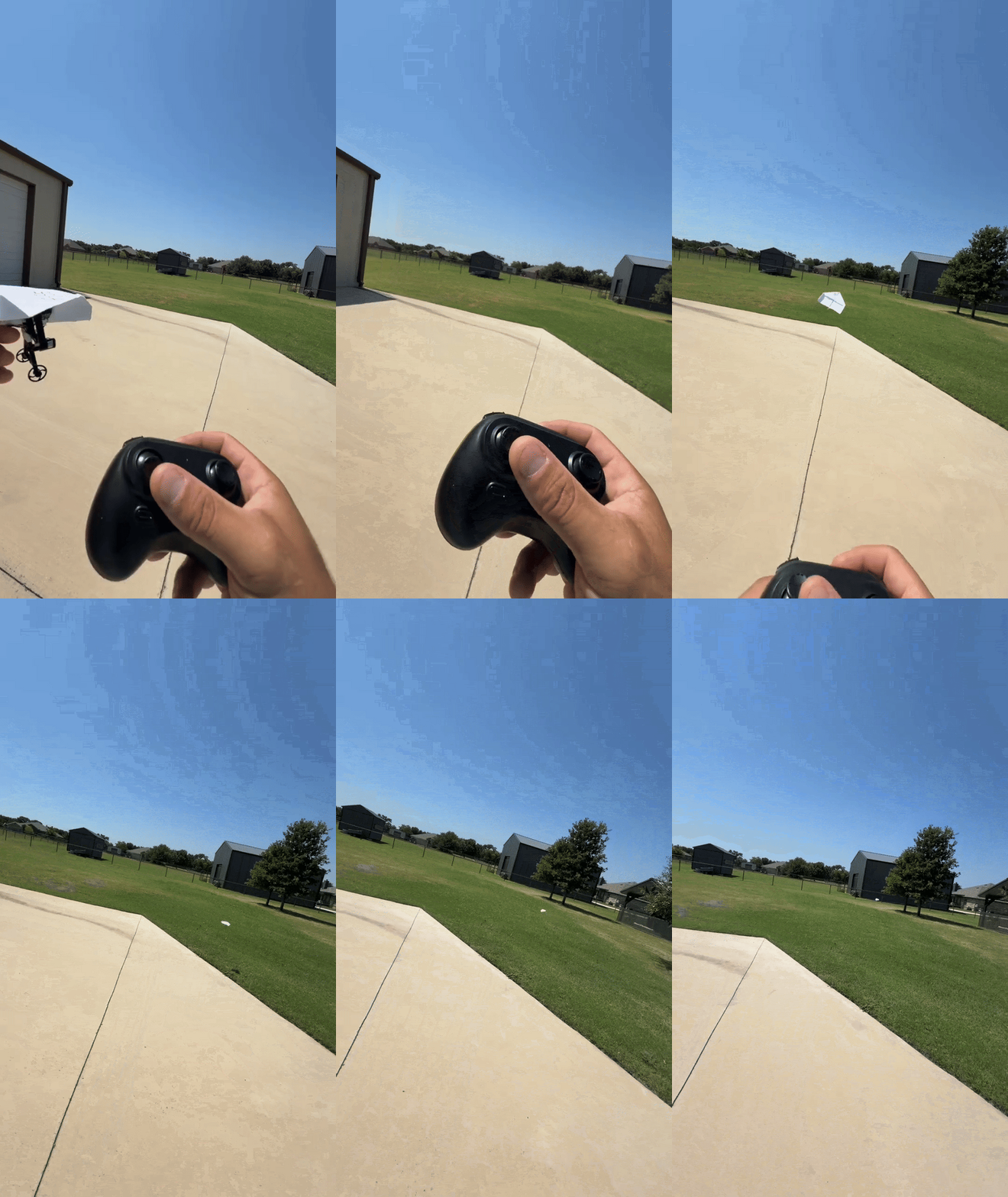
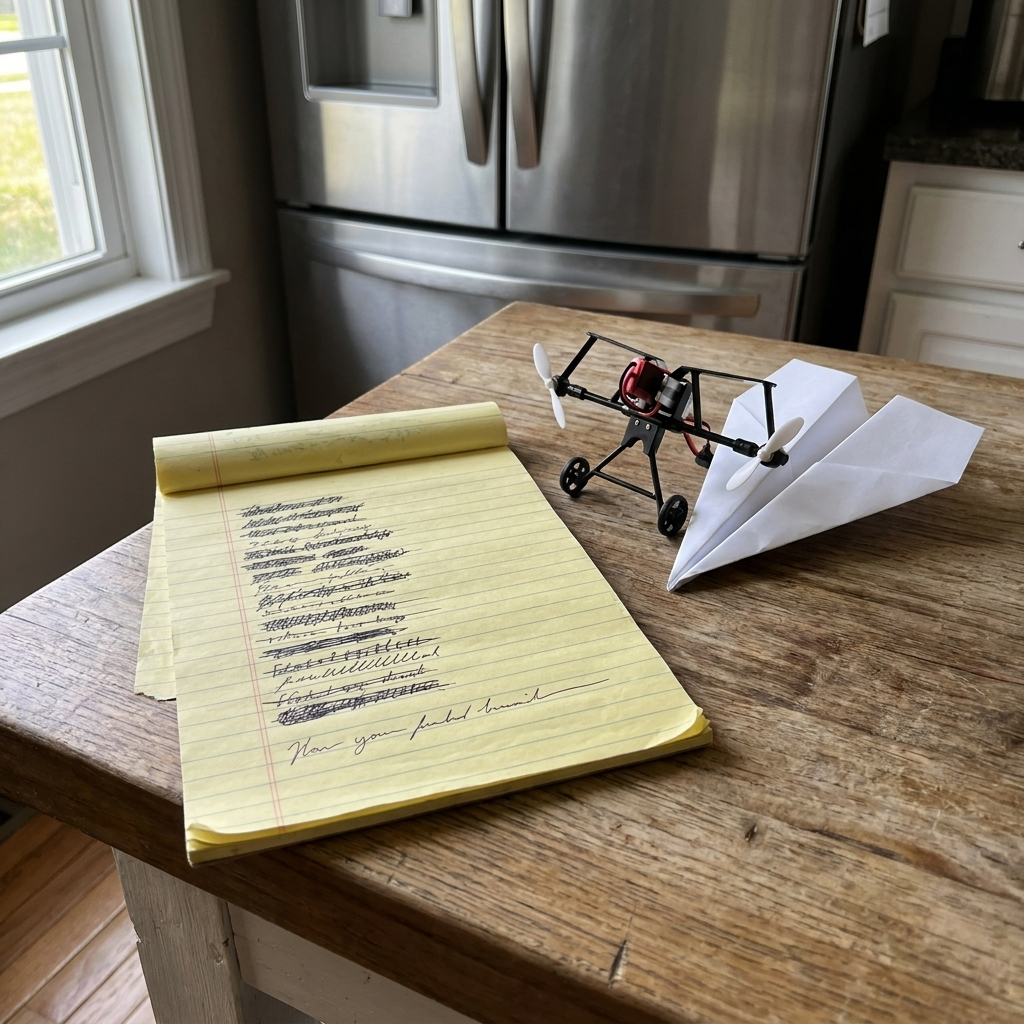
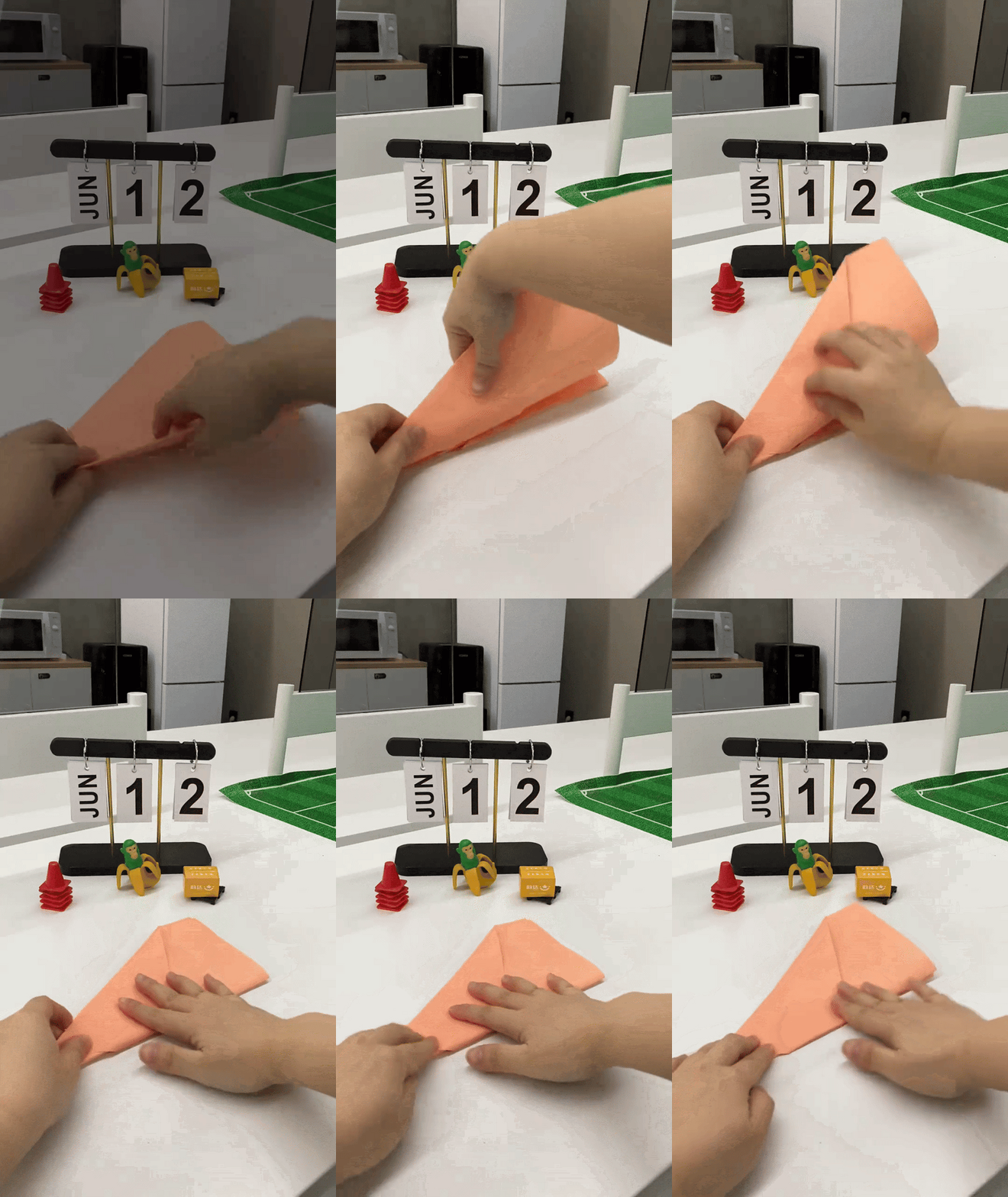
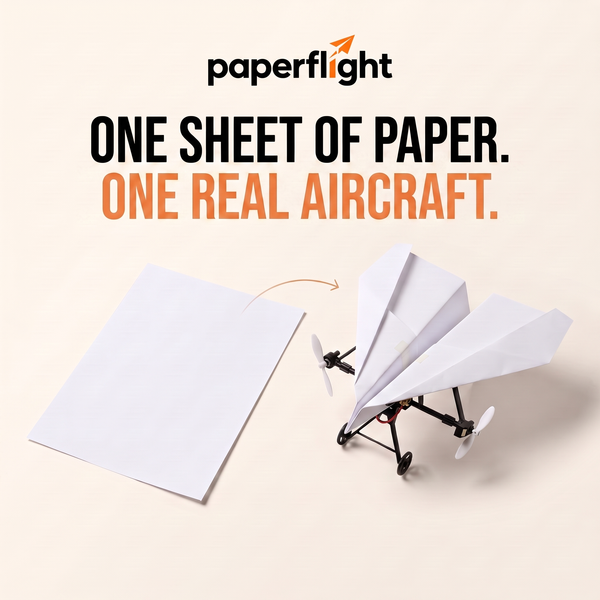
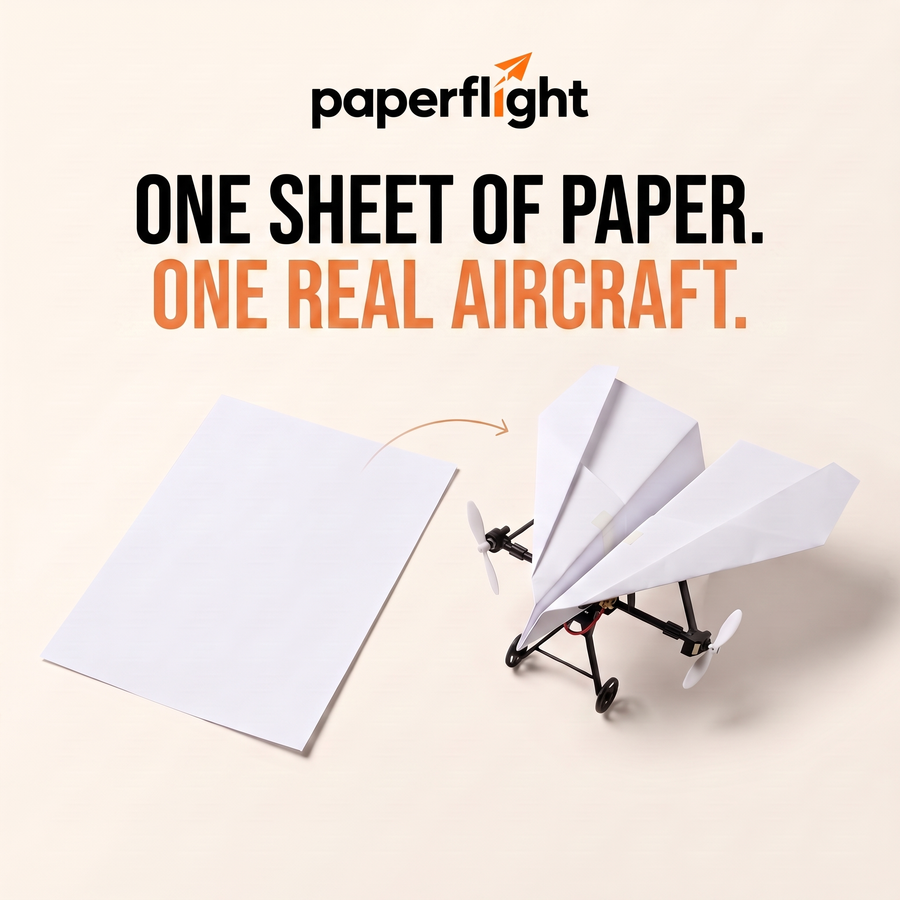
PaperFlight doesn't come with an experiment. A small motor clips under the nose of any paper airplane the kids fold, and a real two-stick remote flies it. The variable is the fold. Change the wings, fly it, compare. Change the nose, fly it again. A new trial costs one sheet of paper, and there's no last page.
A Thrown Plane Tests Two Things at Once. This One Finally Tests One.
You've probably run the classic paper airplane unit. Three designs, five throws each, measure, chart. And you've probably watched it fall apart: one kid throws like he's aiming for the next county, one throws like the plane might bite, nobody agrees where it “landed,” and the chart at the end is a list of numbers that mean nothing.
That's not your kids. A thrown plane is testing two variables — the fold and the throw — so no trial can tell you anything. You've taught them that a good experiment changes one thing. The paper airplane unit quietly breaks that rule every time.
With PaperFlight there's no throw. The motor gives the push. Put a strip of tape on the power stick so every launch gets the same throttle, and the fold is the only thing left that changes. Now a nosedive isn't bad luck. It's data, and they'll go hunting for the reason.
The Four Forces Are on Page 112. Now They're Over Your Backyard.
Lift, gravity, thrust, drag. You've read that page out loud, maybe done the voices for the arrows, and watched their eyes drift somewhere over your shoulder. Then they throw paper planes in the yard, the planes fall, and they write “it fell” on the worksheet.
Here's why that never lands: a thrown plane has no thrust. The moment it leaves a hand, the push is spent, so all the kids ever see is gravity and drag winning. They've never actually watched four forces. They've watched a sheet of paper losing.
Keep a motor pushing it and the whole page happens at once, long enough to watch. Throttle up and it climbs. Ease off and the nose drops. Turn into the wind and it slows. The questions they come back inside with are better than the ones on the worksheet — and they're theirs.
An 8-Year-Old and a 13-Year-Old. Same Table, Same Friday.
Anything simple enough for your youngest is beneath your oldest, and she lets you know. Anything interesting to your oldest is over your youngest's head, and he wanders off. Subscription boxes are built for one kid, so you split one four ways and it's over in fifteen minutes.
This works because the kit doesn't have to fit every age. The change does. Your 13-year-old changes the wing angle, logs it, and graphs the results. Your 10-year-old folds the nose twice and compares. Your 8-year-old flies whatever the big kids built and yells which one turned better. Everyone is running the same experiment at their own level.
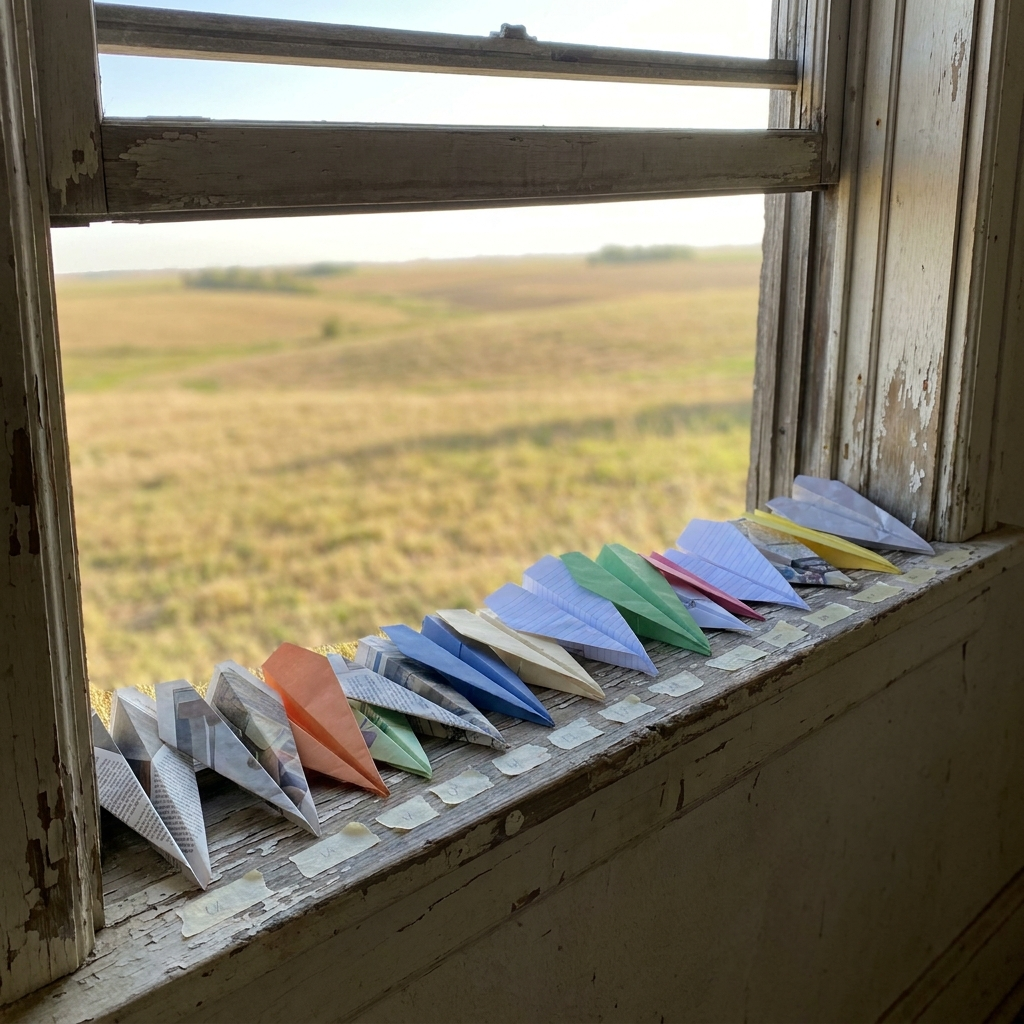
Give them a roll of masking tape. Number each plane, write what changed, line them up on the windowsill. By week four you'll have a row of planes that tells the whole story of what they figured out.
5 Kits for $109.95. Less Than Three Months of Boxes.
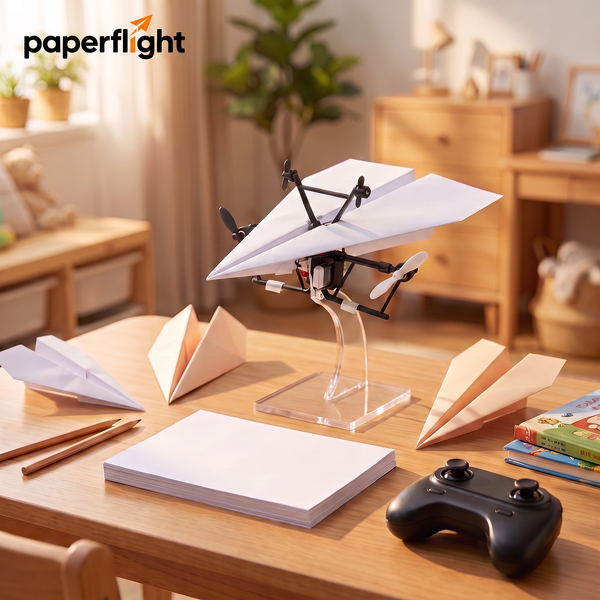
PaperFlight is $44.95 per kit during the Early Fall Sale, 43% off with free shipping, and the five-kit family pack is $109.95 so nobody waits for a remote. Each kit has the motor module, a two-stick remote, a rechargeable battery, USB charging cable, detachable landing gear with wheels, a small screwdriver, a display stand, and the manual. Two kits are $64.95 if you'd rather start smaller.
Paper isn't included. Printer paper works, and if you want every trial on the same sheet so the paper isn't a hidden variable, the 100-sheet pack is on the product page.
The box says 8+, so it fits most homeschool kids from third grade up.
The honest limits, because you've read enough box copy: it's a toy, not a lab instrument, and there's no curriculum in the box. It needs open space and won't fly in real wind. The battery is short, so it charges while they fold the next plane. And it wrecks planes constantly — which, when the plane is the variable, is exactly how it should work.
A small twin-propeller motor that clips under the nose of any paper airplane your kids fold — flown with a real two-stick remote. Same push every flight, so the fold is the variable. Crash it, change one thing, fly again.
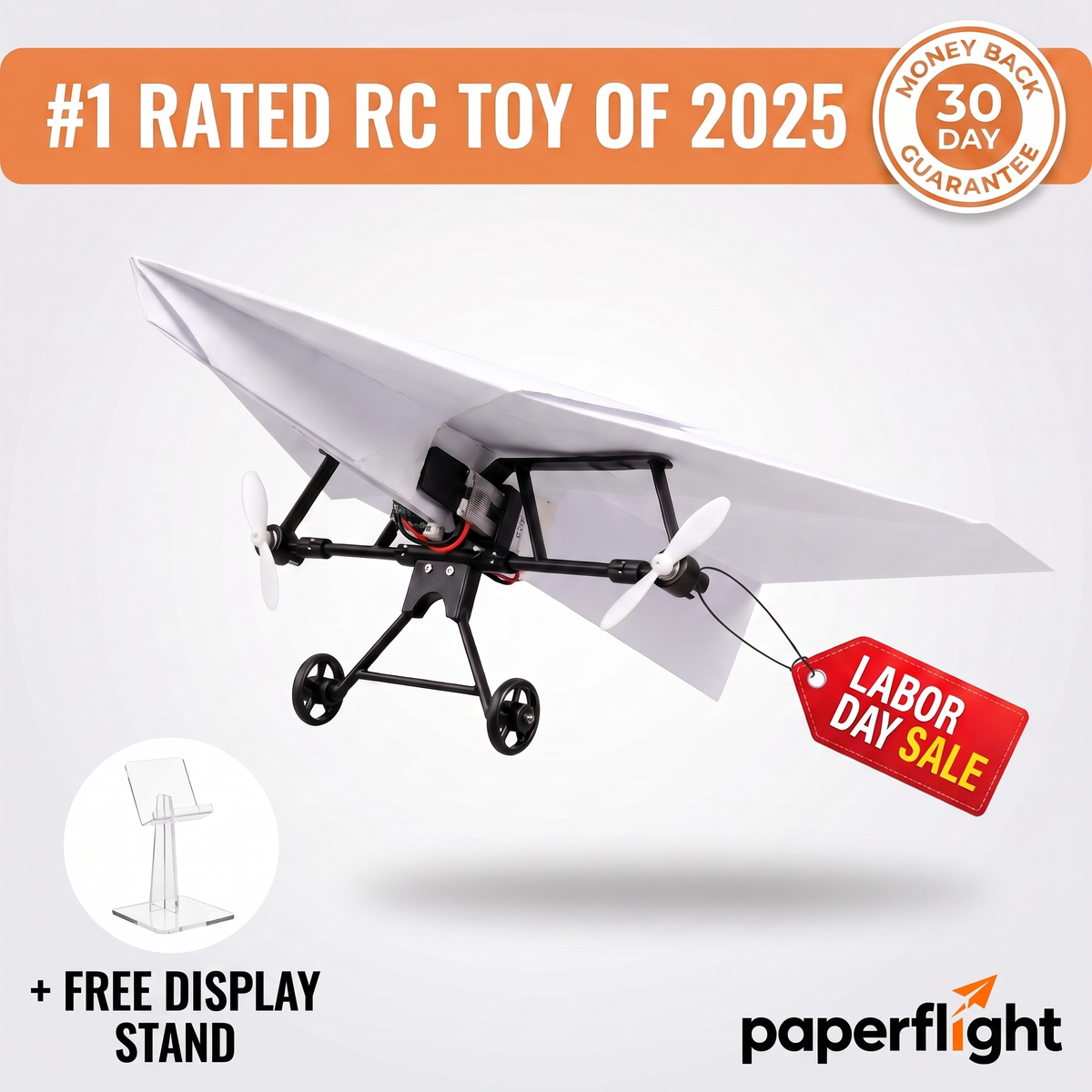
Why 43% off in September? Every kit that ships now is one we're not racing to deliver in the December crush. Early shoppers get the price. When the holiday rush starts, it goes back up — that's the whole story.
$44.95 per kit during the Early Fall Sale, or five for $109.95 — free shipping and 30 days to change your mind. Same push every flight, one change at a time, and a new trial for the cost of a sheet of paper. Clear a spot on the windowsill.
Get PaperFlight — 43% Off →