
You've Got the Field. You've Been Missing the Plane.
Five reasons the men with the most open ground in the country — and the fewest things worth putting in the air over it — are buying a paper airplane with a motor on it. And why "needs an open field" is the best thing on the box.
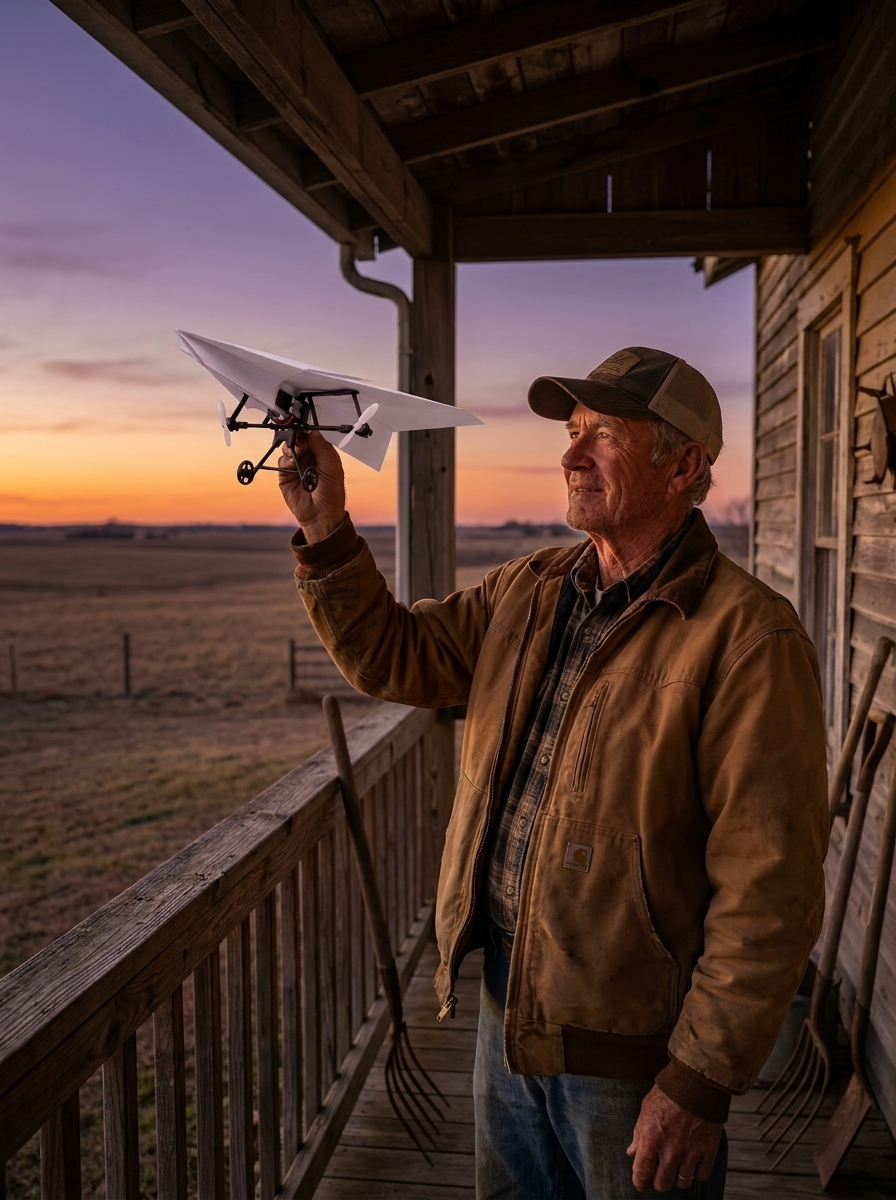
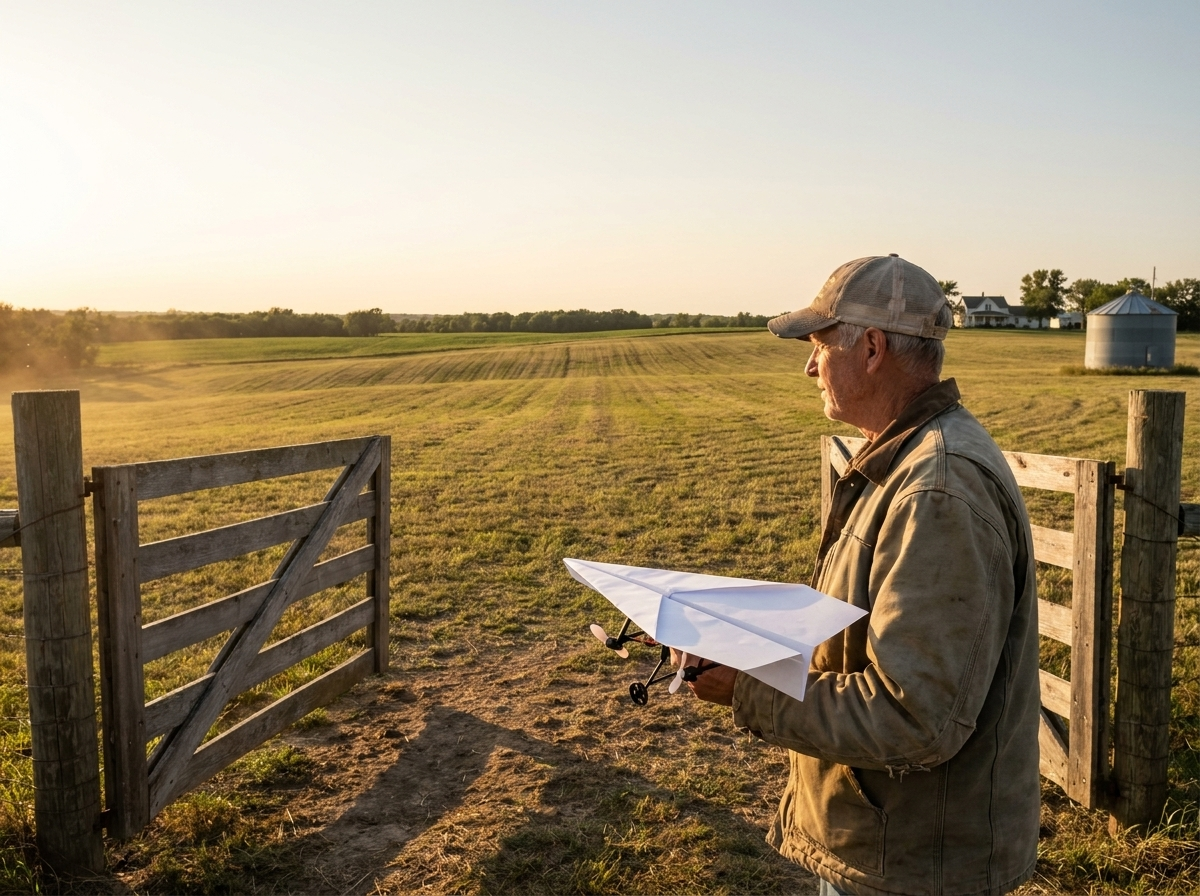
You've Got Forty Acres. Nothing Out There Flies.
Every toy that's ever come through the front door was built for a subdivision. A helicopter that hit the ceiling in four seconds. A drone that needed an app and a signal you don't have past the barn, and a $400 apology the first time it found a cottonwood. The foam plane from the farm store that flew twice and has lived on the shed shelf since, because the second landing cost eighty dollars.
So you've got more open ground than anybody you know and nothing to put in the air over it. Here's the honest version: you never quit wanting one. Nothing was ever worth the space.
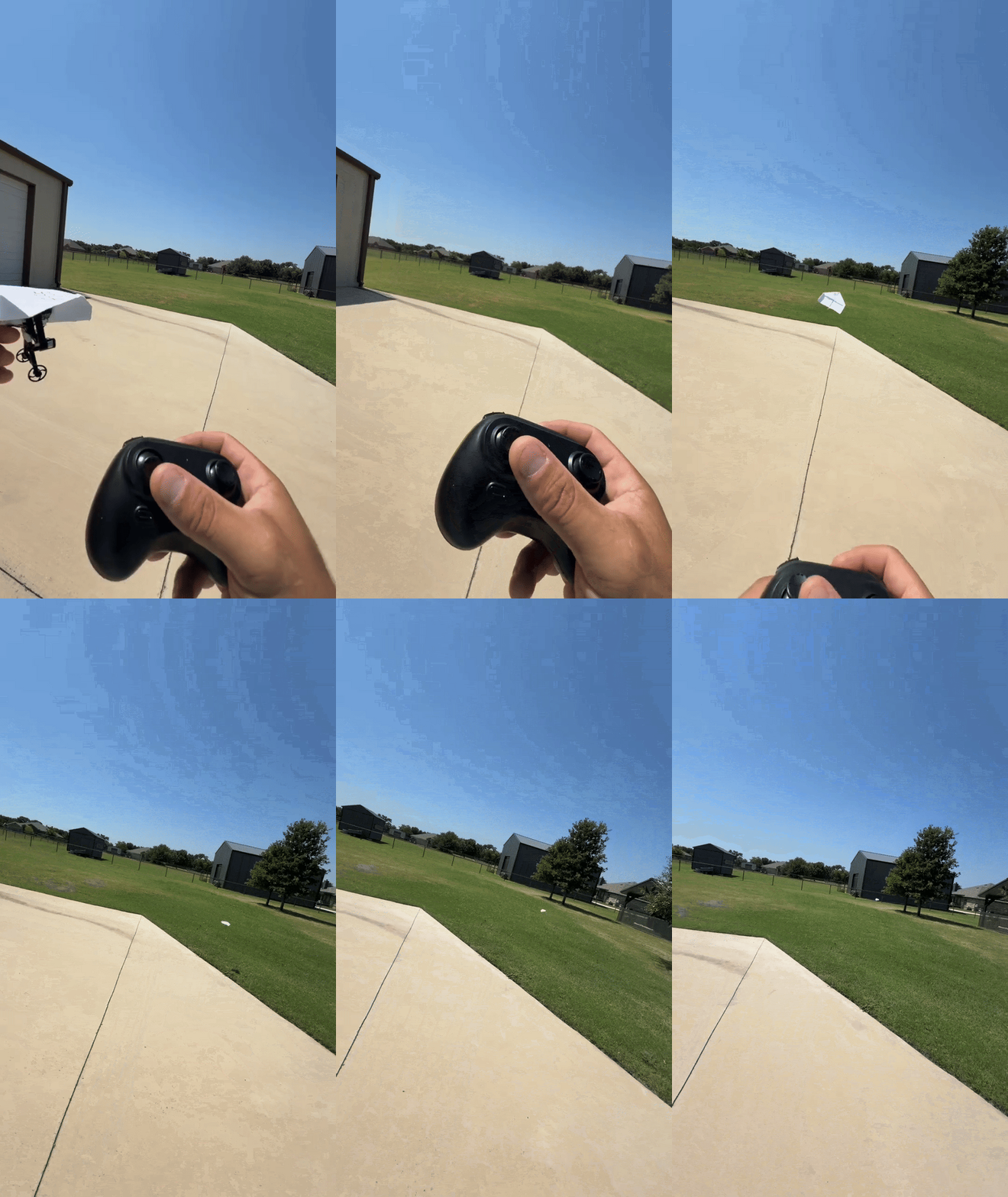
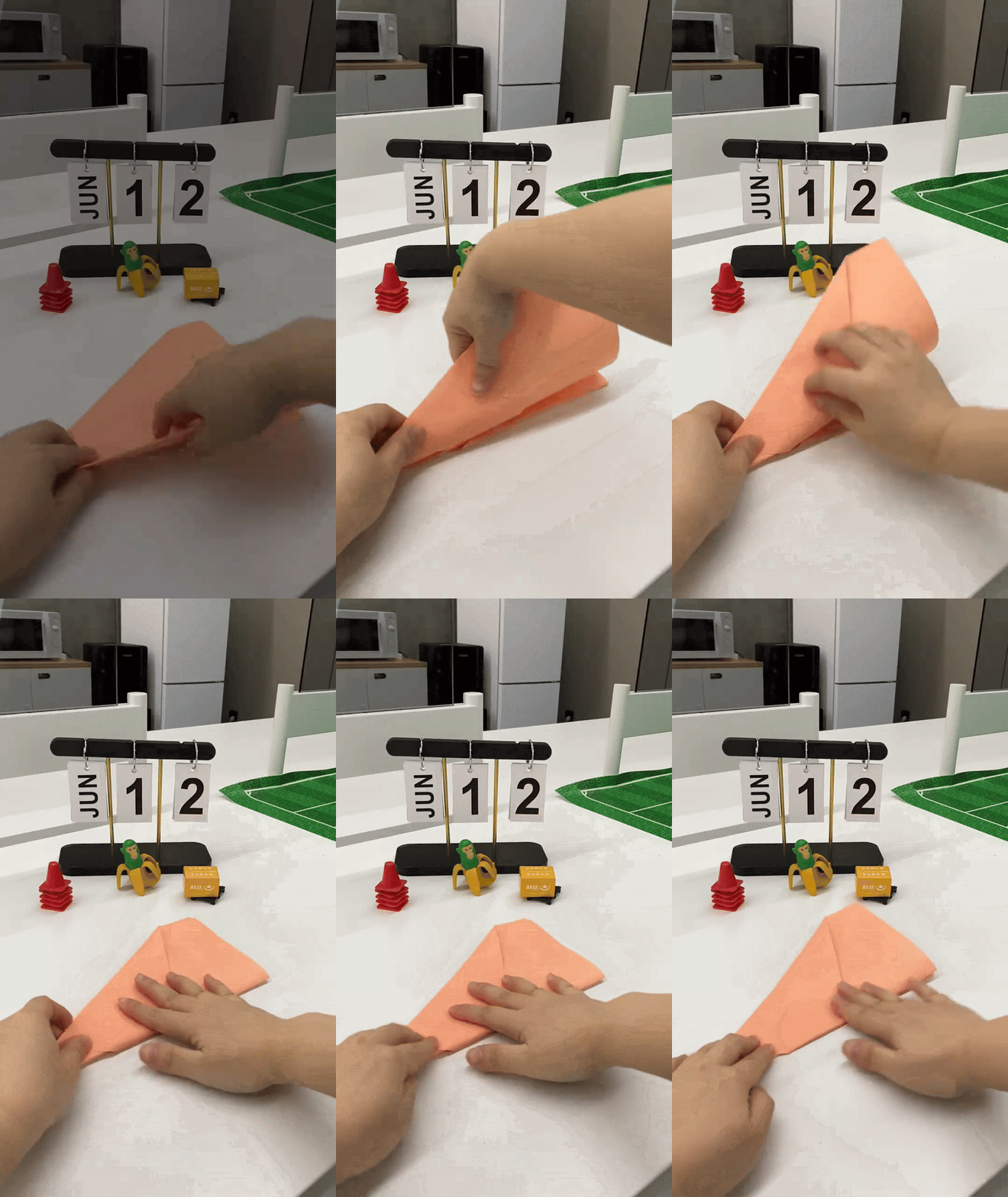
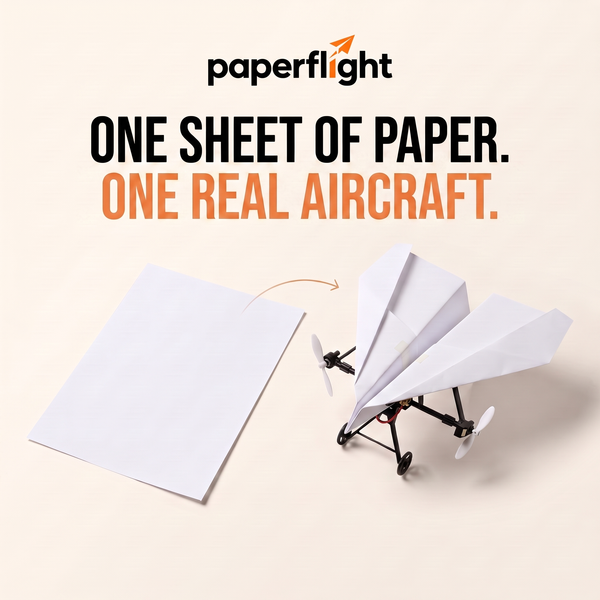
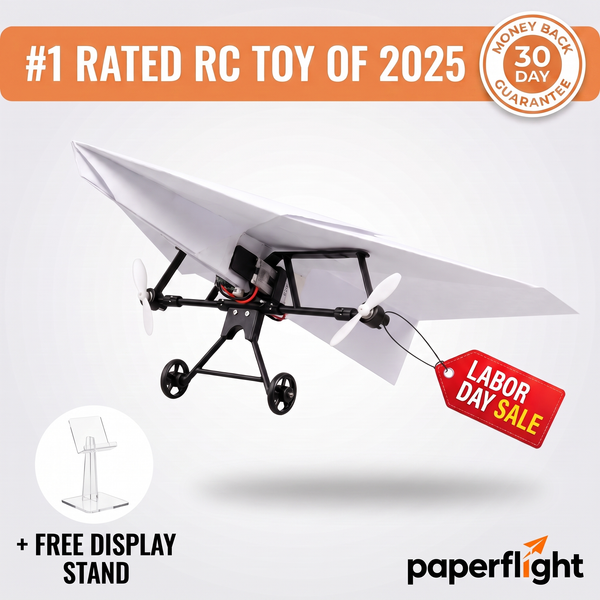
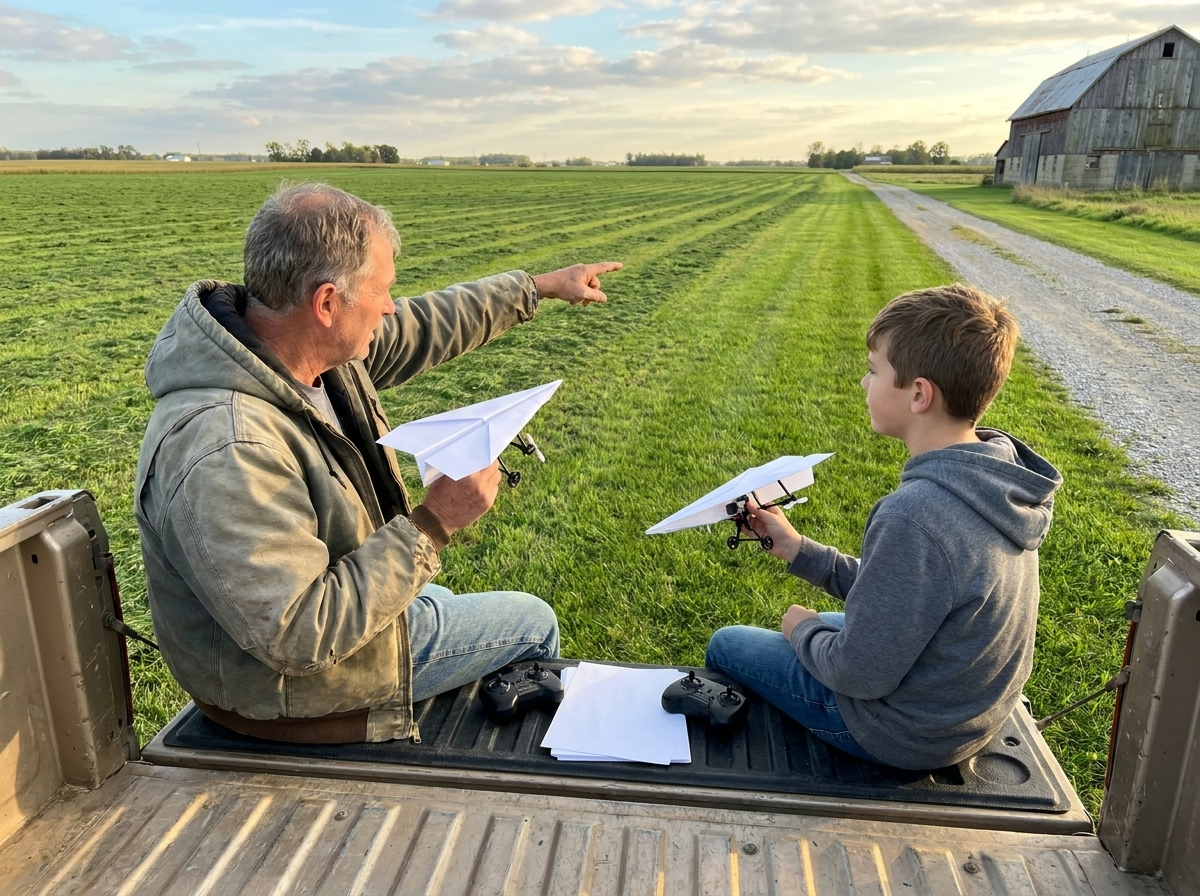
PaperFlight is. The airframe is a sheet of printer paper you fold in a minute. The motor, the gyro and the remote are the part you keep. Put it in the fence line, crumple it, fold another, go again. "Needs an open field" is the warning on the box for everybody else. For you it's the view off the back porch.
Two Props Up Front. No Rudder. It Steers Like a Skid Steer.
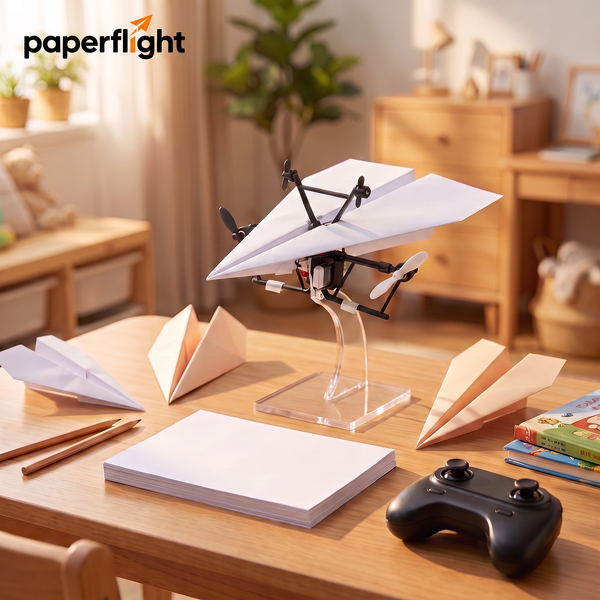
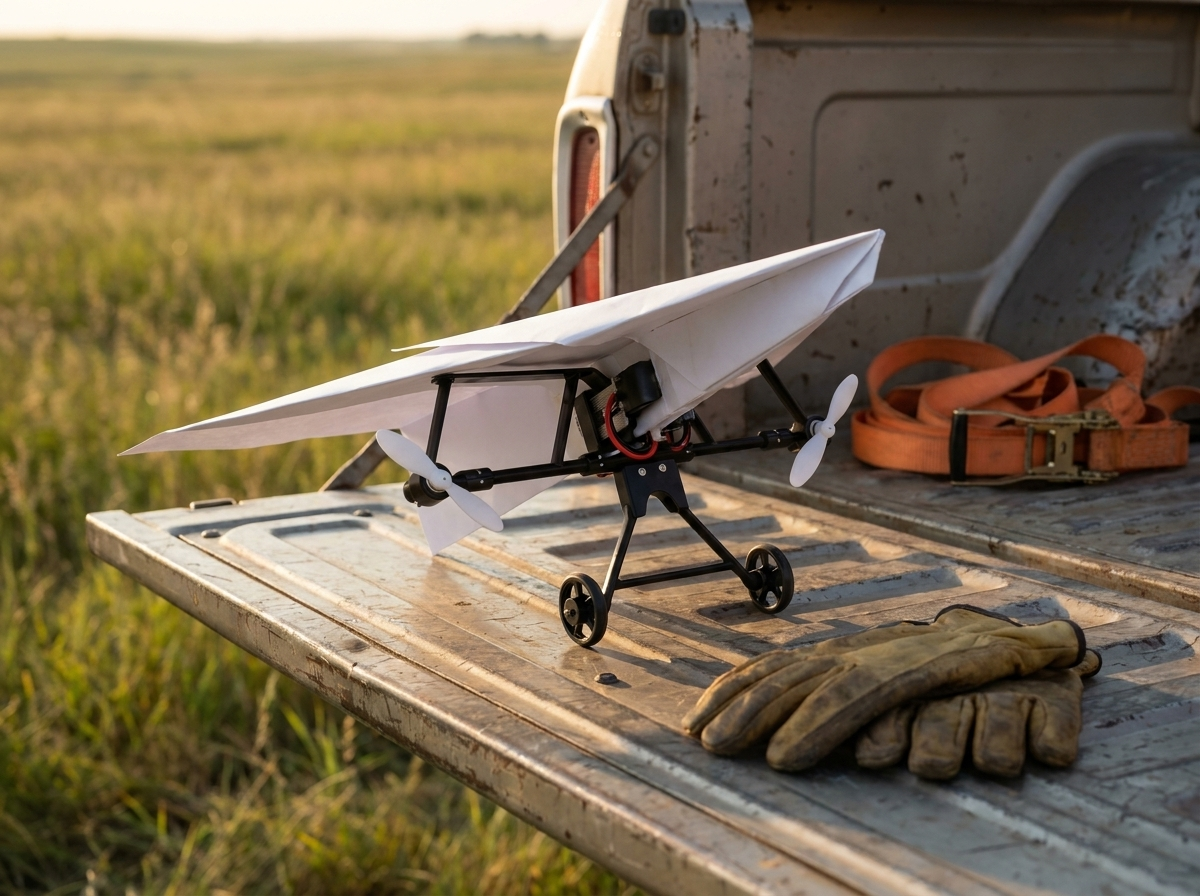
First question from every man who's run equipment: where's the rudder? There isn't one. Two small props sit on a crossbar under the nose, both facing forward. To turn, the module spins one faster than the other. Push the stick right, the left prop spins up, and the plane comes around to the right. If you've ever put a skid steer through a gate — brake one side and the machine pivots — you already understand it.
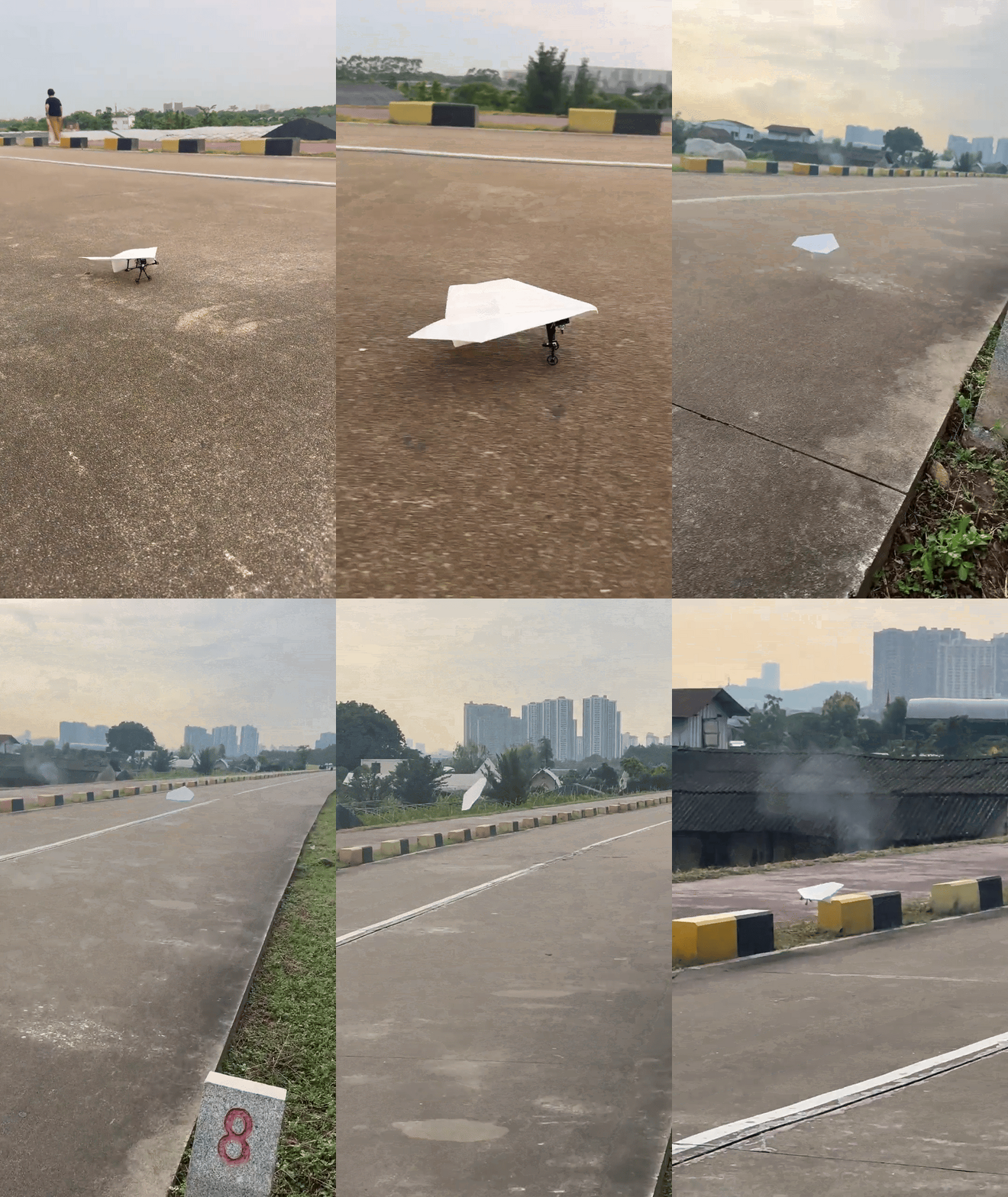
An onboard gyro reads the wings and holds them level between your inputs, so it flies a straight line across the pasture instead of the corkscrew a hand-thrown paper plane wants to do. No servo, no hinge, no control surface to glue and re-glue. Push the throttle and it climbs. Ease off and it glides down like the paper plane it still is.
Under the nose it's a rechargeable battery that charges off any USB port — the truck, the shop, the kitchen counter — and a real radio link to the remote in your hands. Not Bluetooth. Not a phone. Charge it while you fold the next one.
Two Sticks. No Phone. No Bars Needed.
The famous $90 paper plane is flown from a phone. Tilt the phone to steer, drag a thumb across the glass for throttle, pair it over Bluetooth before you do any of that, and keep the app updated. If you've got one bar in the house and none past the barn, you already know how that afternoon goes.
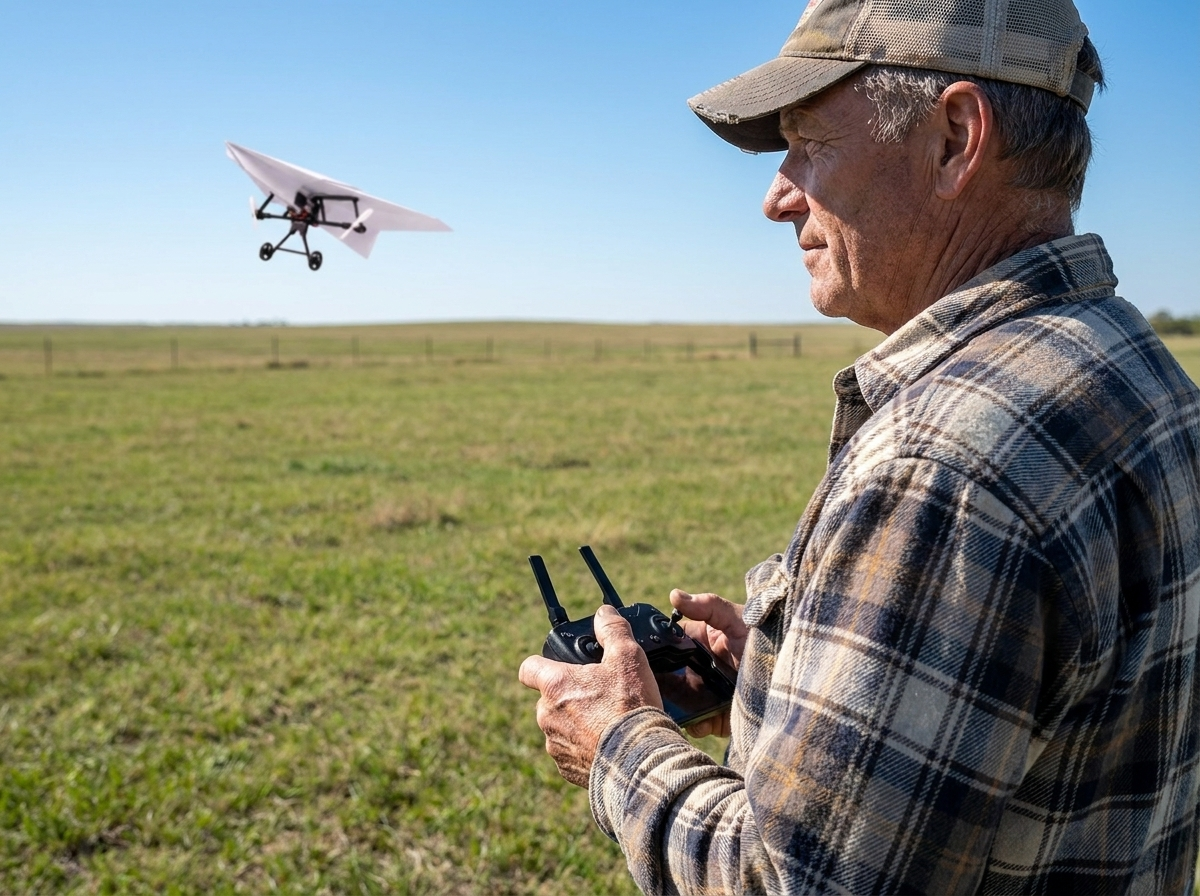
PaperFlight ships with a real two-stick controller in the box. Left stick is throttle. Right stick is steering. The remote talks straight to the plane. No phone, no app, no account, no signal — nothing to lose out in the back field. Turn it on, walk out, fly.
If a grandkid drives out Sunday and wants a turn, hand it over. If he tells you you're doing it wrong, take it back. Nobody's teaching you an app on your own land.
It Goes in the Creek. It Goes in the Fence Line. It Costs a Sheet of Paper.
Here's what changes when the crash costs nothing. You quit flying careful. You try the loop. You bring it in lower over the fence than you should and find out. You send it clear across the pasture because the field is right there and nobody's waiting for a turn. When the airframe is a sheet of paper, you get to be the pilot you were too careful to be at fourteen.
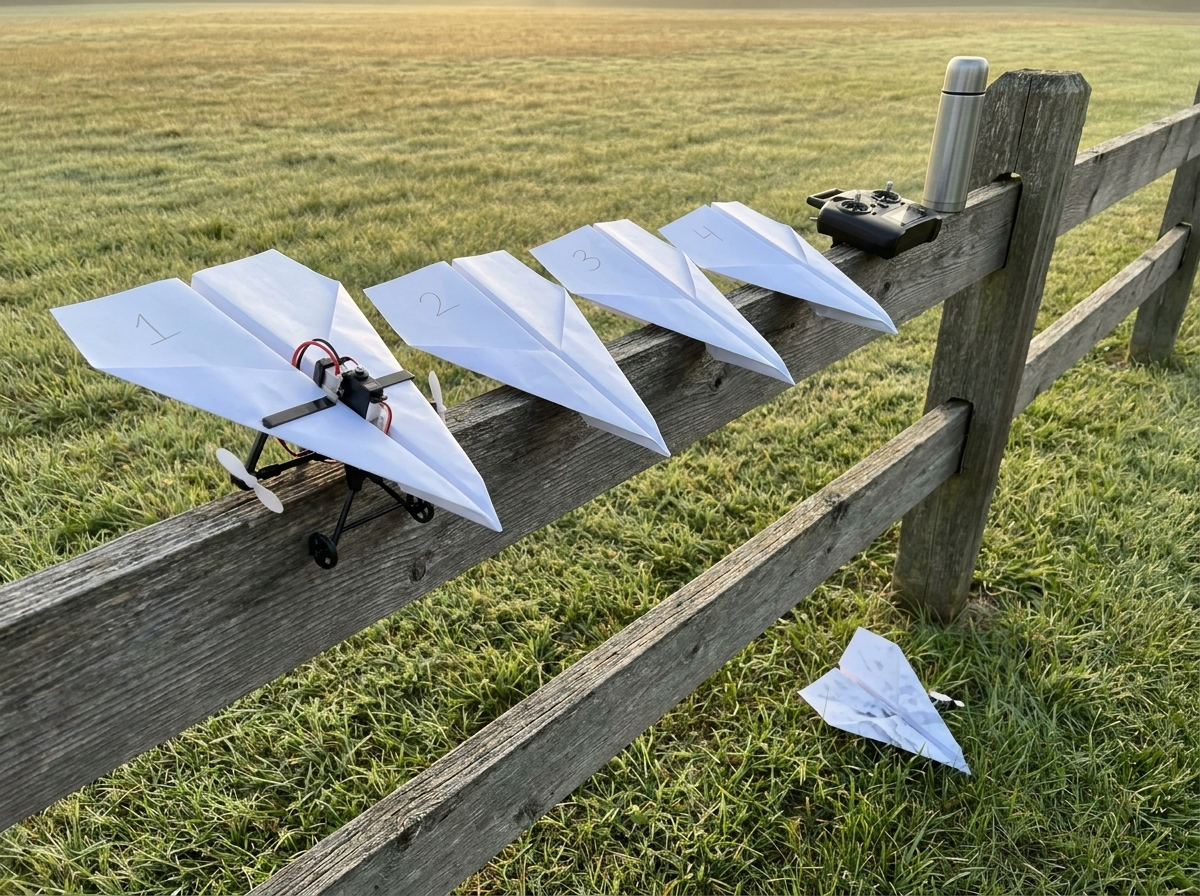
Most of the men who fly these every evening end up with a row of planes on the fence rail with numbers penciled on the wings. Wide wings for the slow floater. Long nose for the one that cuts through a breeze. One in yellow from the printer drawer so you can find it in the tall grass.
A ream of paper is 500 airframes. You'll run out of light before you run out of planes. And once you're flying every calm evening you'll learn what the regulars know: heavier paper glides longer and takes more hits. You'll see why that matters on the product page.
$31.95. One for You. One for Whoever Drives Out Sunday.
The box says Ages 8+. It doesn't say 8 only. Nearly half the orders on this site are for two kits or more, and the men out in the county ordering two aren't confused about who the second one is for. It's for the grandson who comes out on weekends, the neighbor across the road, the son-in-law who says it's a kid's toy right up until he's holding the sticks.
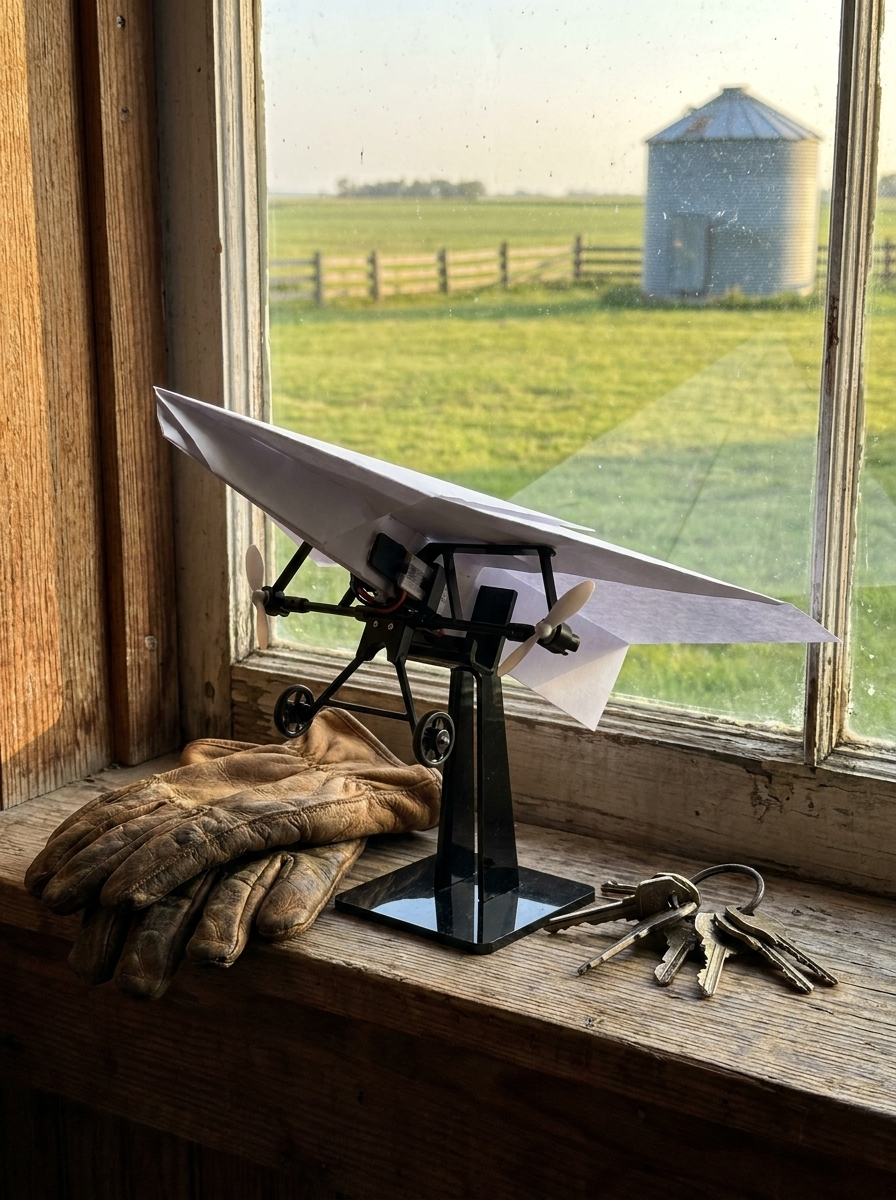
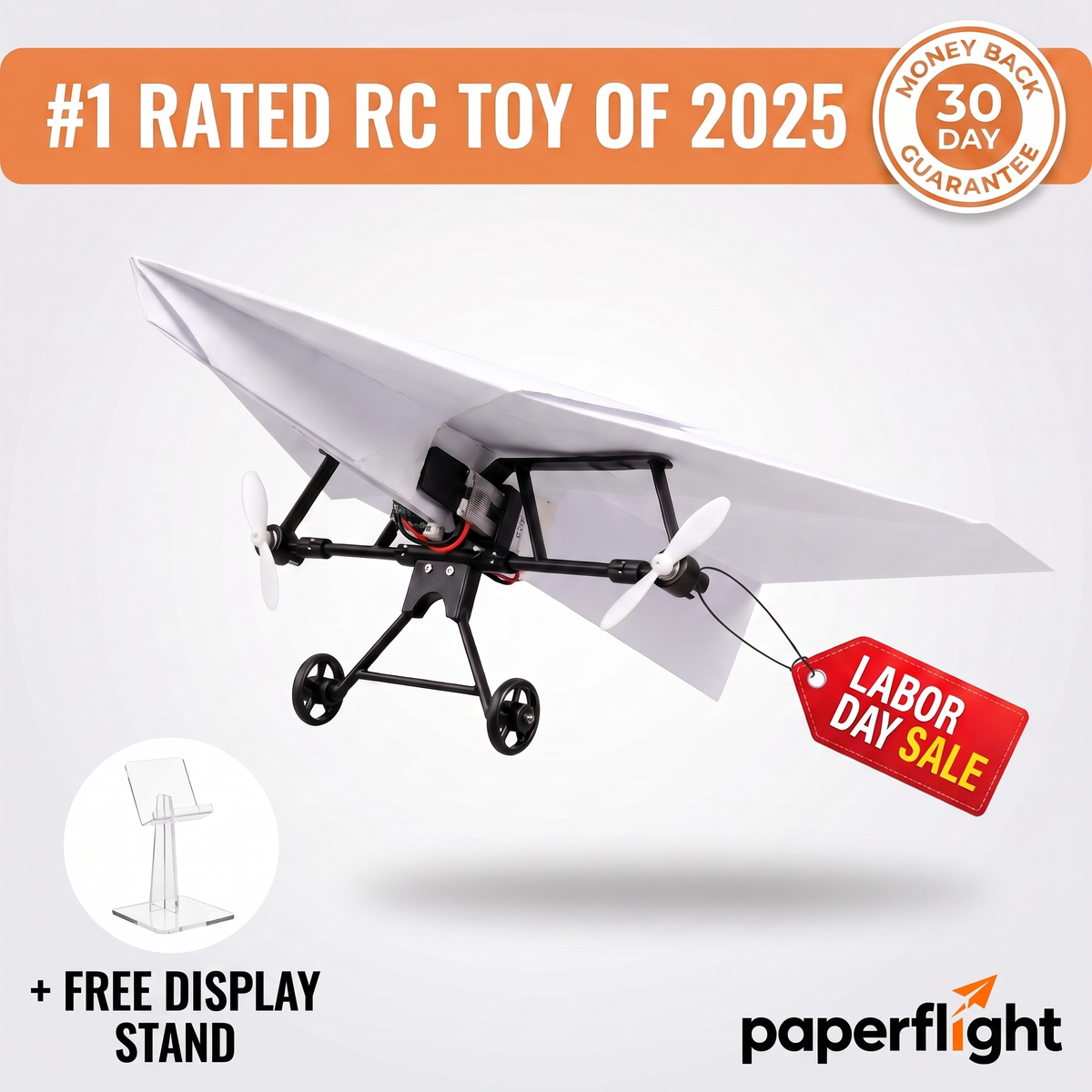
$31.95 during the Early Fall Sale, half off with free shipping. In the box: the twin-prop power module with the gyro, the two-stick remote, a rechargeable battery, USB charging cable, detachable landing gear with wheels, a small screwdriver, a display stand and the manual. Everything that flies is in there. You bring the paper and the field.
Get two. One for you, one for whoever drives out, and nobody's waiting on a remote. Two kits are $54.95 — still less than one app-controlled plane. Free shipping to the end of the county road, same as anywhere.
A twin-propeller power module with a gyro stabilizer that clips onto any paper plane you fold — flown with a real two-stick remote. Crash it, fold another, fly again. No app. No phone. No signal. Made for open ground.
Why 50% off in September? Every kit that ships now is one we're not racing to deliver in the December crush. Early shoppers get the price. When the holiday rush starts, it goes back up — that's the whole story.
$31.95 during the Early Fall Sale — half off, free shipping, and 30 days to change your mind. Real sticks in your hands, a motor built to survive you, and an airframe that costs nothing every single time. The biggest runway in the county was always yours.
Get PaperFlight — 50% Off →