
You Sold the House With the Workshop. Here's the Hobby That Fits in the Glovebox.
Five reasons the full-timers, snowbirds and weekend campers who left a garage full of projects behind are flying a paper airplane with a motor on it — at every site from Yuma to Fairbanks.

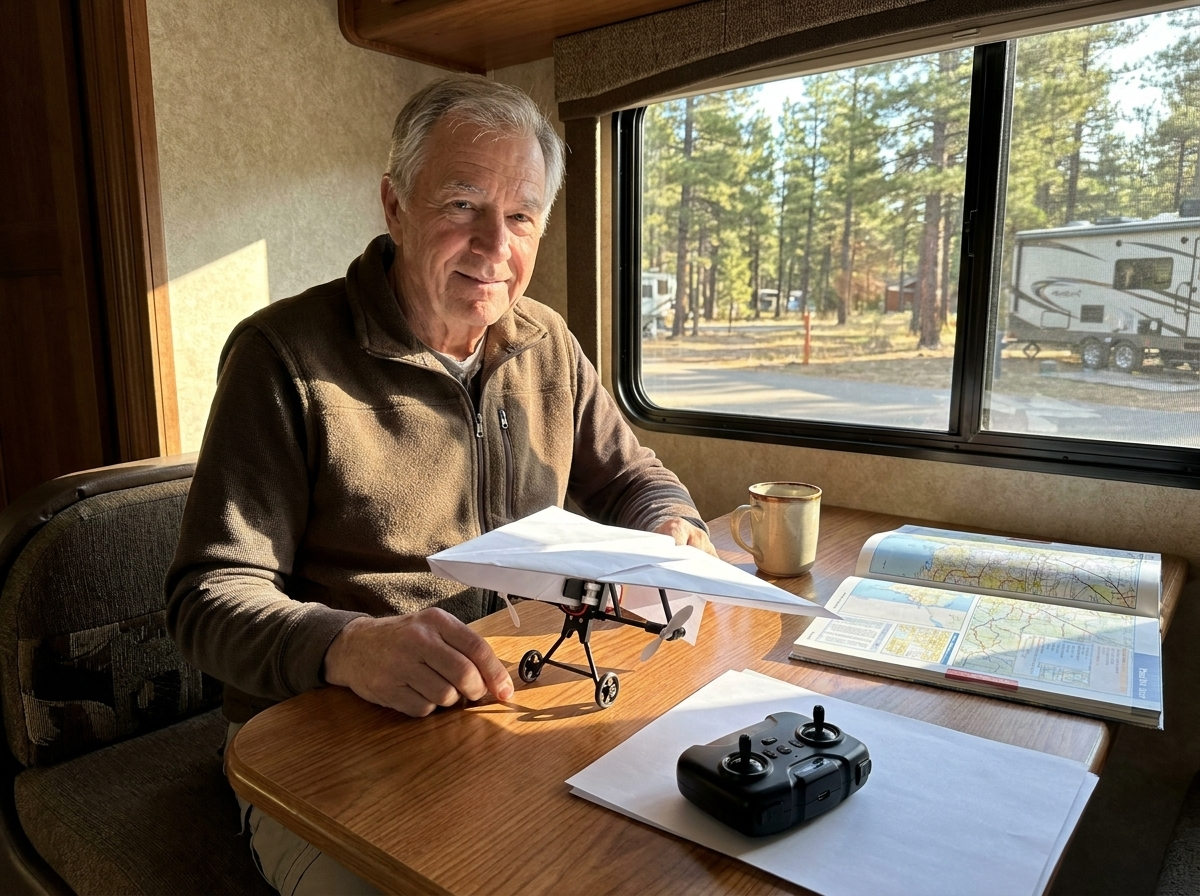
You Didn't Give Up the Hobby. You Gave Up the Garage.
Here's what nobody tells you before you sell the house and go full-time: the rig has room for the things you need and almost nothing you want. The workbench didn't make the cut. Neither did the model kits, the glue, the drawer of spare parts, or the one plane you built over a winter and crashed in a spring. Somewhere in the downsizing, "I'll get back to it" turned into a storage unit you pay for and never open.
Most of us didn't stop because we lost interest. We stopped because everything worth doing needed a garage, and the garage is now 1,400 miles behind you. That's not quitting. That's a floor plan.
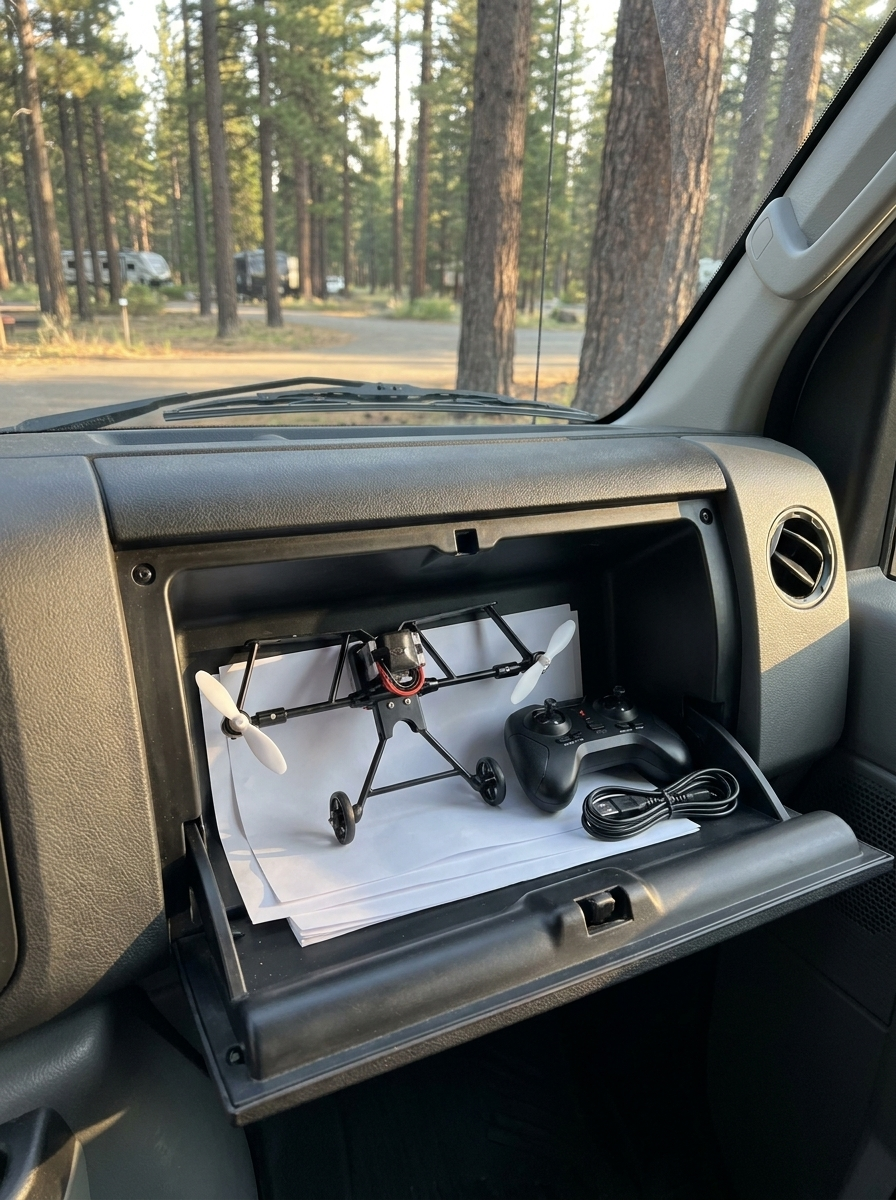
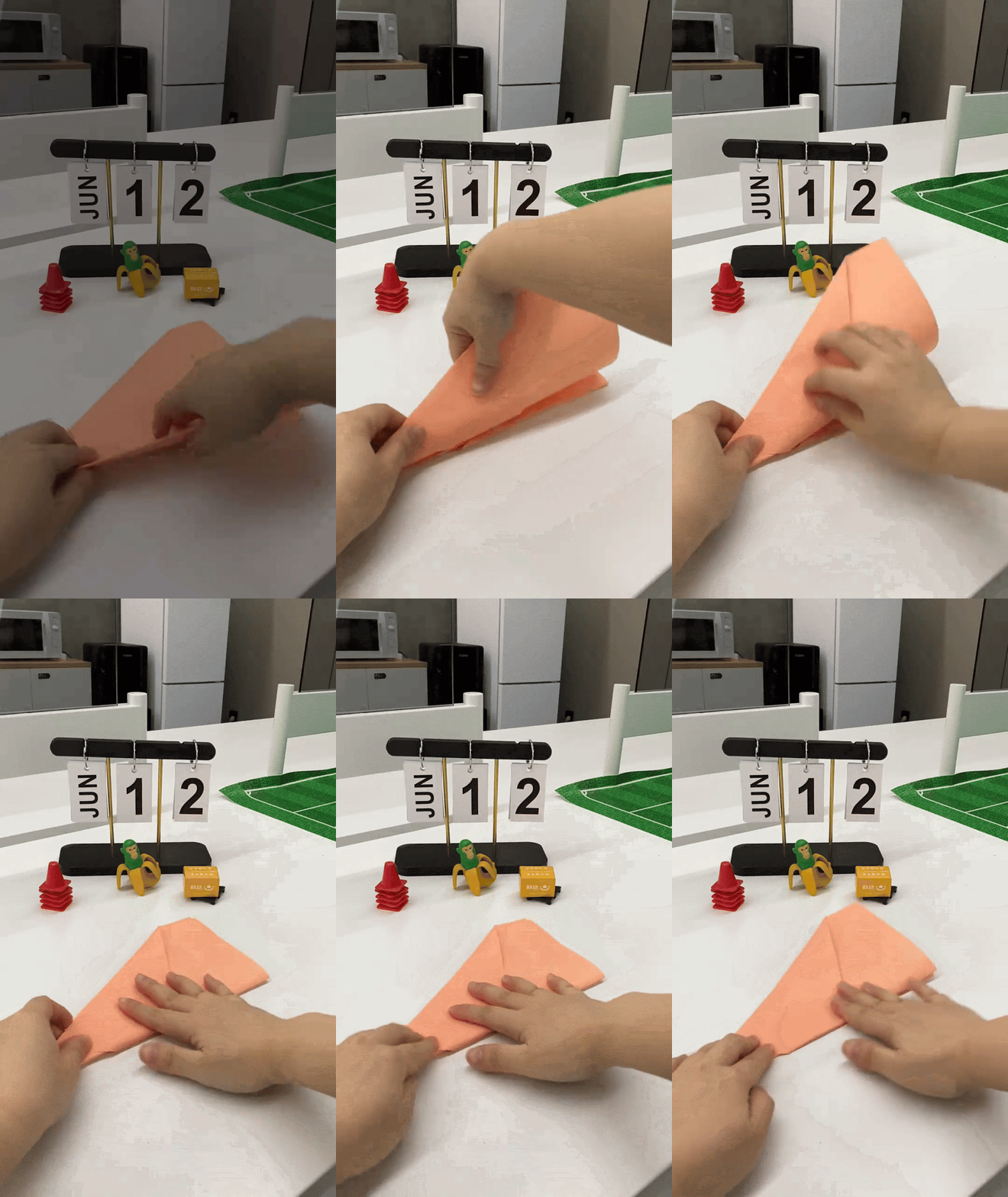
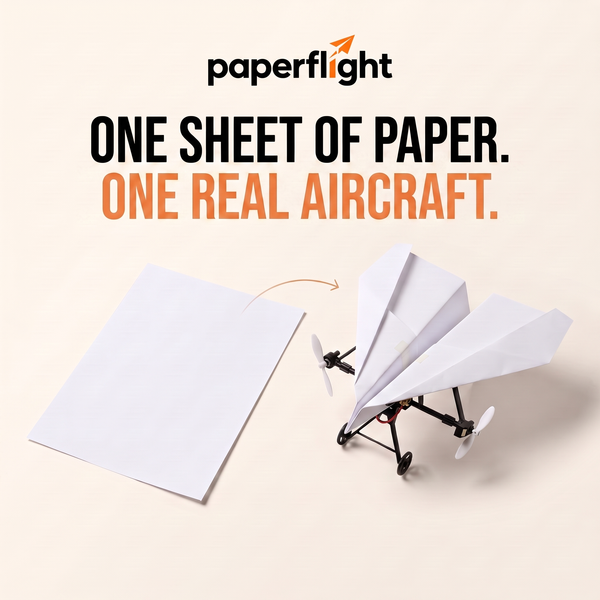
PaperFlight is the version of the hobby that fits the floor plan. The airframe is a sheet of printer paper you fold at the picnic table. The motor, the gyro and the two-stick remote are the part you keep, and the whole kit stows in the glovebox with room left for the registration. Nothing to glue. Nothing to store. Nothing to leave behind at the next site.
Fits in the Glovebox. Two Props Up Front, No Rudder, Nothing to Glue.
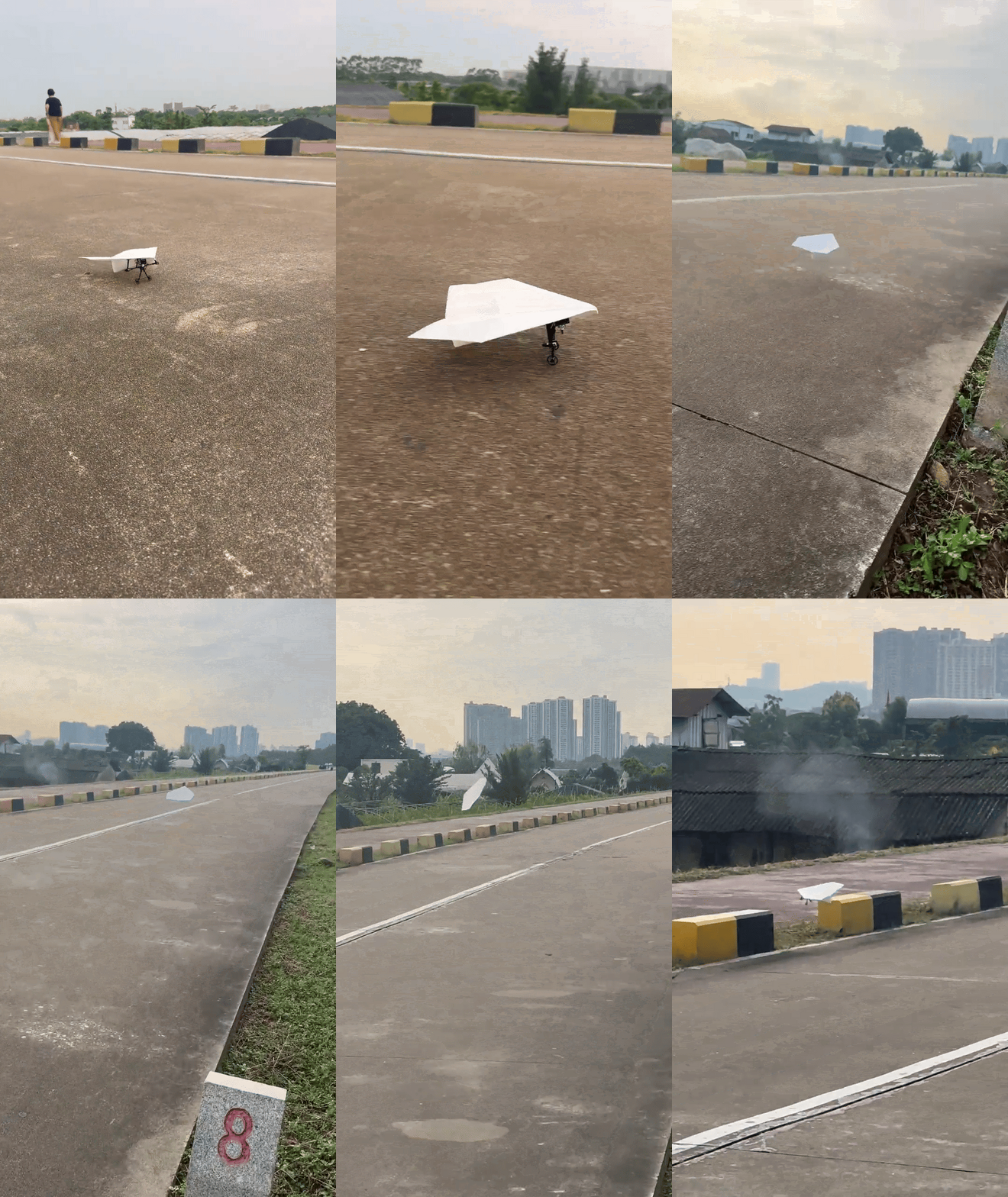
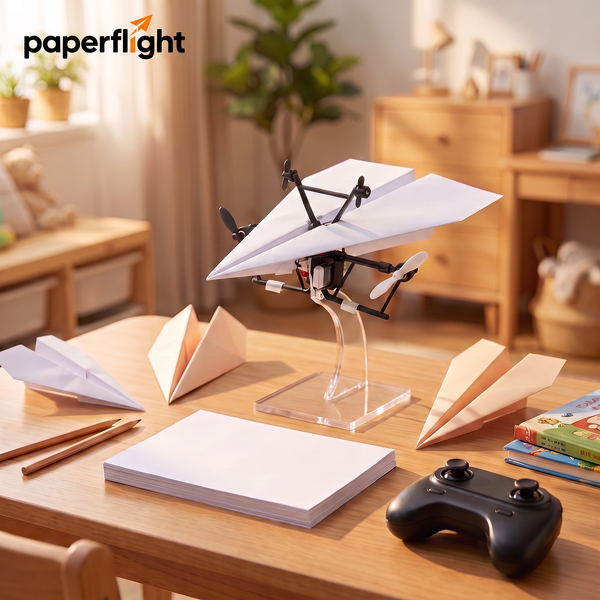
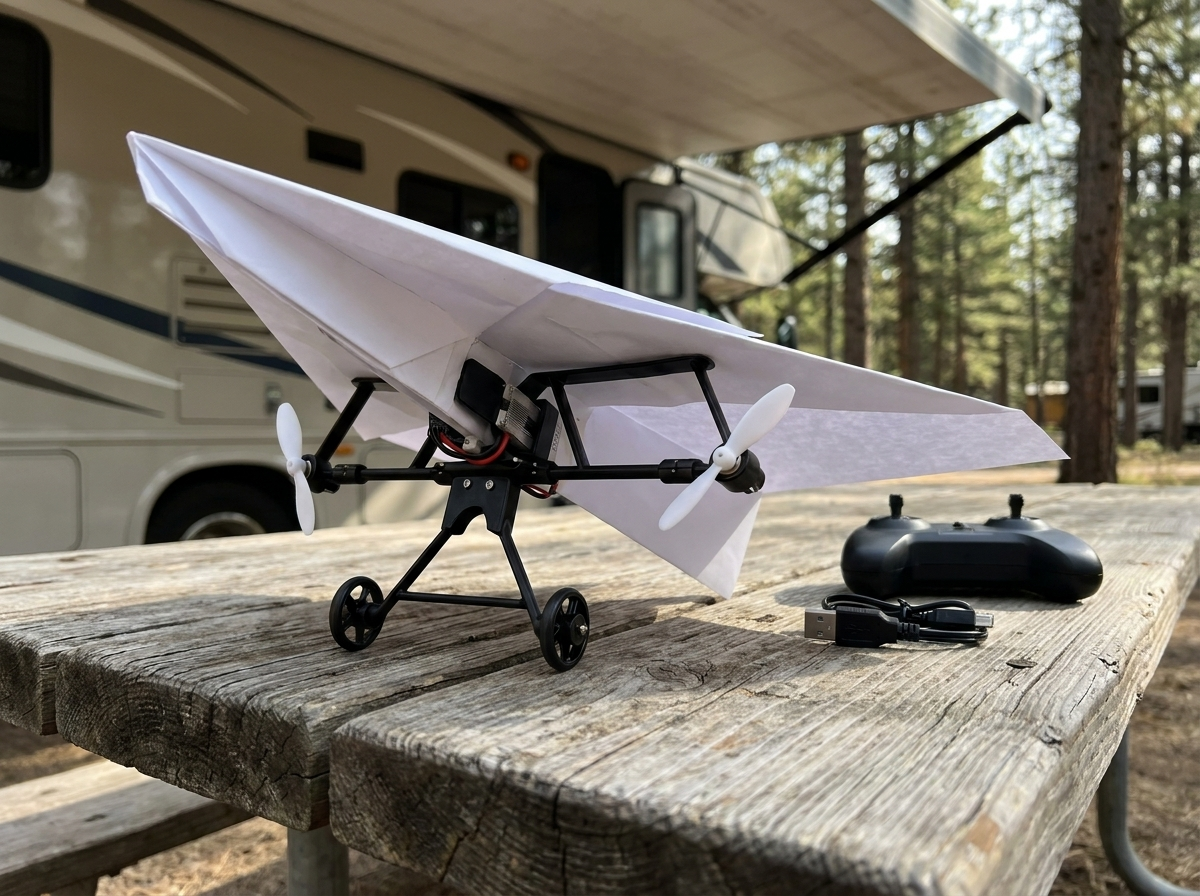
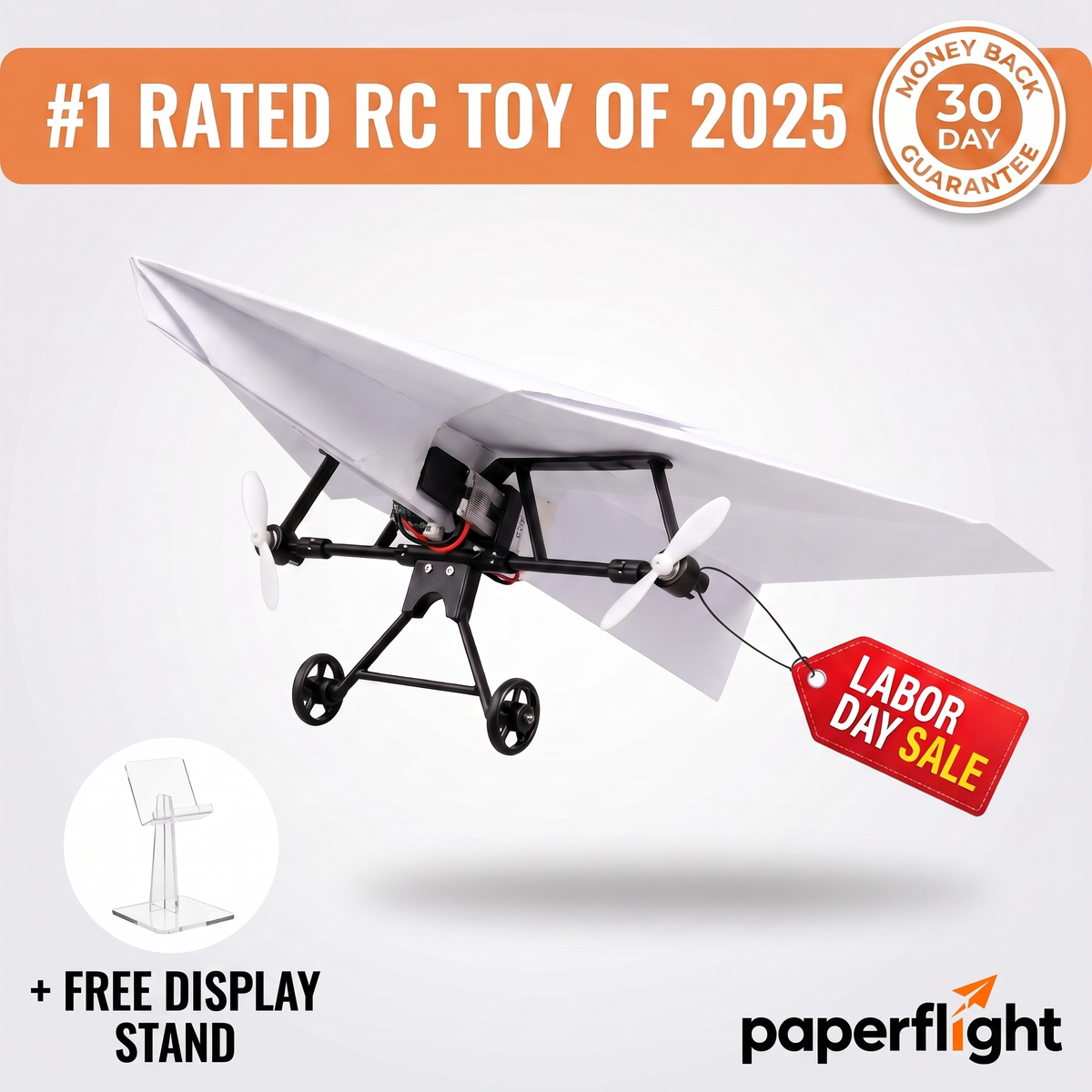
Look at the module and you'll notice what isn't there. No rudder. No elevator. No hinge, no pushrod, no servo to strip on a picnic table. Just a crossbar under the nose with a small propeller at each end, a pod in the middle, and two wheels that pop off when you'd rather hand-launch.
It turns the way a twin-engine pilot turns with one throttle pulled back: push the stick and one prop spins faster than the other, and the plane banks. Differential thrust. An onboard gyro reads the wings and holds them level between your inputs, so a folded sheet of paper flies straight instead of corkscrewing the way it did off the porch when you were nine.
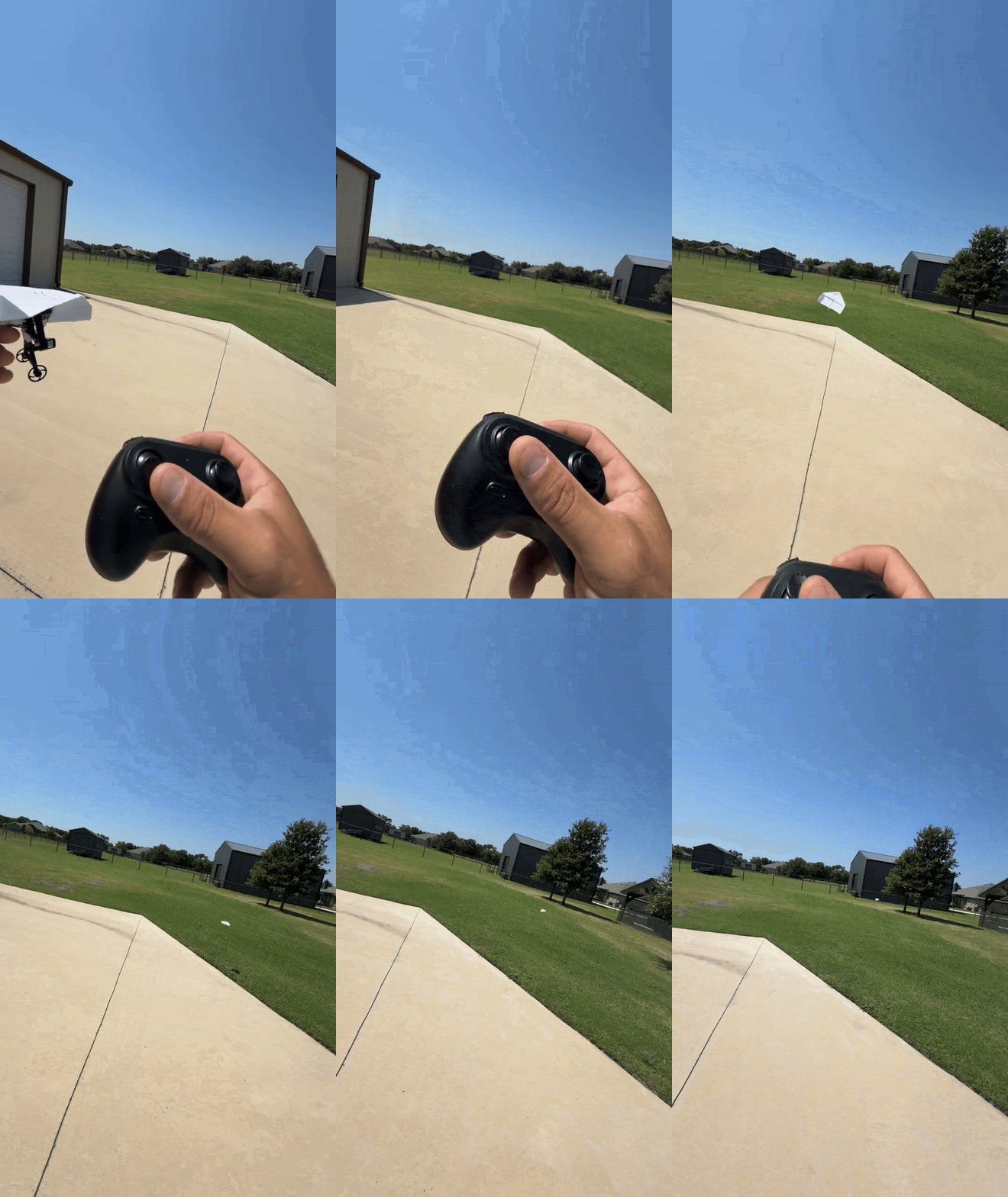
The battery charges off any USB port — the dash, the inverter, the little bank you keep for the phone — and it charges while you fold the next plane. Wheels for a driveway takeoff off the campsite pad, or pull the gear and throw it. The whole thing weighs less than the coffee mug next to it.
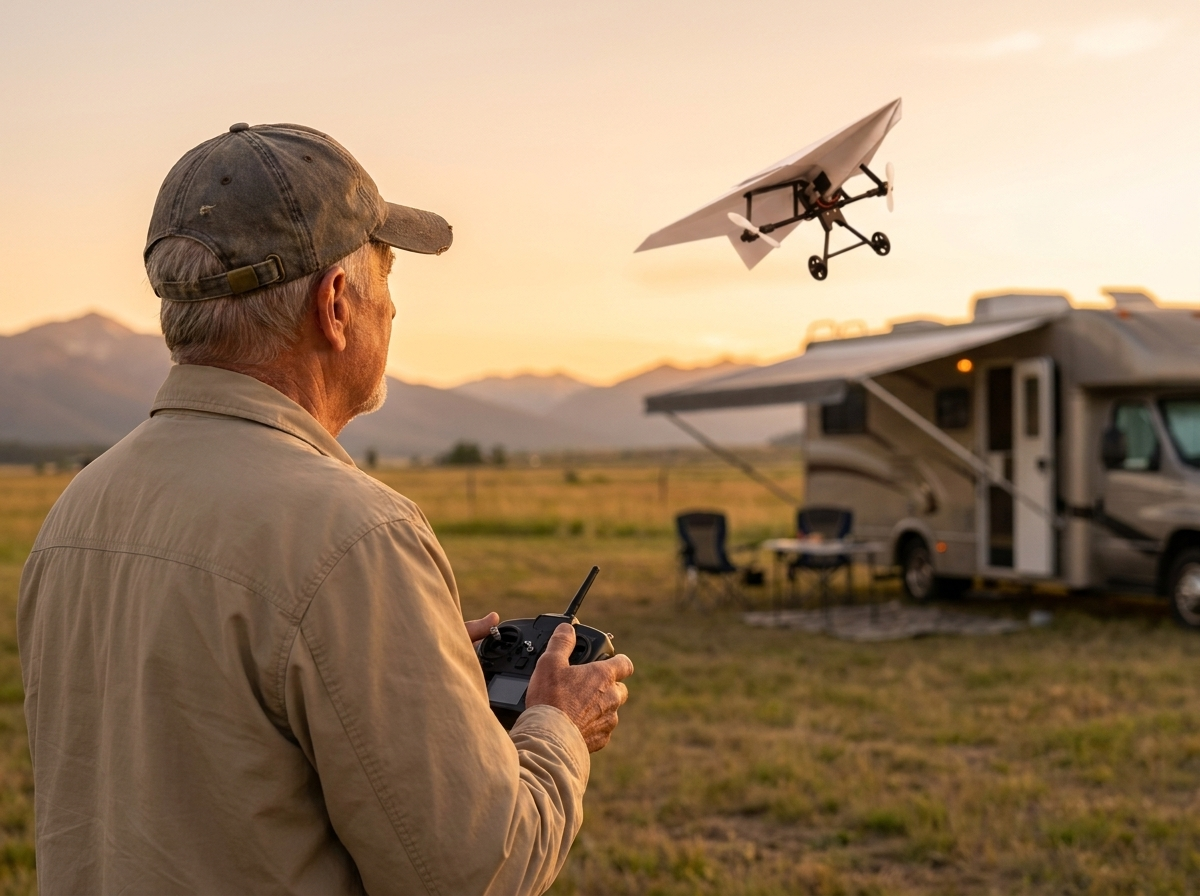
Two Sticks. No Phone. Works Where the Signal Doesn't.
The famous $90 paper plane is flown from a phone. You pair it over Bluetooth, tilt the glass to steer, drag a thumb for throttle, and pray the app doesn't want an update the morning you finally have a calm field. You already know how the signal is at the good campgrounds. That's why you picked them.
PaperFlight ships with a real two-stick controller in the box. Left stick is throttle. Right stick is steering. No app, no account, no pairing, no bars required. It talks to the plane on its own radio link, the same way every transmitter you've ever held did. Turn it on and fly. It works at the boondocking spot with zero service exactly as well as it works in the Walmart lot.
If a grandkid wants a turn, hand it over. If they tell you you're doing it wrong, take it back. Nobody is teaching you an app at a picnic table.
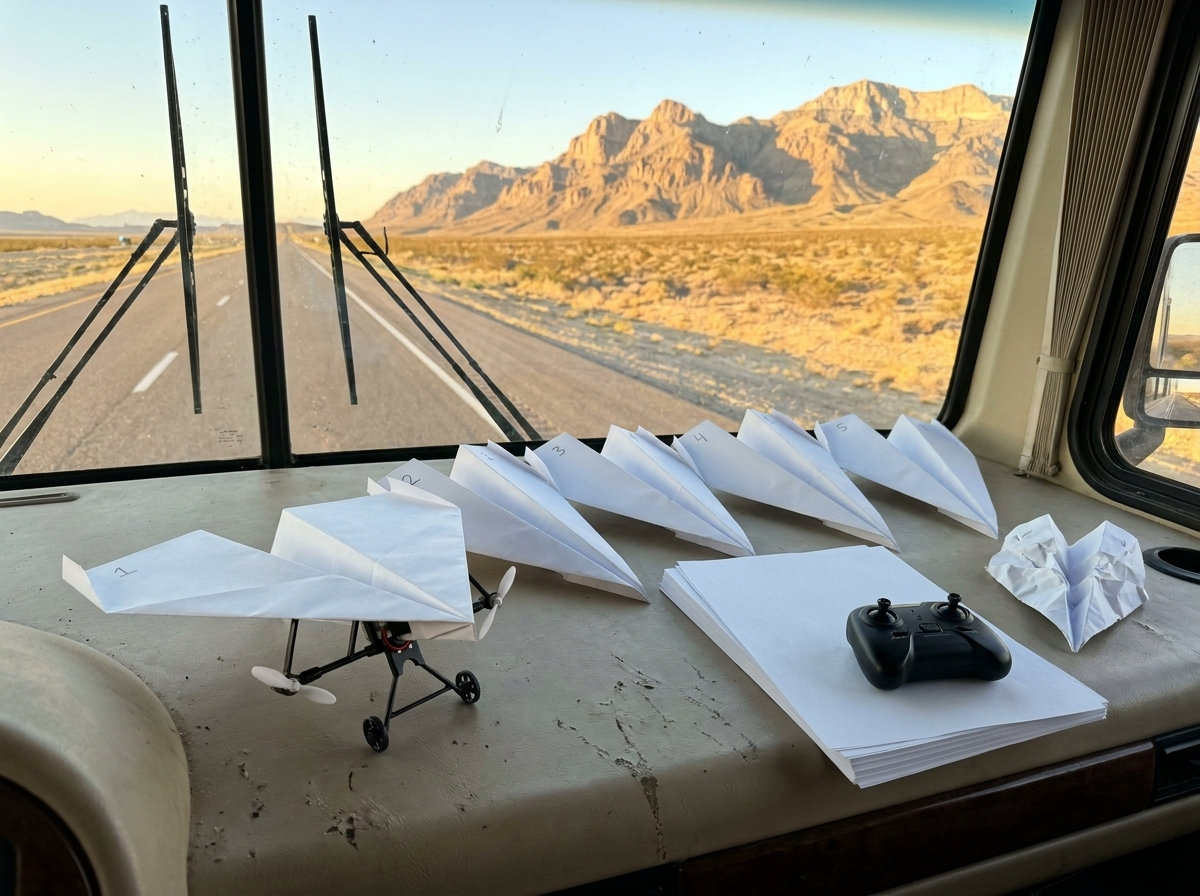
A Ream of Paper Is 500 Planes Across 12 States.
Here's what changes when the crash costs a sheet of paper: you stop flying carefully. You try the loop. You bring it in low over the fire ring. You fly it into the pines at the state park in Utah and it doesn't matter, because the next airframe is in the printer drawer under the dinette and takes a minute to fold.
The rigs that carry one of these end up with a row of planes on the dash with numbers penciled on the wings. Wide wings for a slow floater on a still evening. Long nose for a dart. One in the red paper so the neighbor at site 14 knows whose it is. It becomes a thing you do at every stop, not a thing you did once.
A ream is 500 airframes, and a ream fits in a bay you already have. Once you're flying every stop you'll find out what the regulars know: heavier paper glides longer and takes more hits. You'll see why that matters on the product page.
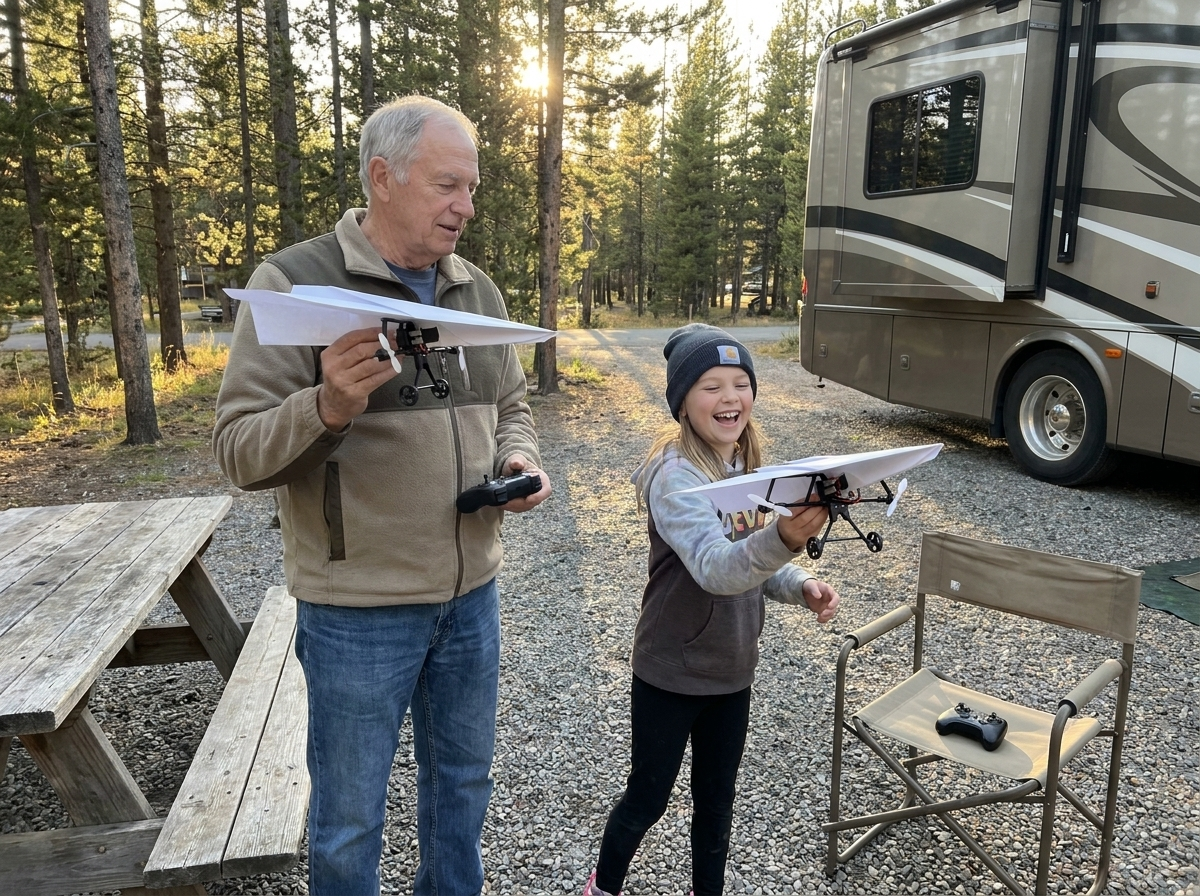
$31.95. One for the Rig. One for When the Grandkids Roll In.
Nearly half the orders on this site are for two or more kits, and the folks writing "one stays in the motorhome" in the order notes are not confused about who it's for. The box says Ages 8+. It doesn't say 8 only, and it definitely doesn't say "not at a campground."
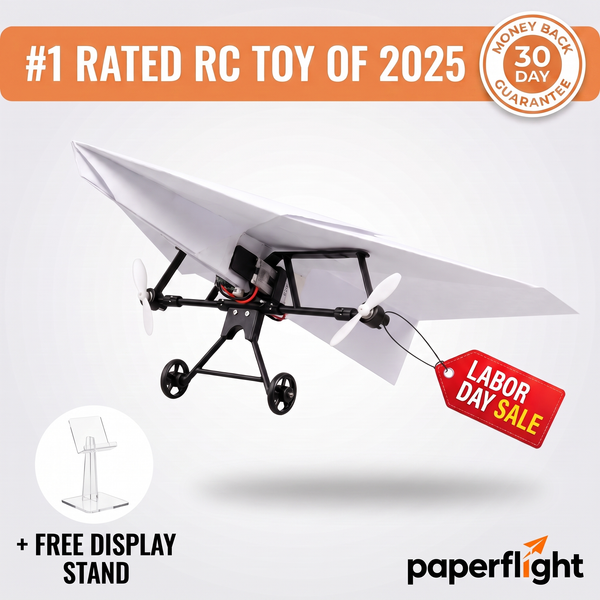
$31.95 during the Early Fall Sale, half off with free shipping. In the box: the twin-prop power module, the two-stick remote, a rechargeable battery, USB charging cable, detachable landing gear with wheels, a small screwdriver, a display stand and the manual. Everything you need to fly is in there. The only thing you add is printer paper.
Get two. One lives in the glovebox for every stop on the route. One is wrapped in a bay for the week the grandkids fly out to meet you, so nobody is sharing a remote and you're not the one waiting. Two kits is $54.95, still under what a single app-controlled plane costs, and it ships free.
A twin-propeller power module with a gyro stabilizer that clips onto any paper plane you fold — flown with a real two-stick remote. Crash it, fold another, fly again. No app. No phone. No garage. Ages 8 to 80.
Why 50% off in September? Every kit that ships now is one we're not racing to deliver in the December crush. Early shoppers get the price. When the holiday rush starts, it goes back up — that's the whole story.
$31.95 during the Early Fall Sale — half off, free shipping, and 30 days to change your mind. Real sticks in your hands, a motor that charges off the rig, and an airframe that costs a sheet of paper at every site on the route. No bay required.
Get PaperFlight — 50% Off →