Twelve Kids. One Hour. $240 in Kits Nobody Takes Home. This Is the One That Runs Until June.
Five reasons scout leaders, youth-group leaders and after-school teachers are running a paper airplane with a motor on it — and why the only thing wrong with the hands-on activity was the kit that ended when the glue dried.
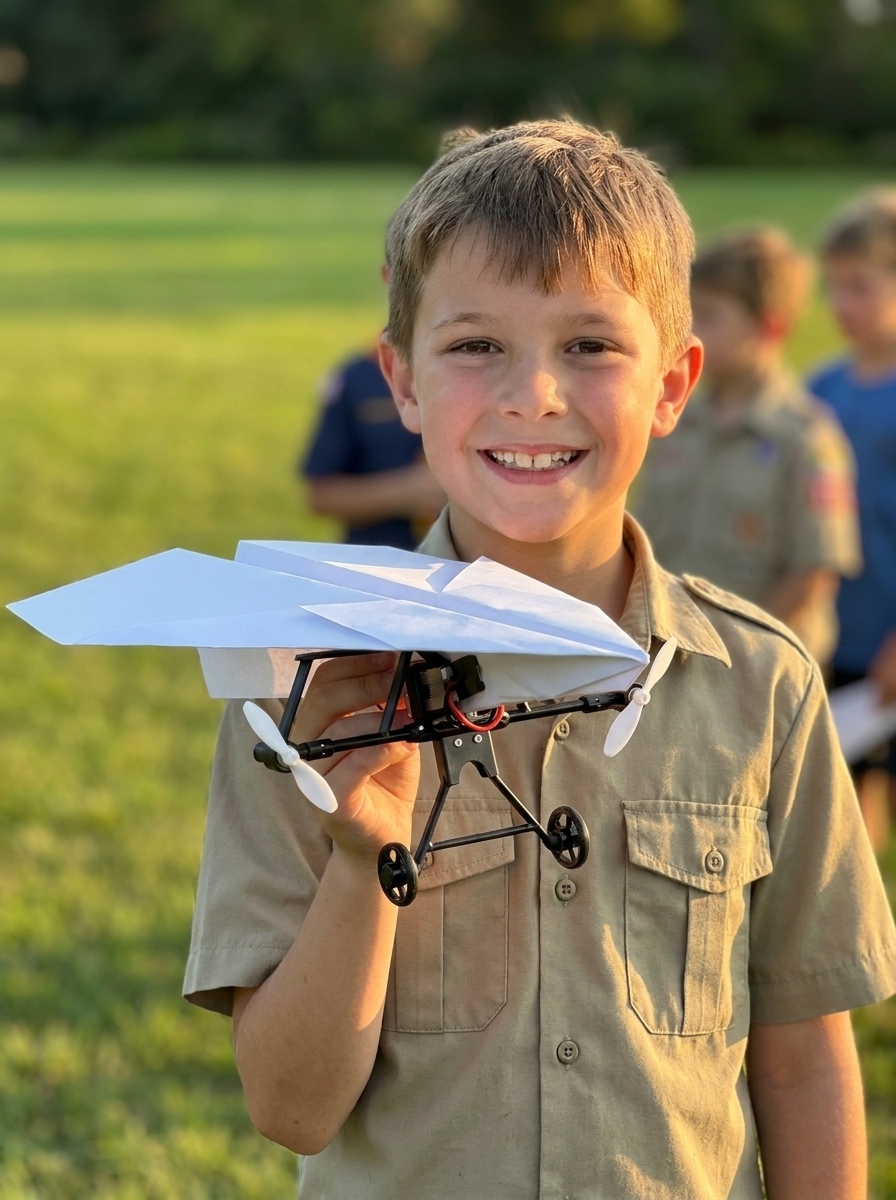
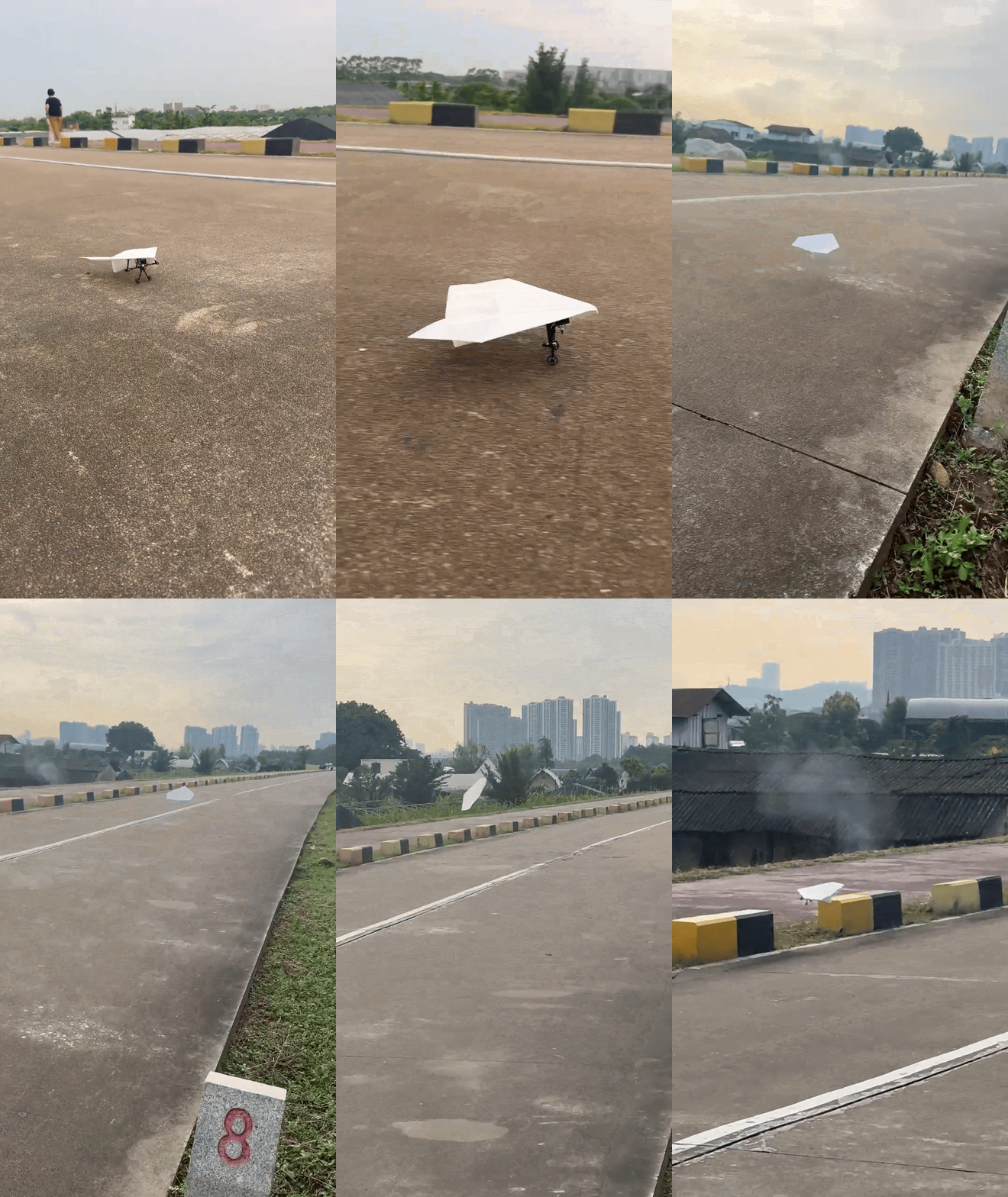
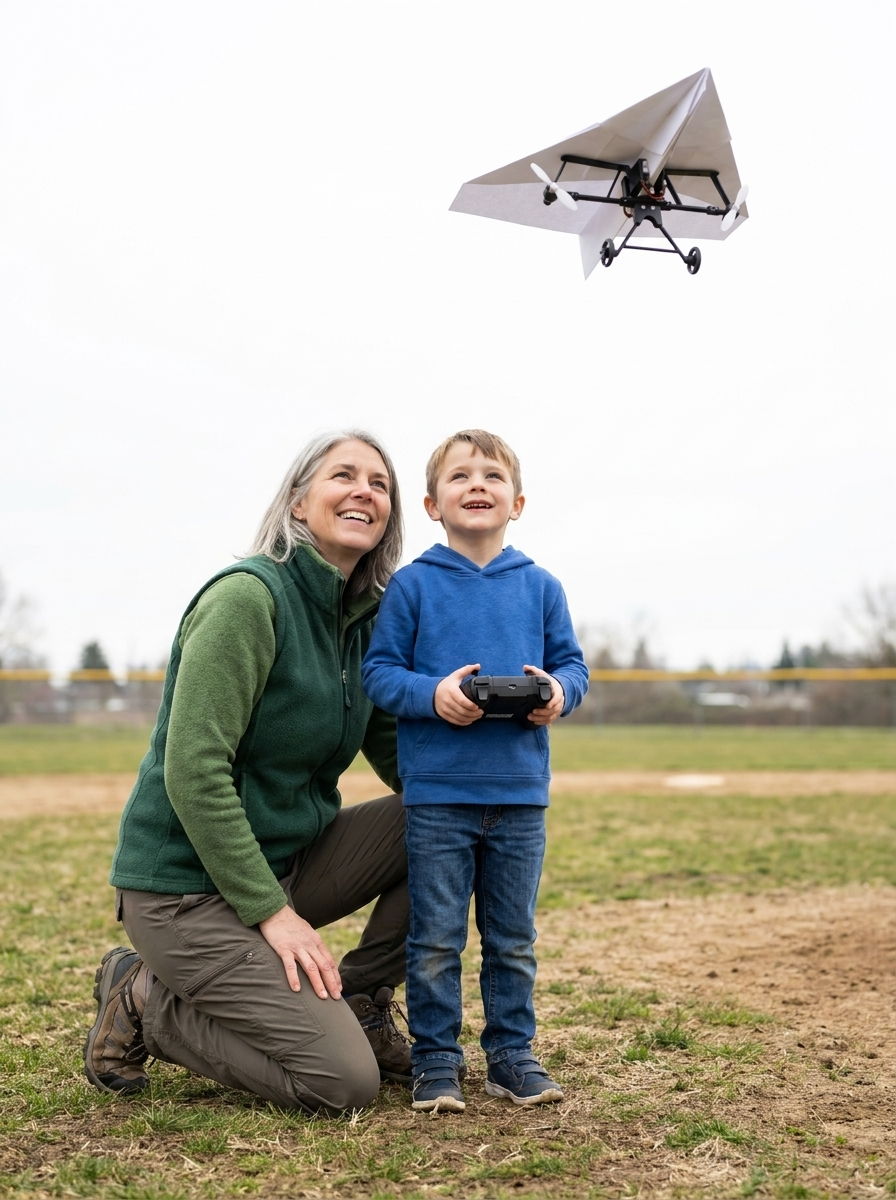
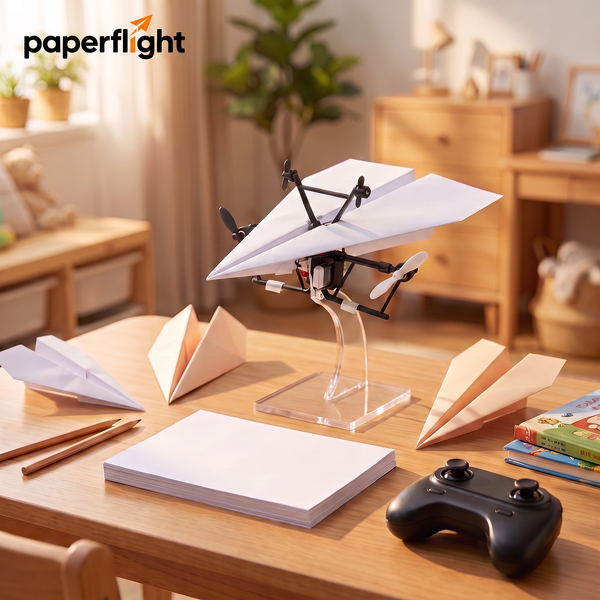
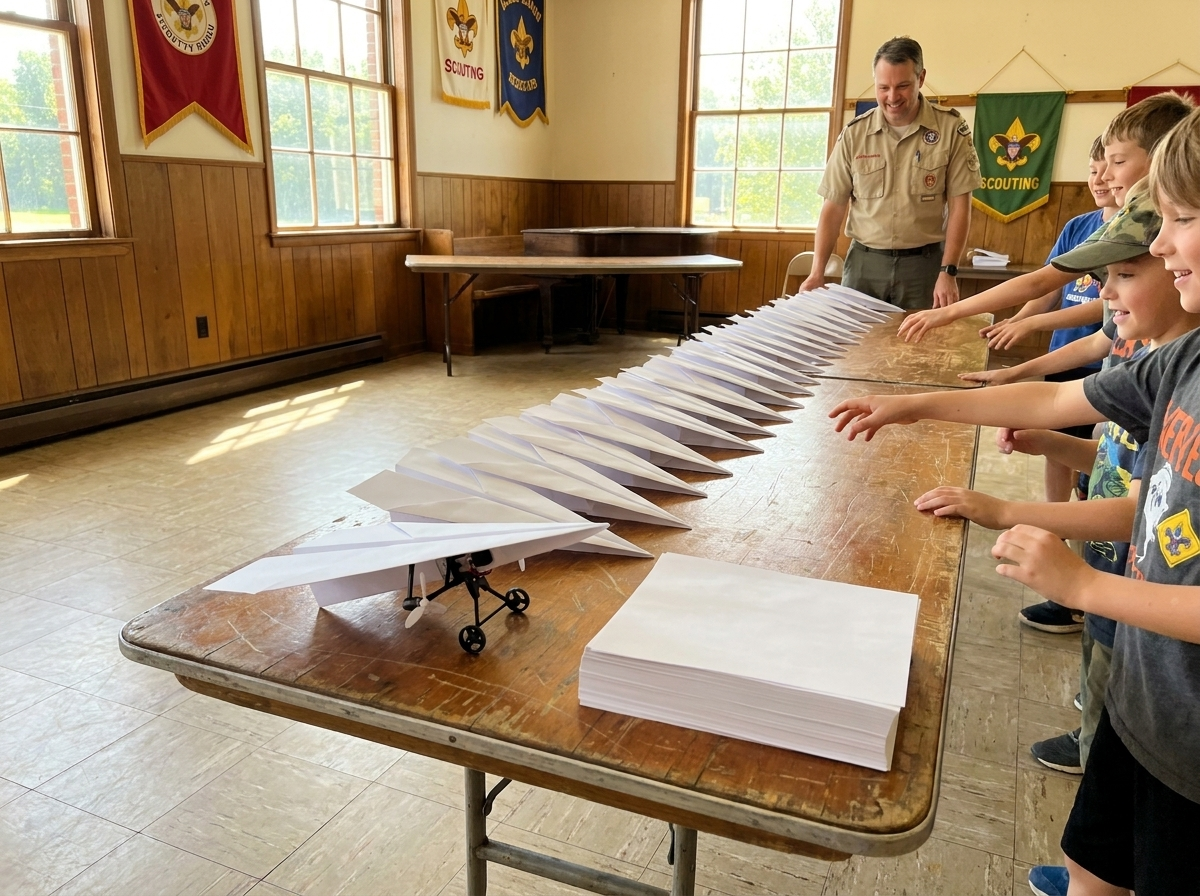
One Kit. Twelve Kids. A Ream of Paper.
Here's how it went. You found the kit in the catalog, it looked hands-on, and you ordered twelve. $18 to $22 a head. The kids built it in forty minutes, flew it or launched it or lit it once, and half of it was in the trash before pickup. Next month you ordered twelve of something else. So you ran the volcano. You ran the rocket. You ran the robot. And then you ran out.
The part nobody says out loud: you didn't stop doing projects with the kids. The kits stopped surviving the meeting. Every activity was a purchase order and an hour, and the program that was supposed to be about building things turned into a program about unboxing them.
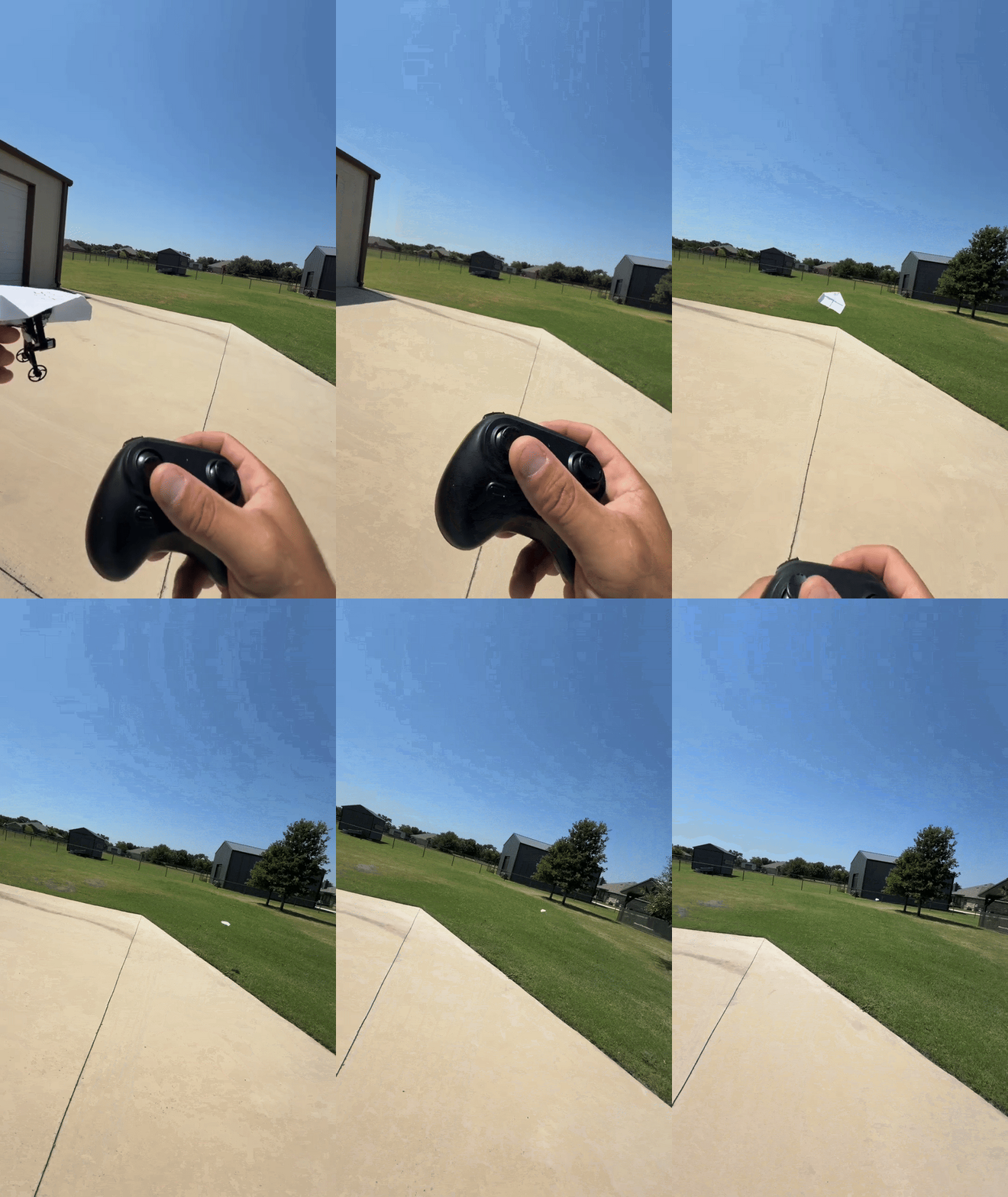
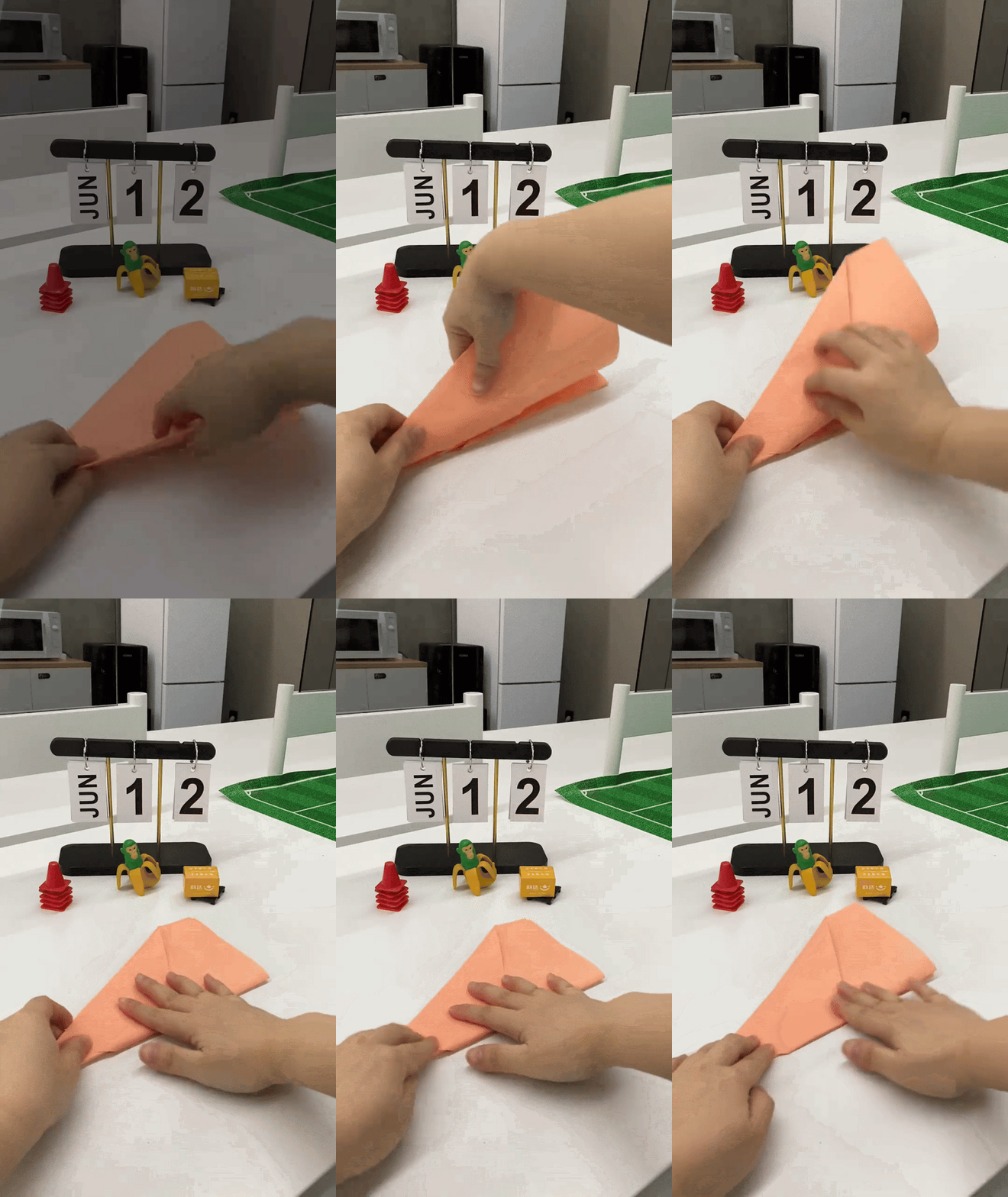
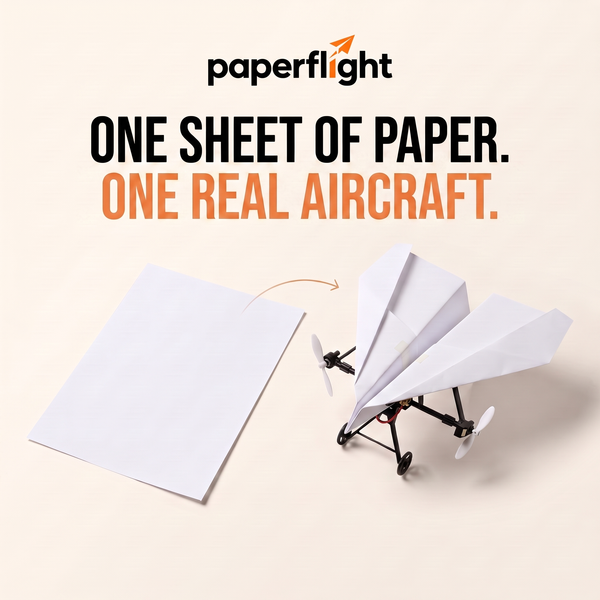
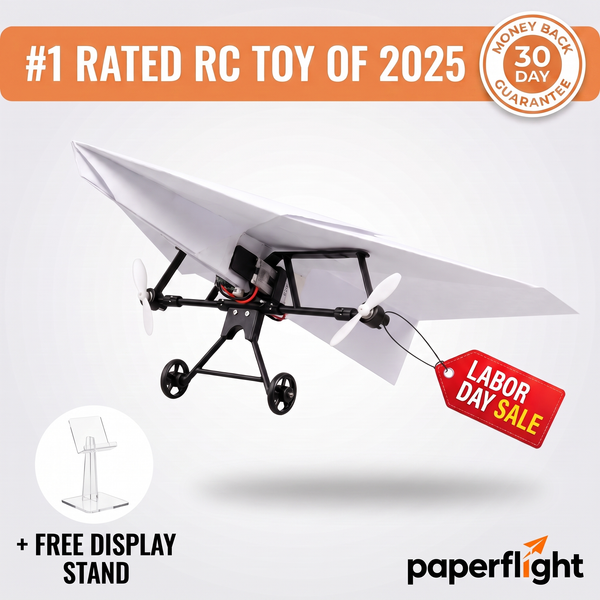
PaperFlight takes the purchase order out. The plane is a sheet of printer paper the kid folds himself. The motor, the gyro and the two-stick remote are the part you keep, and they're built to hit the ground. Clip it under the nose, fly it, crash it, pull it off, fold another. A ream of paper is five hundred planes. That's the whole year, out of one supply bin.
Two Props Up Front. No Rudder. Here's Why a 10-Year-Old Can Steer It.
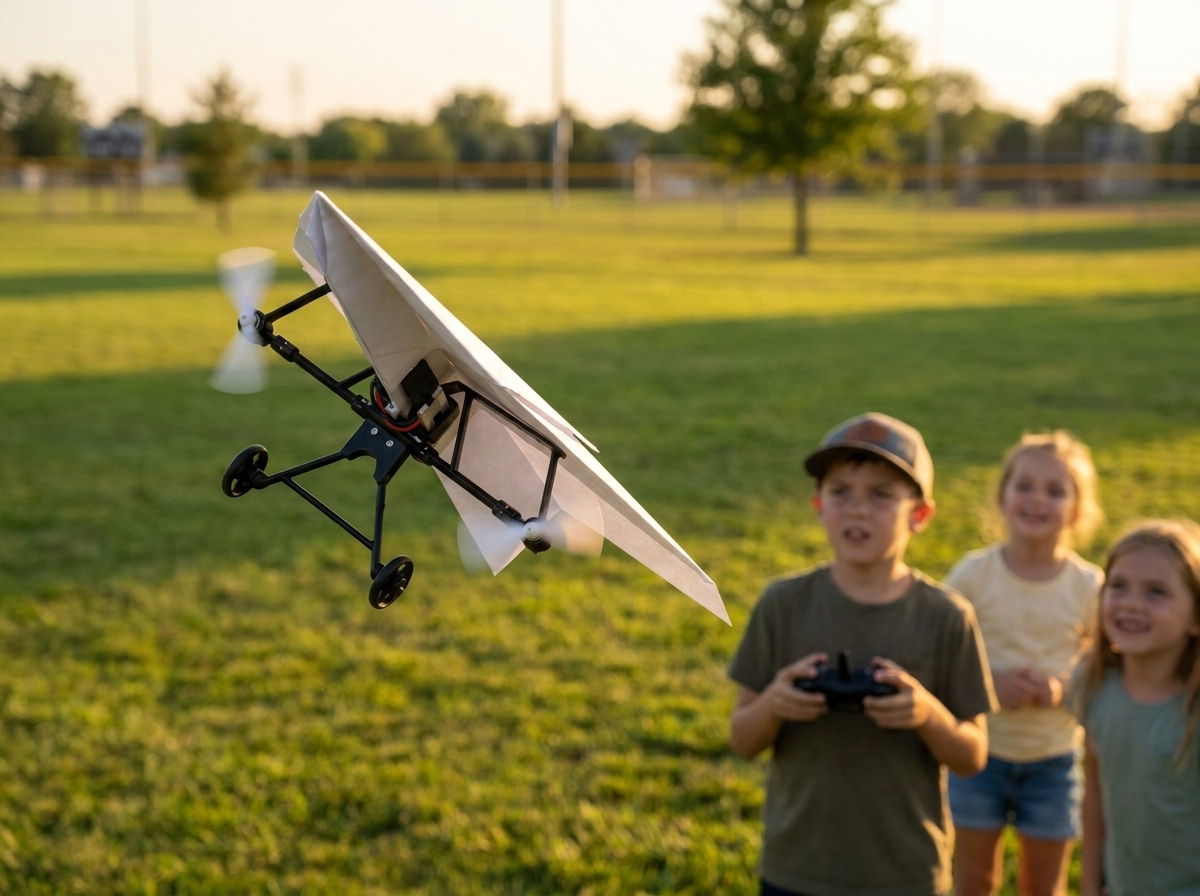
You'll look at it and ask how a kid is supposed to fly this in one meeting. Most RC planes lose kids in the first five minutes — rudder, elevator, trim, a manual nobody reads. This one has two propellers on a bar across the nose and nothing else to learn.
To turn, the module spins one prop faster than the other. Push the stick right and the plane banks right; push it left, the opposite. An onboard gyro reads the wings and holds them level between inputs, so when the kid overcorrects — and he will — the plane straightens itself out instead of corkscrewing into the grass.
That's the whole lesson: power on one stick, steering on the other. The first kid figures it out in a couple of throws. The second kid learned by watching the first. By the third table nobody's asking you how it works. They're arguing about wing shape.
No Phones Come Out. The Whole Controller Is Two Sticks.
You already know what happens when the activity needs a phone. The famous $90 paper plane is flown by tilting one. That's one phone per plane, an app that wants an update, Bluetooth pairing in a gym with twelve devices — and the kid whose parents don't let him have one standing there with his hands in his pockets.
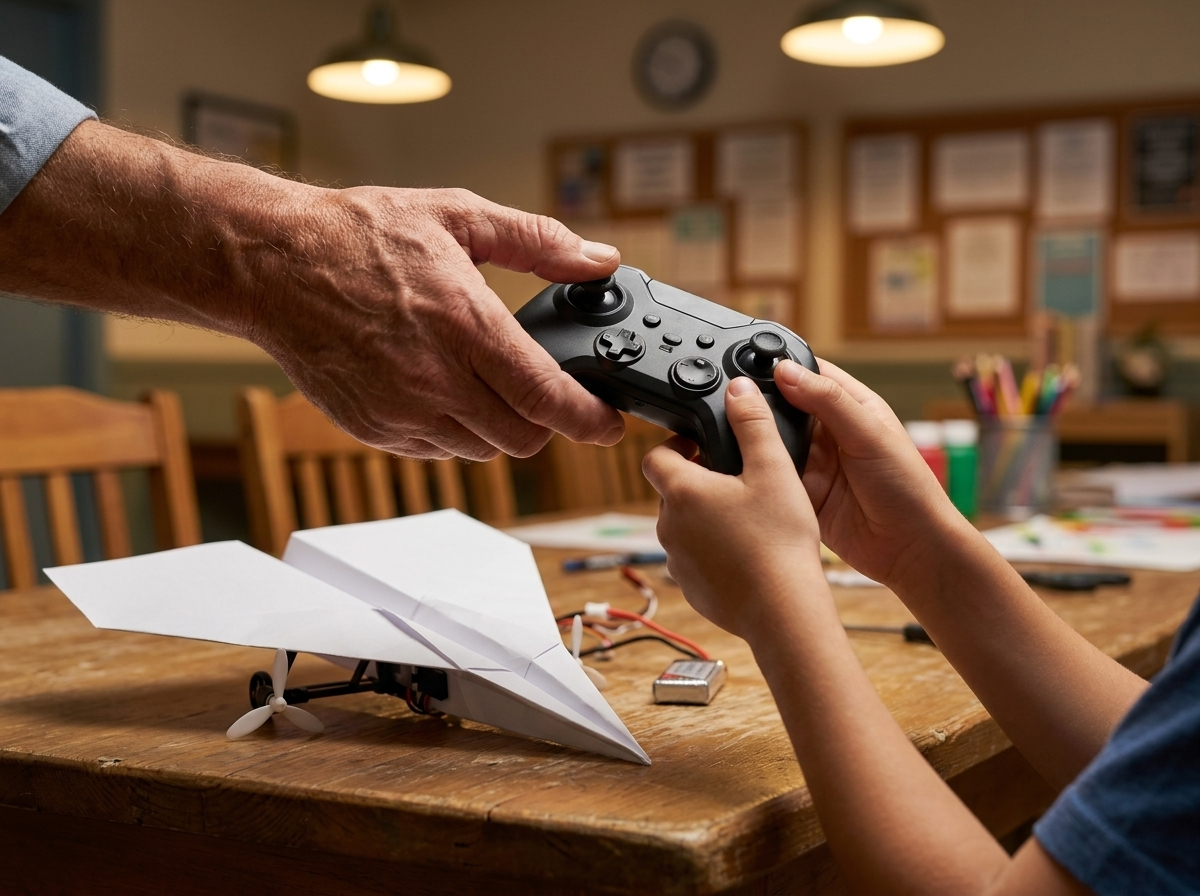
PaperFlight ships with a real two-stick controller in the box. Power on the left, steering on the right. It isn't a full transmitter — it's a compact two-stick unit — but it's the layout every kid who's held a game controller already knows. No app, no download, no pairing, nothing that turns a screen-free room into a screen argument.
One remote, one plane, and you hand it to the next kid. Twelve turns, zero screens, and the only thing you have to referee is whose turn it is.
They'll Crash It Forty Times Before Snack. Each One Costs a Sheet of Paper.
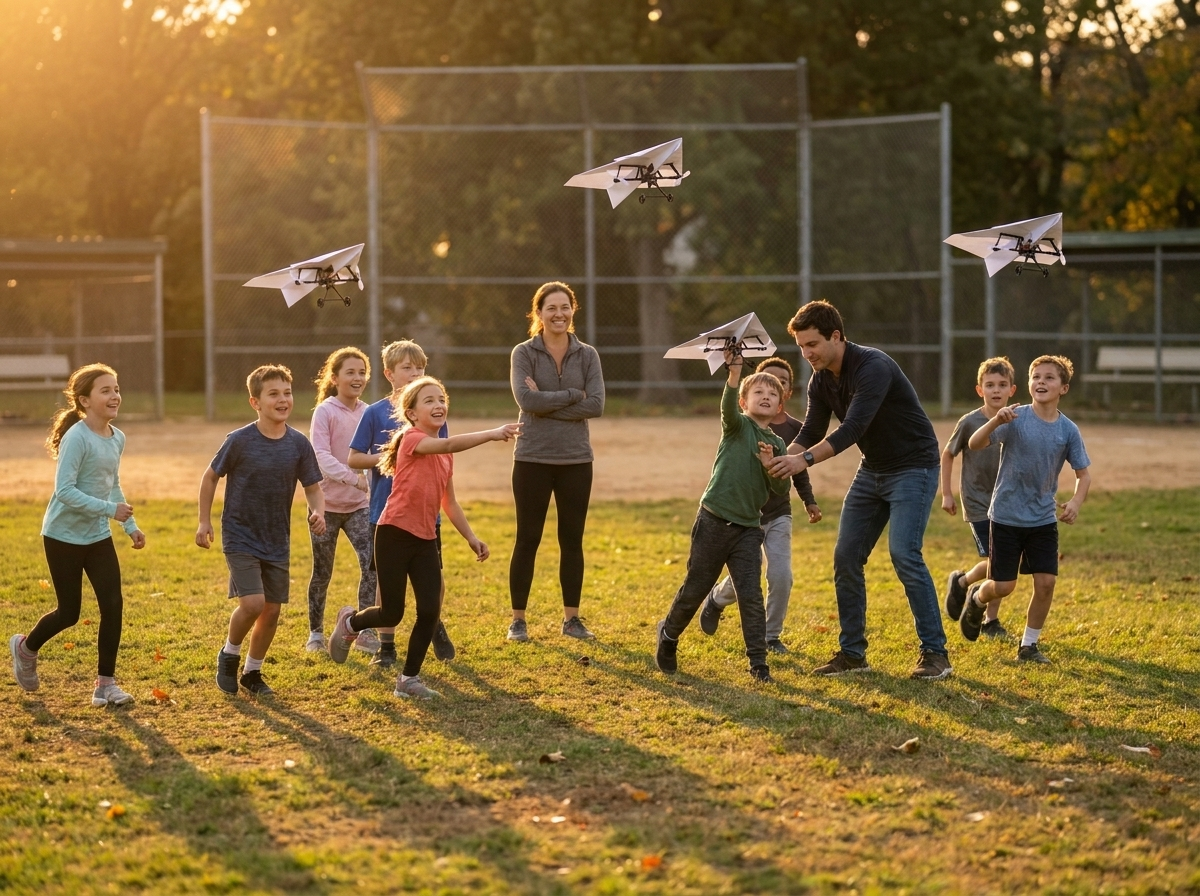
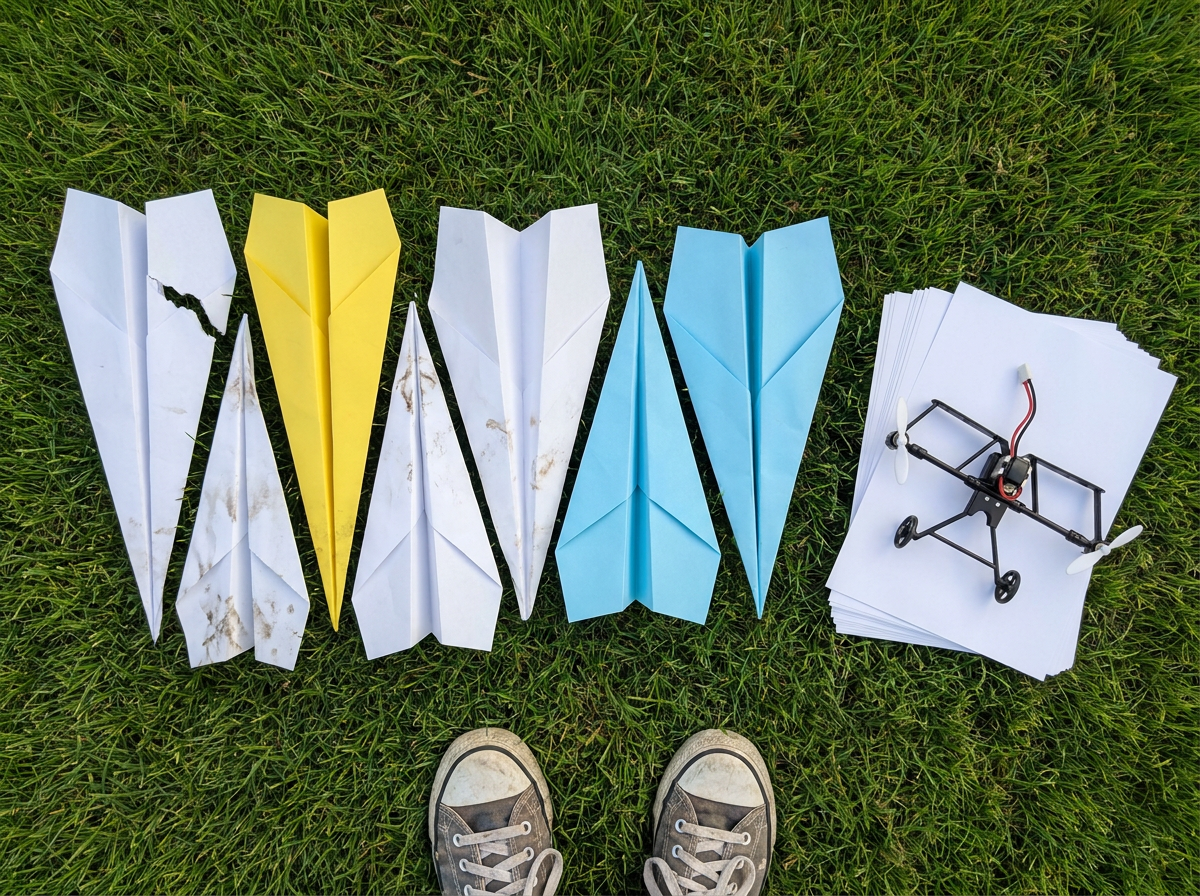
Here's what changes when the crash costs nothing. Twelve kids will put this thing into the fence, the backstop and each other more times than you can count, and that's the activity. The nose crumples, the wing tears, the kid pulls the module off, grabs a fresh sheet and folds a different plane — wider wing this time, more nose weight, a little bend in the tips. That's the design loop every STEM kit promises and then hands you a glue stick for.
Most groups that run this every week end up with a row of planes across the table with names on the wings. Long nose for a dart. Wide wing for a floater. Nobody tells them to do that. It's the tinkering the one-use kit never had room for, minus the part where a mistake costs $20 and another purchase order.
A ream of paper is five hundred planes. You'll run out of meeting before you run out of planes. Once you're running it every week you'll find out what the regulars know: the kids who crash hardest start asking for heavier paper. You'll see why that matters on the product page.
The 4-Kit Is the Group Rate. One Plane Per Table of Three.
You know what twelve one-use kits cost. One PaperFlight is $31.95 during the Early Fall Sale, half off with free shipping. Two are $54.95. Four are $99.95 — one plane per table of three, which is the ratio that keeps twelve kids busy and one leader sane. That's under $8.50 a kid, and it's still in the supply bin next year.
Say it plainly to the treasurer: it comes out of the same line as the one-use kits, and it doesn't get bought again. In the box: the twin-prop power module, the two-stick remote, a rechargeable battery, USB charging cable, detachable landing gear with wheels, a small screwdriver, a display stand and the manual. The only thing you add is printer paper.
The honest limits, because you're the one standing in front of the group: it needs the ball field or the back lot, not the gym. It won't fly in wind — check the flag before you take them out. The battery is short, so rotate: one table flies while the next table folds and the pack charges off the USB cable. And it wrecks planes constantly. Which, again, is the point.
A twin-propeller power module with a gyro that clips under the nose of any paper plane the kids fold — flown with a real two-stick remote. No phones, no app, no rudder. Crash it, fold another, fly again. One kit runs a table of three all year.
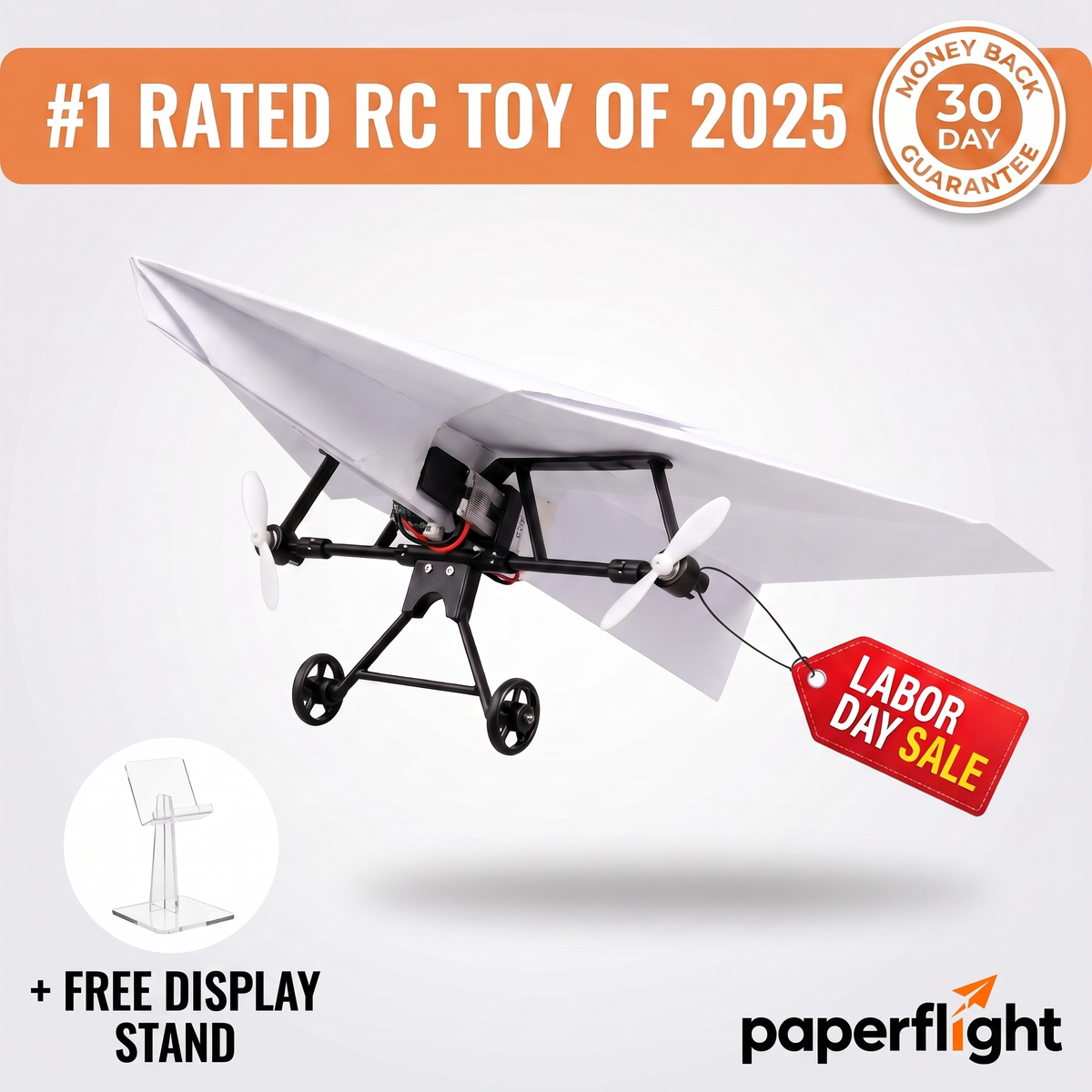
Why 50% off in September? The Early Fall Sale is how we get kits into groups before the fall program calendar fills up. Every kit that ships now is one we're not racing to deliver in the December crush. When the holiday rush starts, it goes back up — that's the whole story. 2 kits $54.95. 4 kits $99.95.
$31.95 during the Early Fall Sale — half off, free shipping, and 30 days to change your mind. Four kits is the group rate at $99.95: one plane per table of three, a ream of paper, and an activity that doesn't end when the box is empty.
Get the Group Rate — 50% Off →