You Didn't Quit RC. RC Quit You at $80 a Crash. This Is the Plane That Costs a Sheet of Paper.
Five reasons the men who gave up on RC after the third replacement wing are flying a paper airplane with a motor on it — and why the crash bill was the only thing that was ever wrong with the hobby.
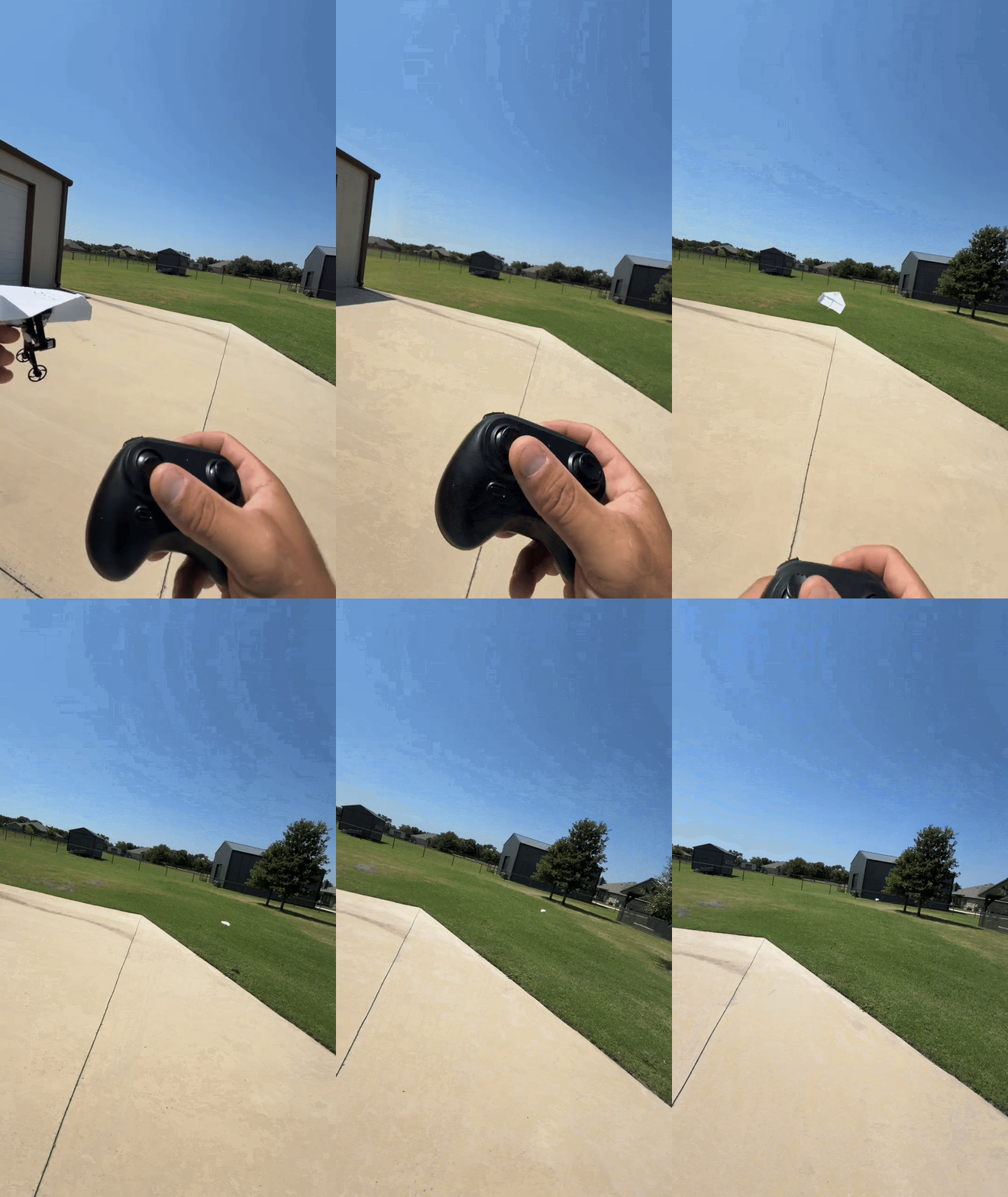
You Didn't Quit RC. RC Quit You at $80 a Crash.
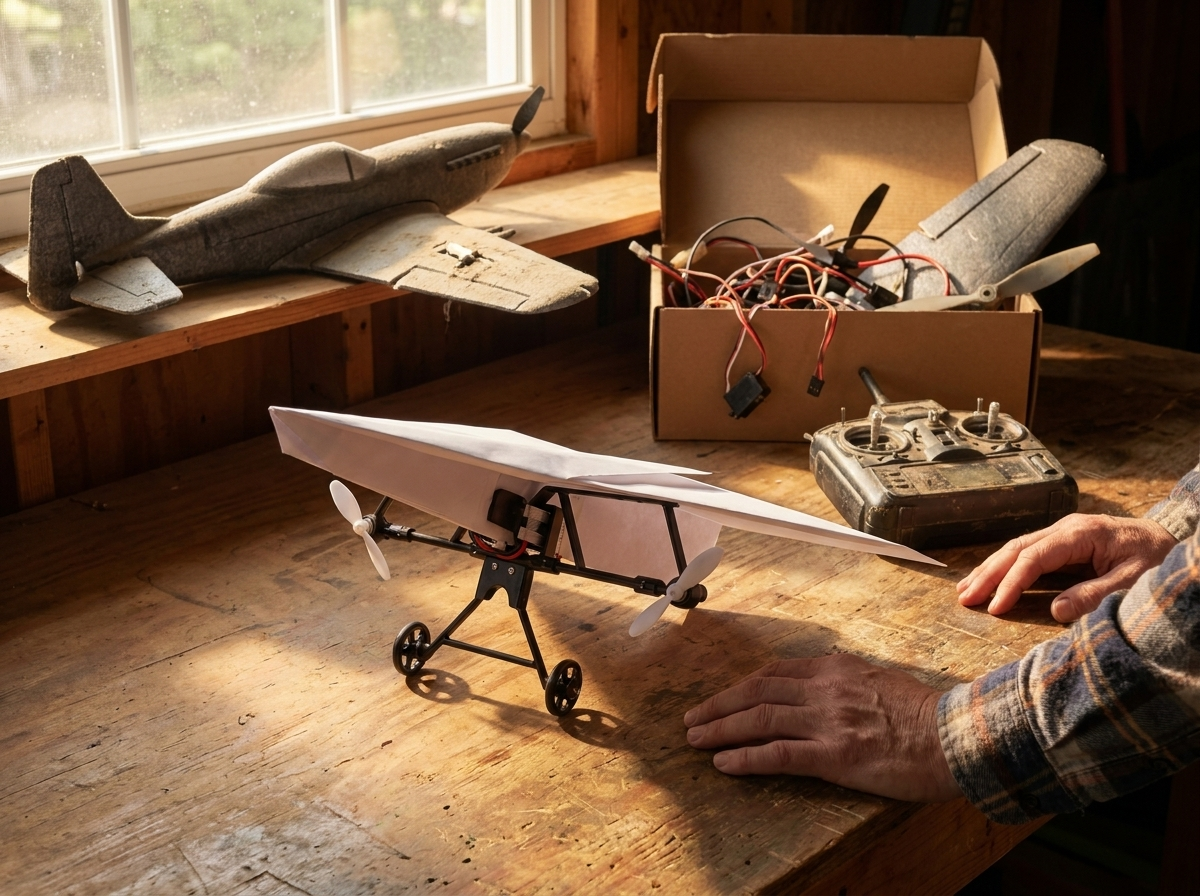
Here's how it went. You bought the foamie because it was "ready to fly." Flight one was fine. Flight three went in nose-first, the wing came off at the root, and the replacement was $38 plus shipping plus nine days. You fixed it. Flight seven took the tail. Somewhere around the third parts order you did the math, and the plane went on the shelf "for when you have time." That was 2019.
The part nobody says out loud: you didn't lose interest. You lost the argument with the spare-parts box. Every crash was a bill and a week, and the hobby that was supposed to be about flying turned into a hobby about ordering wings.
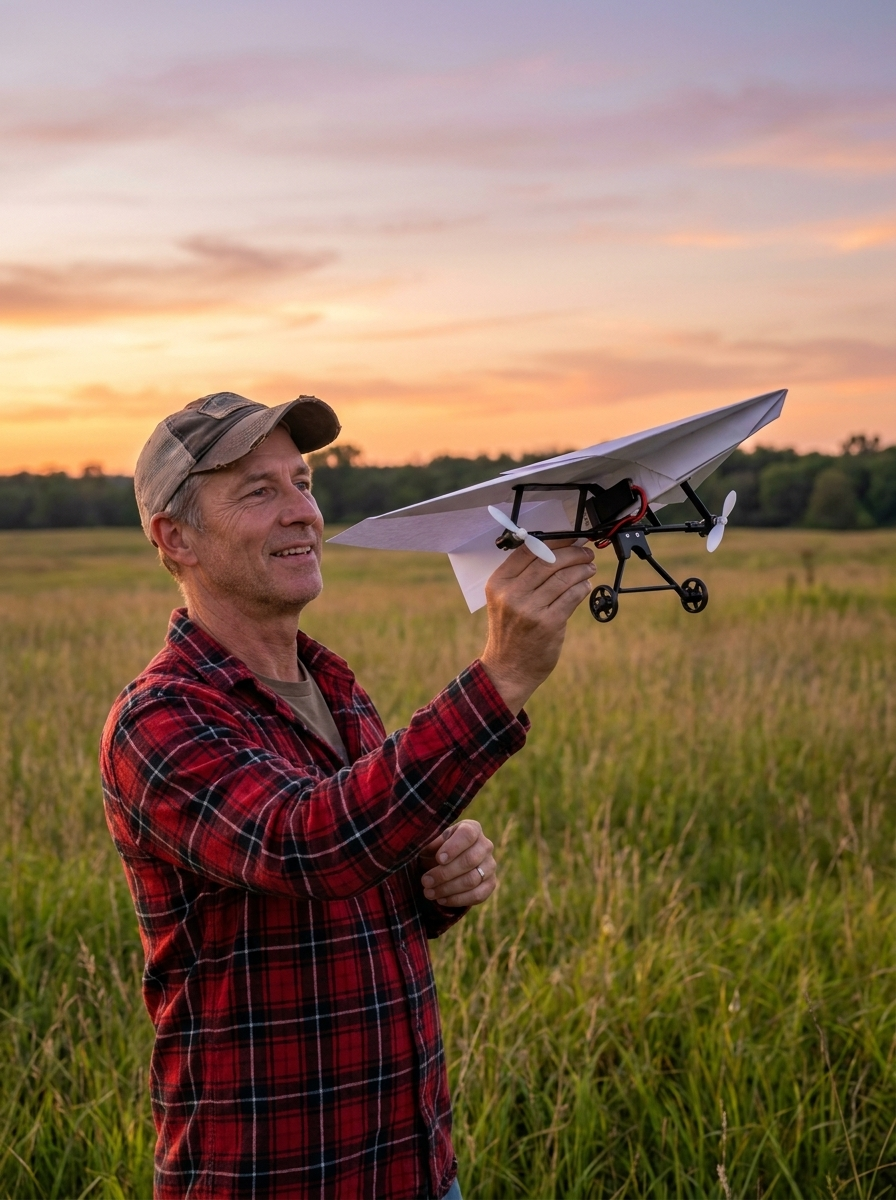
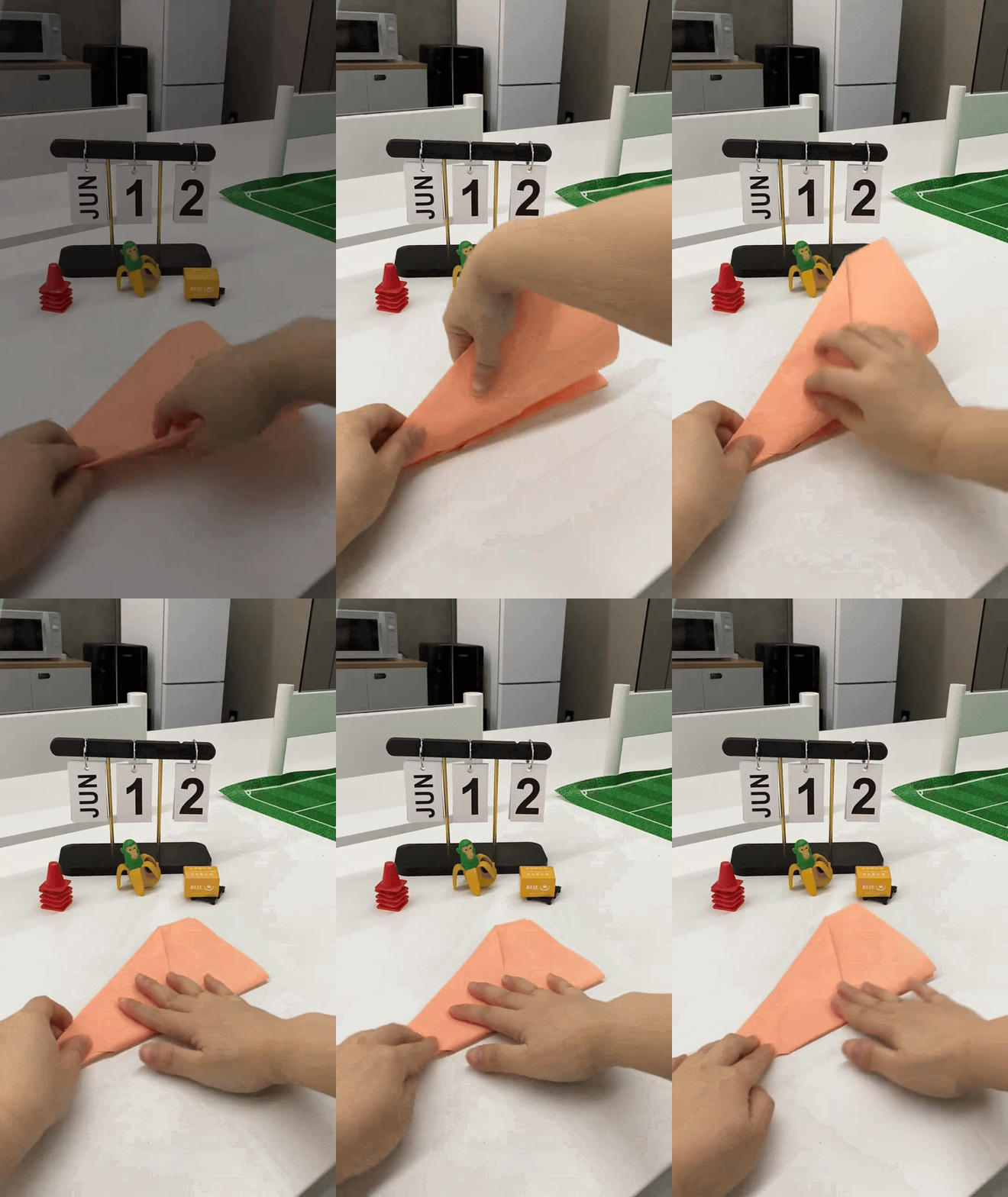
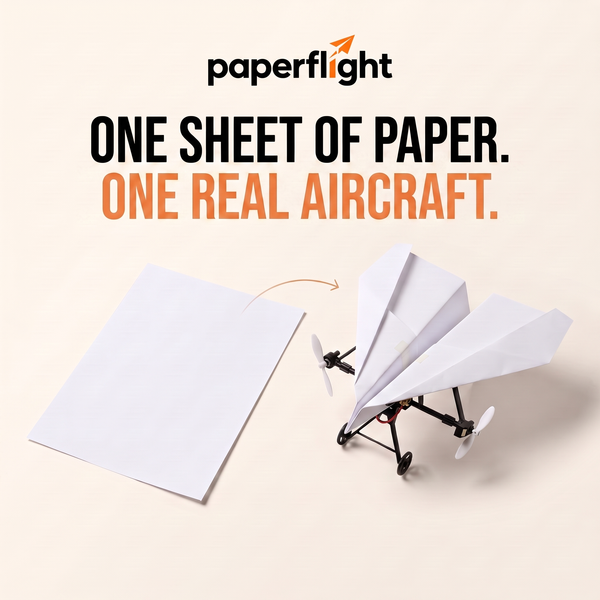
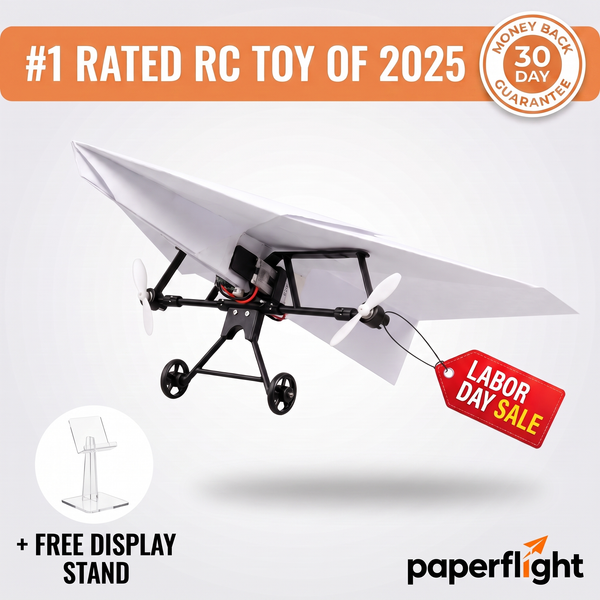
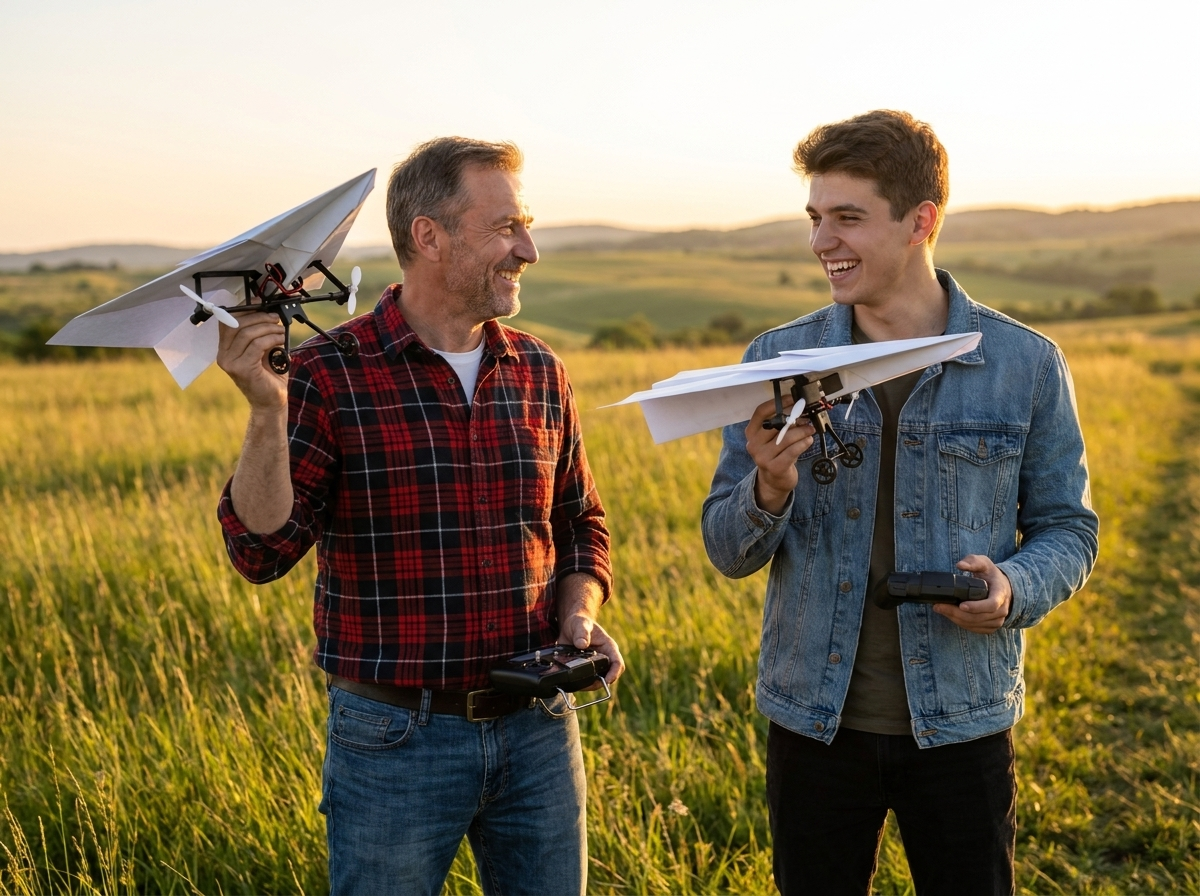
PaperFlight takes the bill out. The airframe is a sheet of printer paper you fold in a minute. The motor, gyro and two-stick remote are the part you keep, and they're built to hit the ground. Put it into the fence, crumple it, fold another, go again. The flying is still the flying. The parts order is gone.
No Servos. No ESC. No Rudder. Here's How It Turns.
You'll look at it and ask where the control surfaces are. There aren't any. No servos, no linkages, no ESC to program, no receiver to bind. Here's what's actually on it.
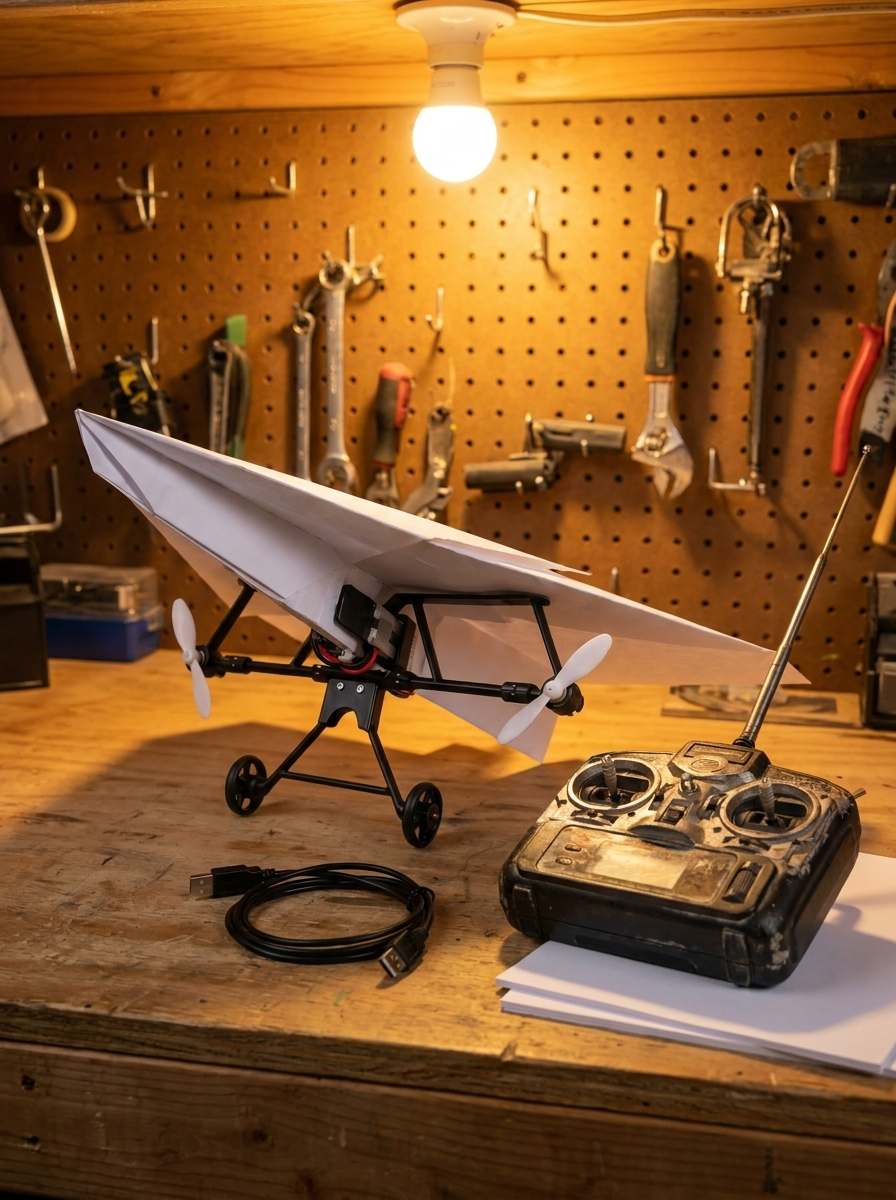
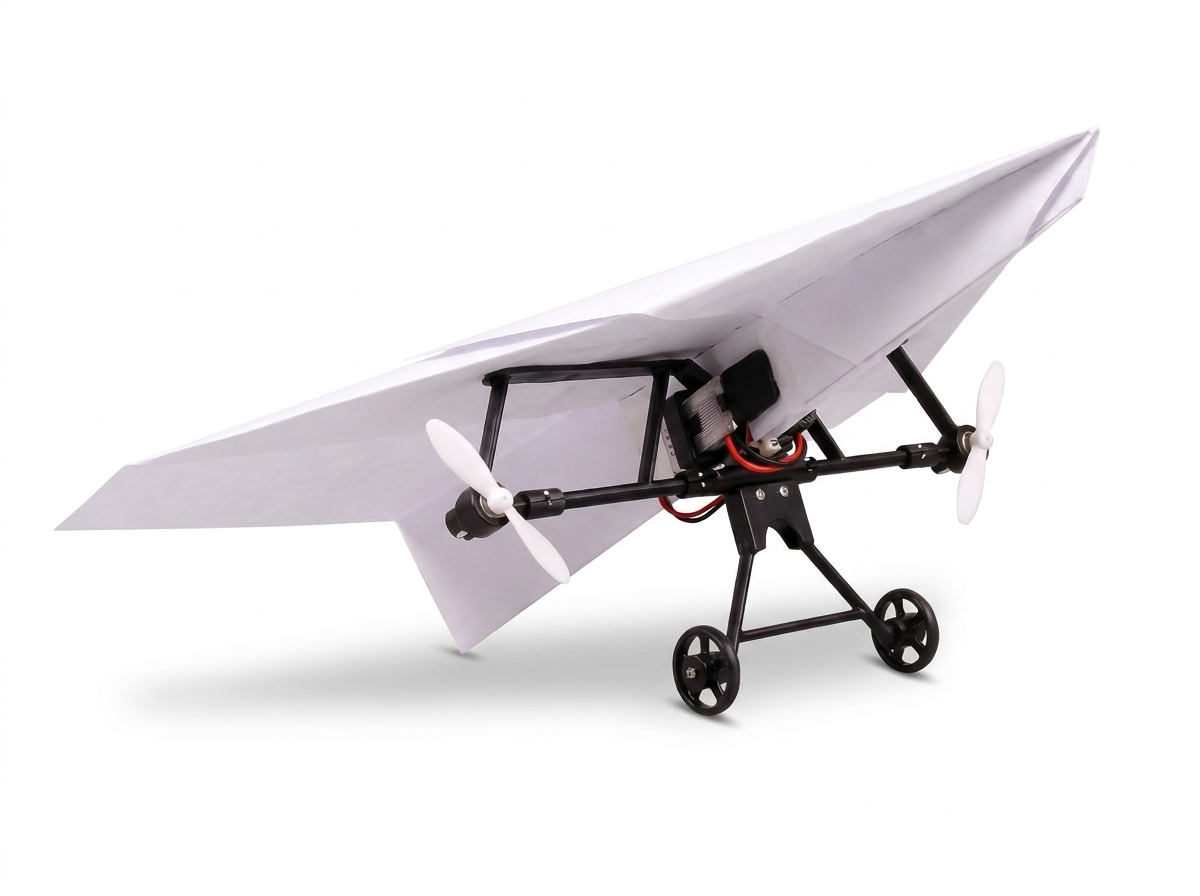
A crossbar across the nose with a prop at each end, both pulling forward. To turn, the module spins one faster than the other — differential thrust, same as a twin with one throttle pulled back. Push the right stick and the plane banks. An onboard gyro reads the wings and holds them level between your inputs, the way a stabilizer receiver does on a foamie, so a paper plane that wants to corkscrew flies straight instead.
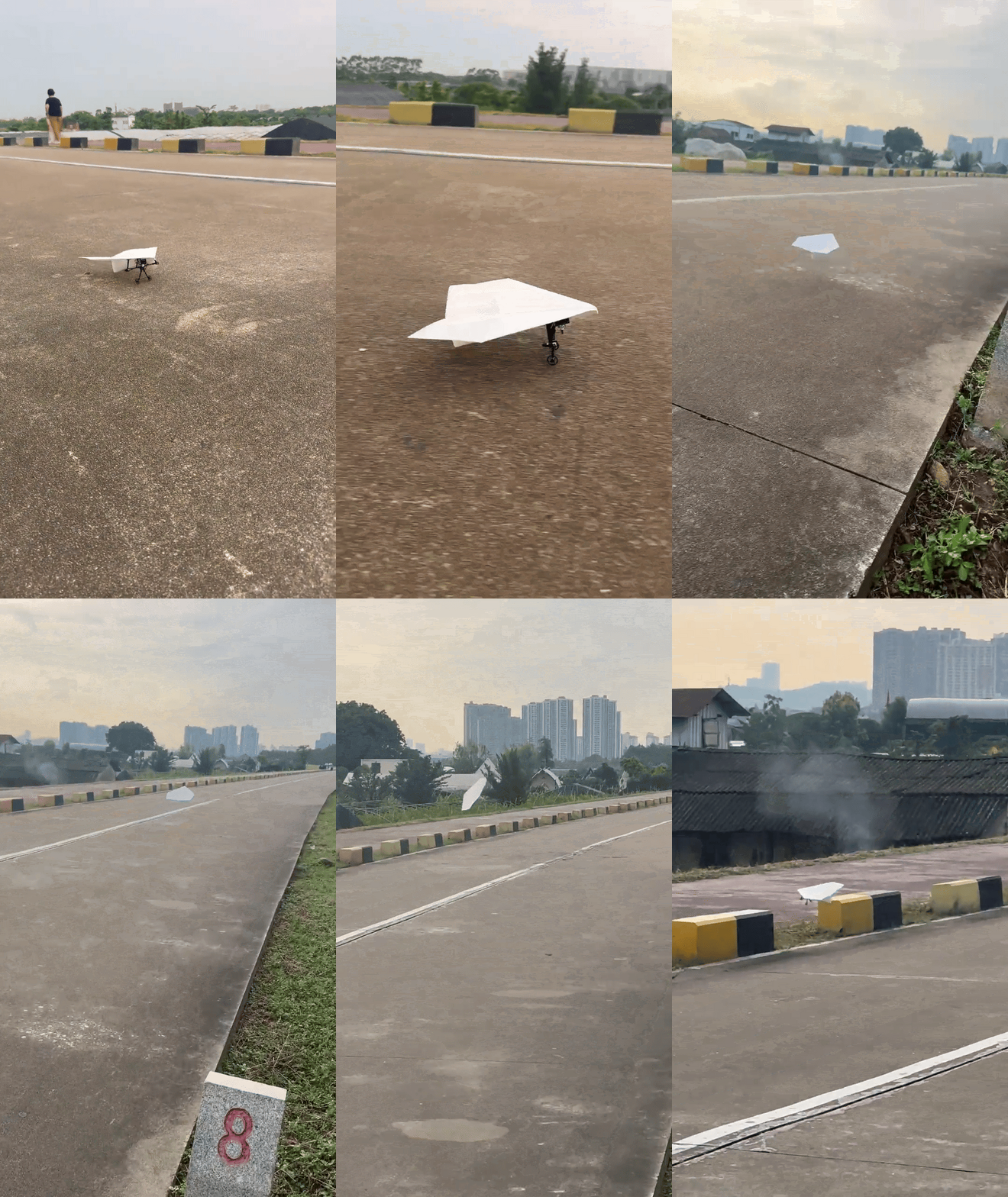
Throttle up and it climbs. Ease off and it glides down like the paper plane it still is. A rechargeable battery charges off any USB port — charge it while you fold the next airframe. Landing gear clips on underneath for rolling takeoffs off a driveway; pull it and hand-launch.
Two Sticks. Mode 2. Your Thumbs Already Know.
The famous $90 paper plane is flown with a phone. You tilt the phone to steer and drag a thumb across glass for throttle, after you pair it. If you've ever tried to fly anything by tilting a phone, you already know why it's in someone's closet.
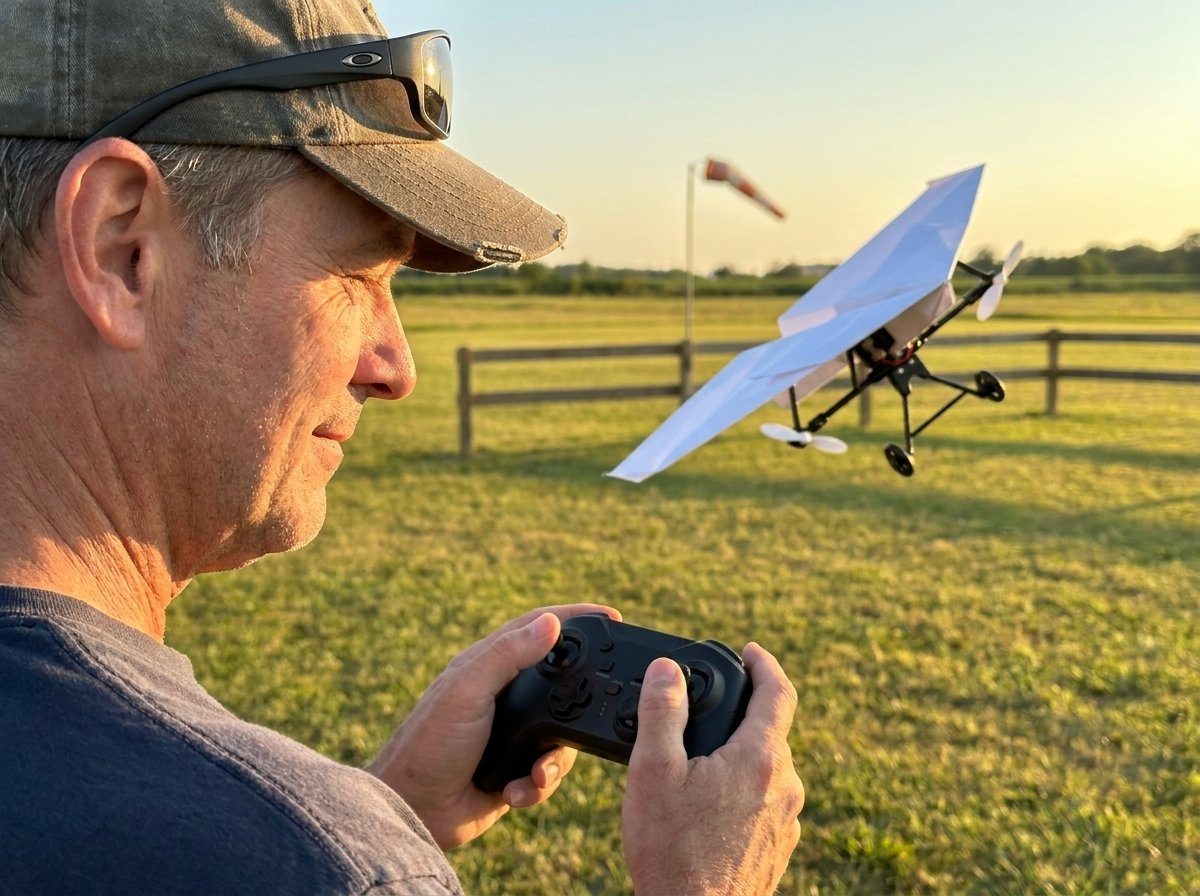
PaperFlight ships with a real two-stick controller in the box. Throttle on the left, steering on the right. It isn't a full transmitter — it's a compact two-stick unit — but the layout is the one your thumbs learned on your first trainer. No app, no binding, no firmware, no update at the field. Turn it on and fly.
And because there's nothing to set up, the guy next to you at the field will have one turning on purpose by the second flight. That's usually when he asks where you got it.
Crash It All Afternoon. The Airframe Is Free.
Here's what changes when the crash costs nothing. You stop flying like the plane is money. You try the loop. You bring it in low over the fence. You fly the whole battery instead of landing early to protect the wing. The airframe is a sheet of paper, so you get to fly it the way you flew the foamie for exactly three flights before you got careful.
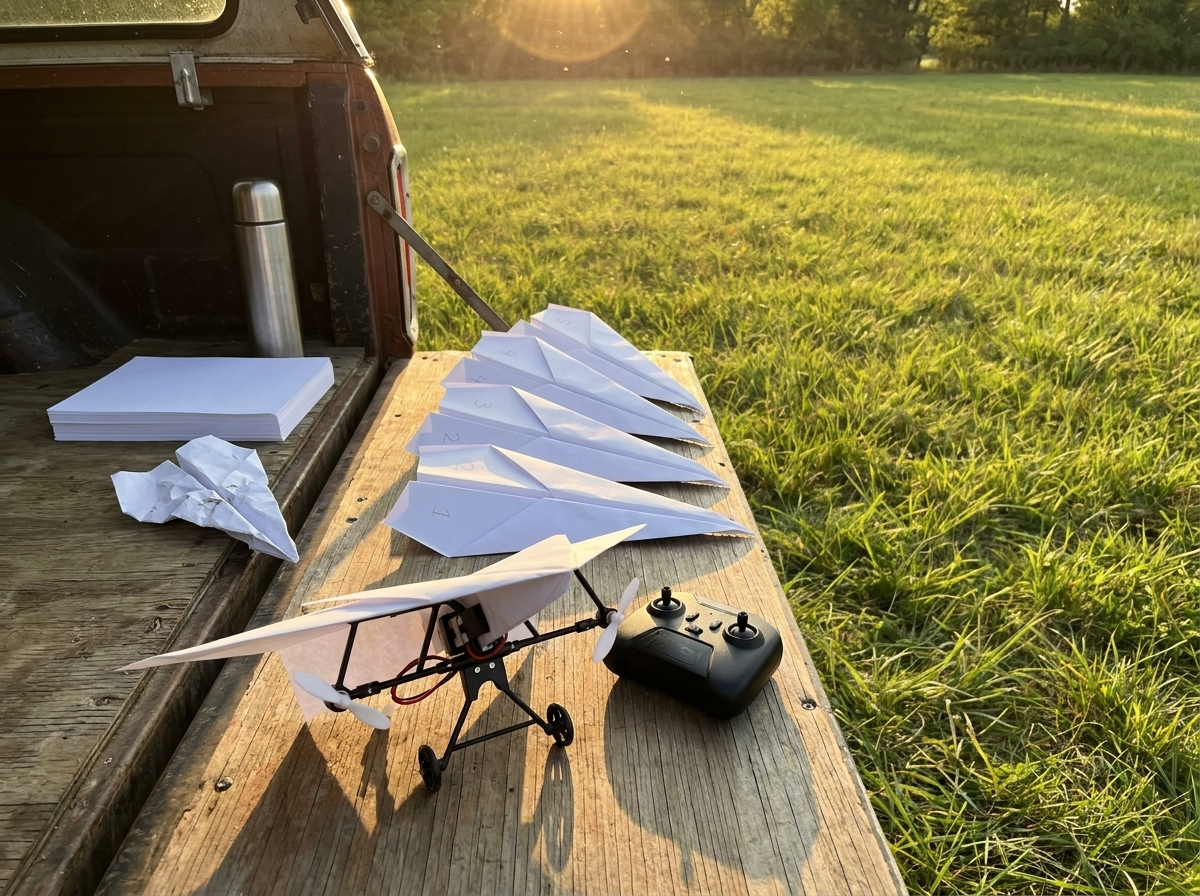
Most of the men flying these every weekend end up with a row of planes on the tailgate with numbers on the wings. Long nose for a dart. Wide wing for a floater. Bent-up tips because it looked right. Nobody tells them to do that. It's the same tinkering you did with the foamie, minus the part where a mistake costs $38 and nine days.
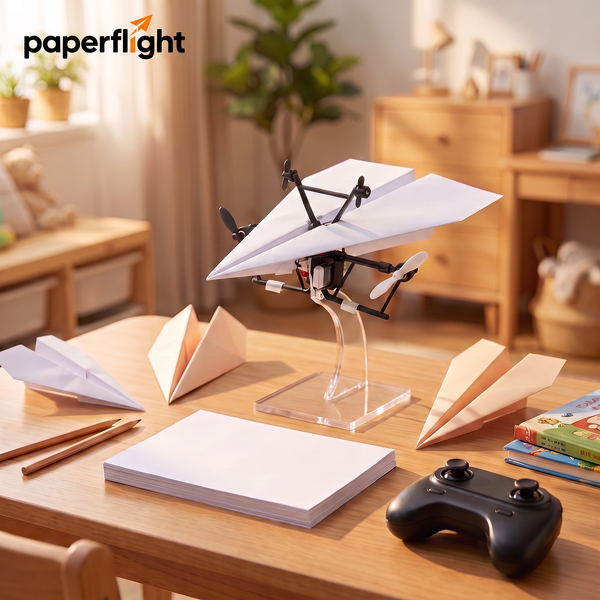
A ream of paper is 500 airframes. You'll run out of battery before you run out of planes. Once you're flying every weekend you'll find out what the regulars know: heavier paper glides longer and takes more hits. You'll see why that matters on the product page.
$31.95. Less Than One Replacement Wing.
You know what a wing costs. You know what a set of props costs, and a servo, and the shipping on all of it. PaperFlight is $31.95 during the Early Fall Sale, half off with free shipping — less than the last parts order you made for the plane that's still on the shelf — and it never asks you for another one.
In the box: the twin-prop power module, the two-stick remote, a rechargeable battery, USB charging cable, detachable landing gear with wheels, a small screwdriver, a display stand and the manual. Everything you need to fly is in there. The only thing you add is printer paper.
Get two. The guy you used to fly with quit for the same reason you did. Two kits is $54.95, still under one afternoon of foam repairs, and the first Saturday you both show up at the field with paper airplanes is the best one you've had there in years.
A twin-propeller power module with a gyro that clips under the nose of any paper plane you fold — flown with a real two-stick remote. No servos, no ESC, no rudder. Crash it, fold another, fly again.
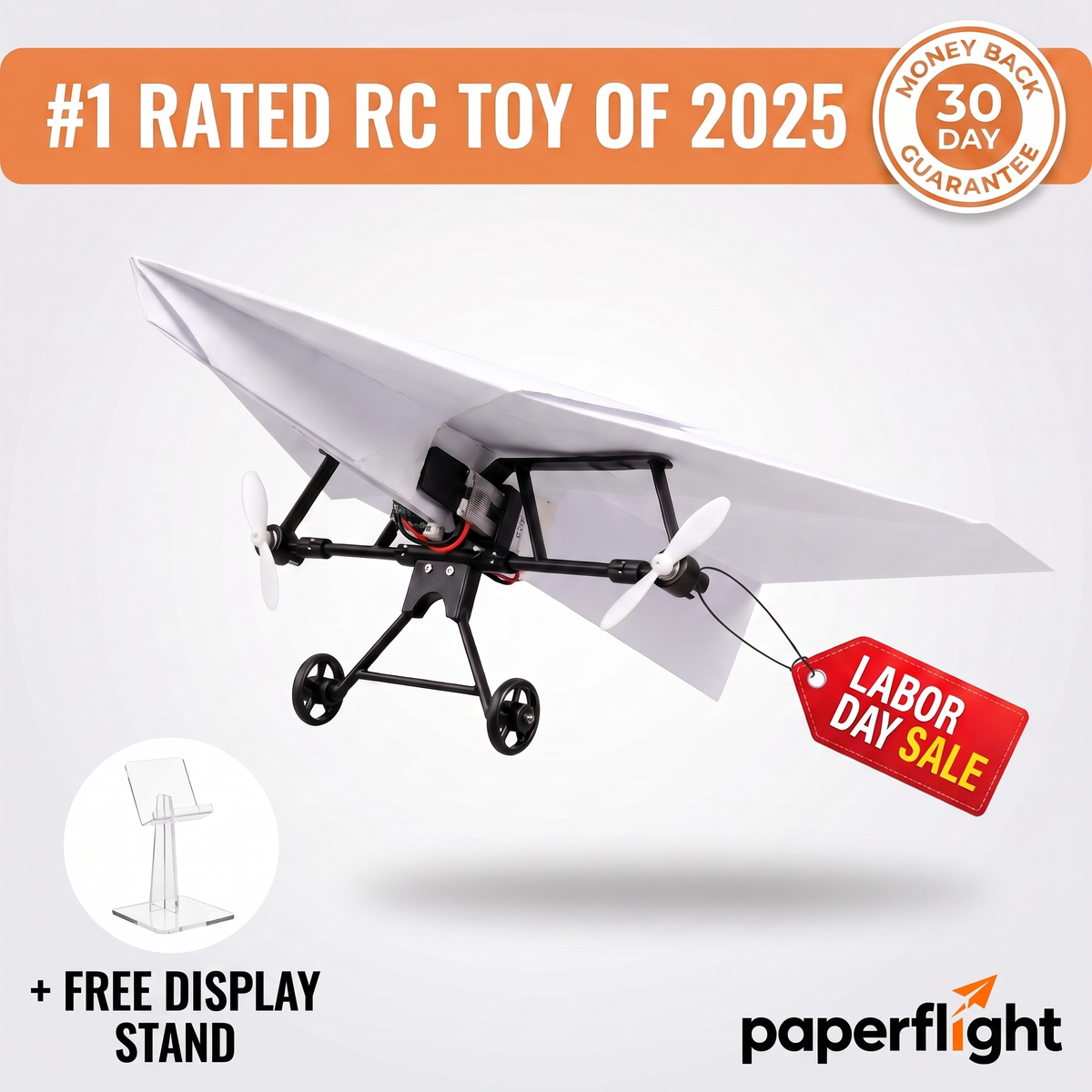
Why 50% off in September? Every kit that ships now is one we're not racing to deliver in the December crush. Early shoppers get the price. When the holiday rush starts, it goes back up — that's the whole story.
$31.95 during the Early Fall Sale — half off, free shipping, and 30 days to change your mind. Two sticks in your hands, a motor built to hit the ground, and an airframe that costs nothing every single time. Leave the foamie on the shelf.
Get PaperFlight — 50% Off →