It's Not Just for the Grandkids. Who Are We Kidding — Get Yourself One.
Five reasons the men who built balsa kits at the kitchen table in 1968 are buying a paper airplane with a motor on it in 2026 — and why "Ages 8+" on the box is the least honest thing about it.
You Didn't Quit Flying. It Just Got Too Expensive to Crash.
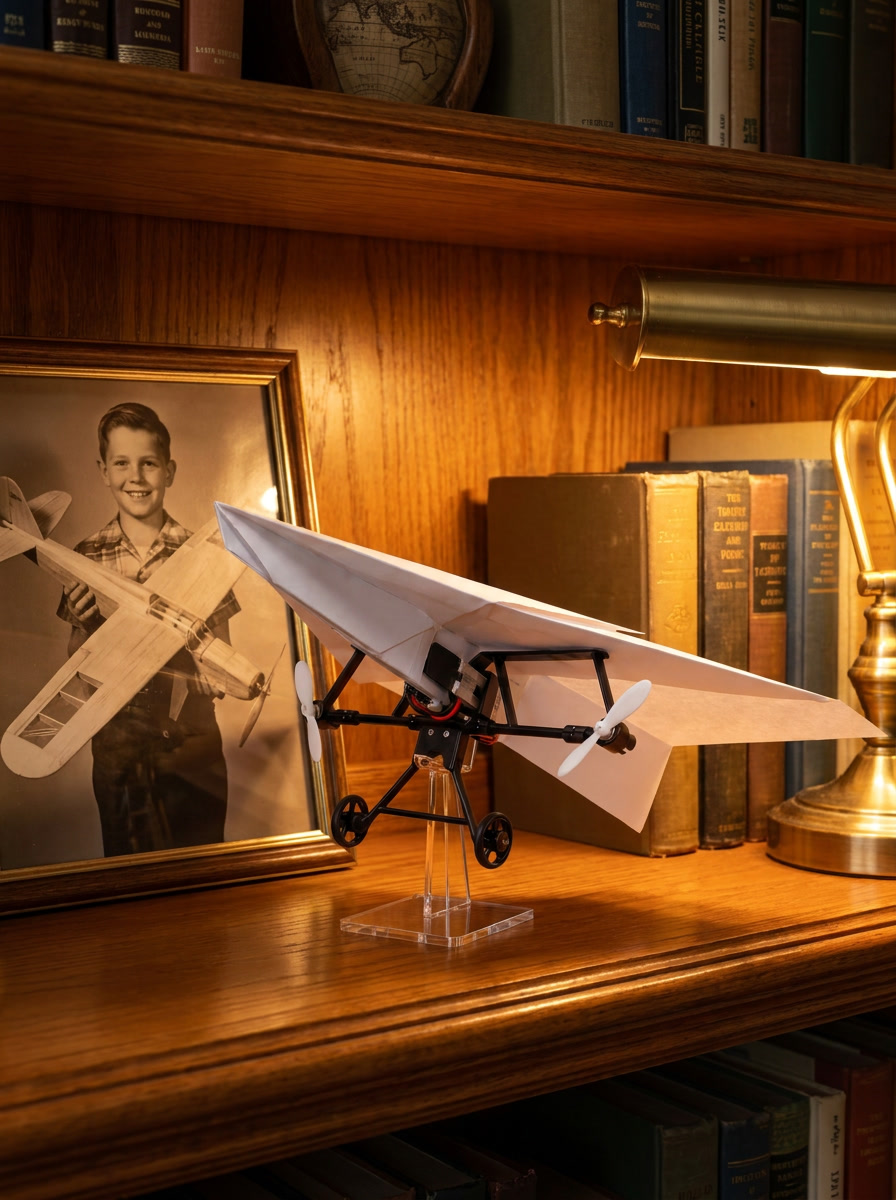
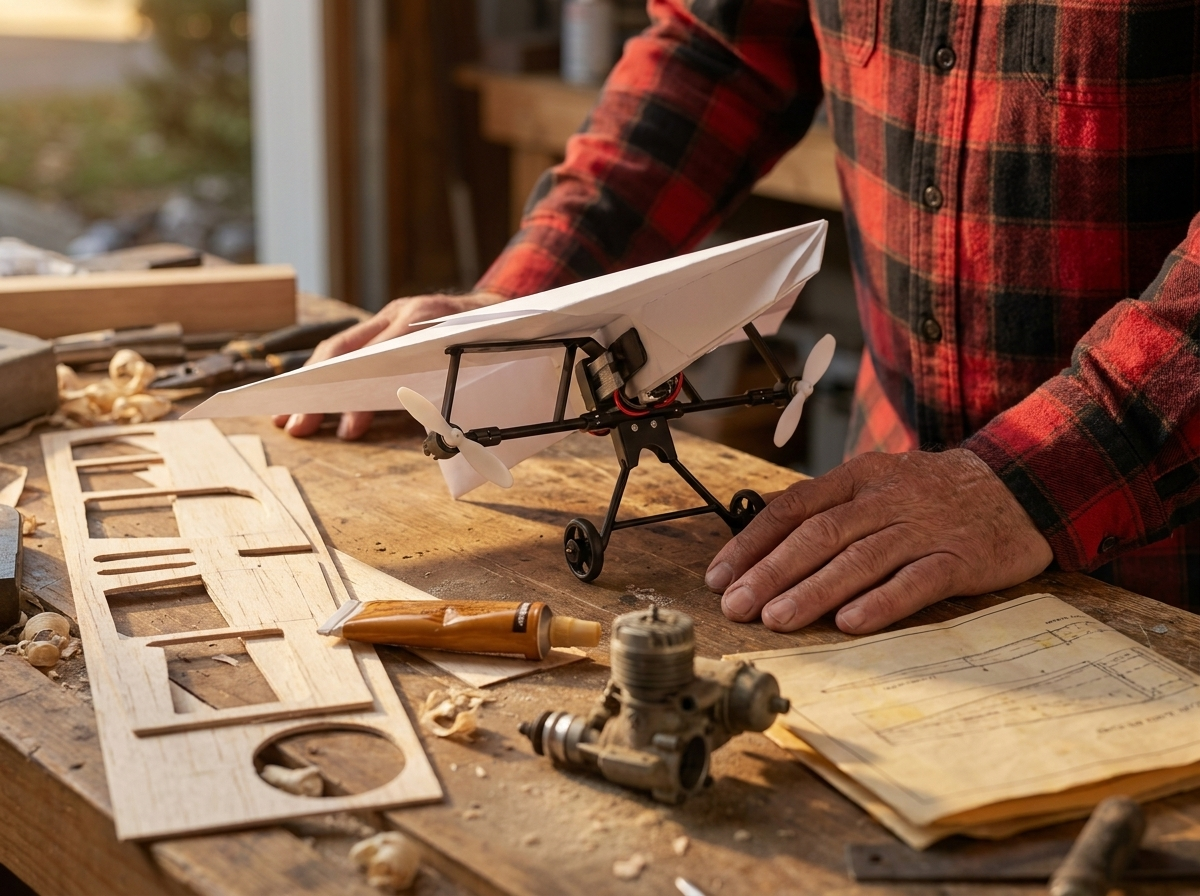
If you're over sixty there's a fair chance you remember the smell of model glue and the feel of balsa snapping under your thumb. A kit was a week of evenings at the kitchen table. Then one Saturday it went into the ground nose-first, and that was that. Nobody rebuilt it. You moved on to cars, or a job, or a family.
Here's the part nobody says out loud: most of us didn't stop because we grew out of it. We stopped because every crash cost a week and a paycheck, and somewhere around the third one it stopped being worth it. The itch never went anywhere. The math just got bad.
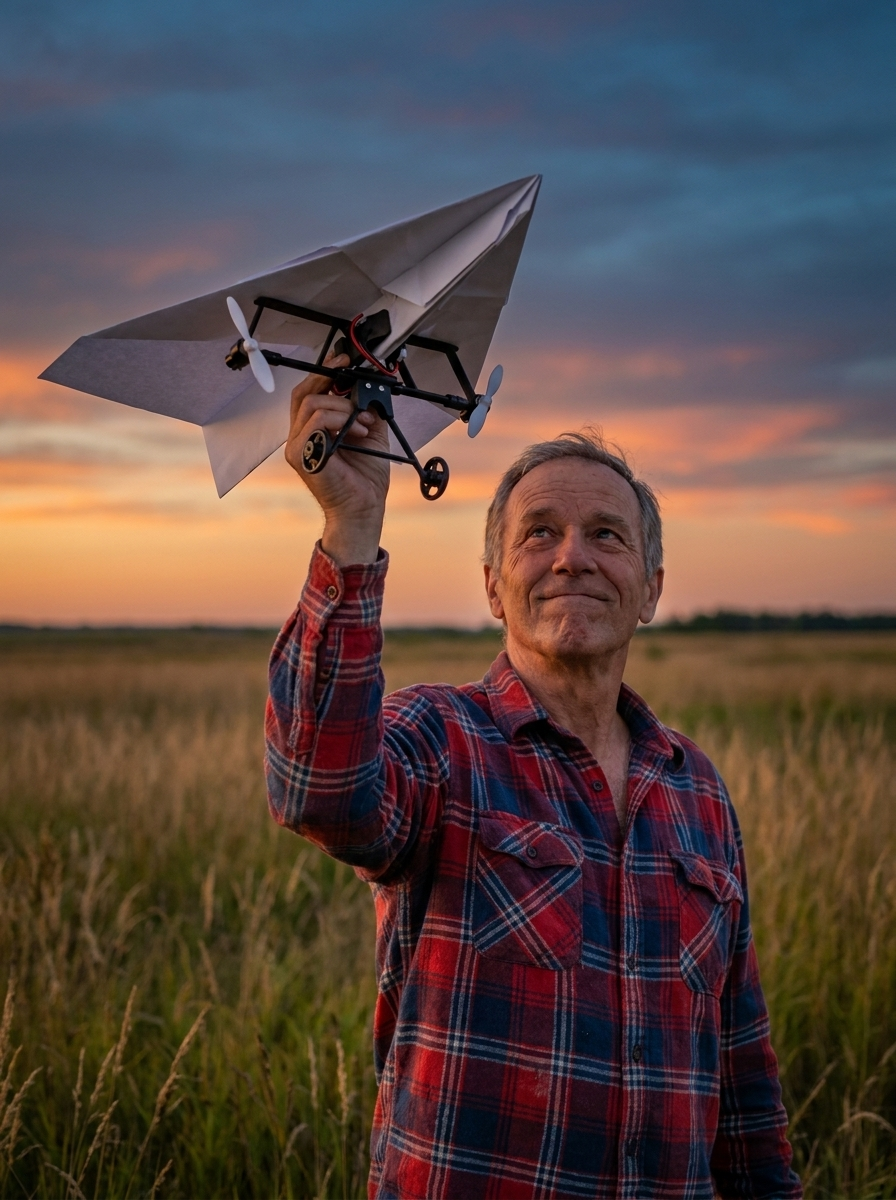
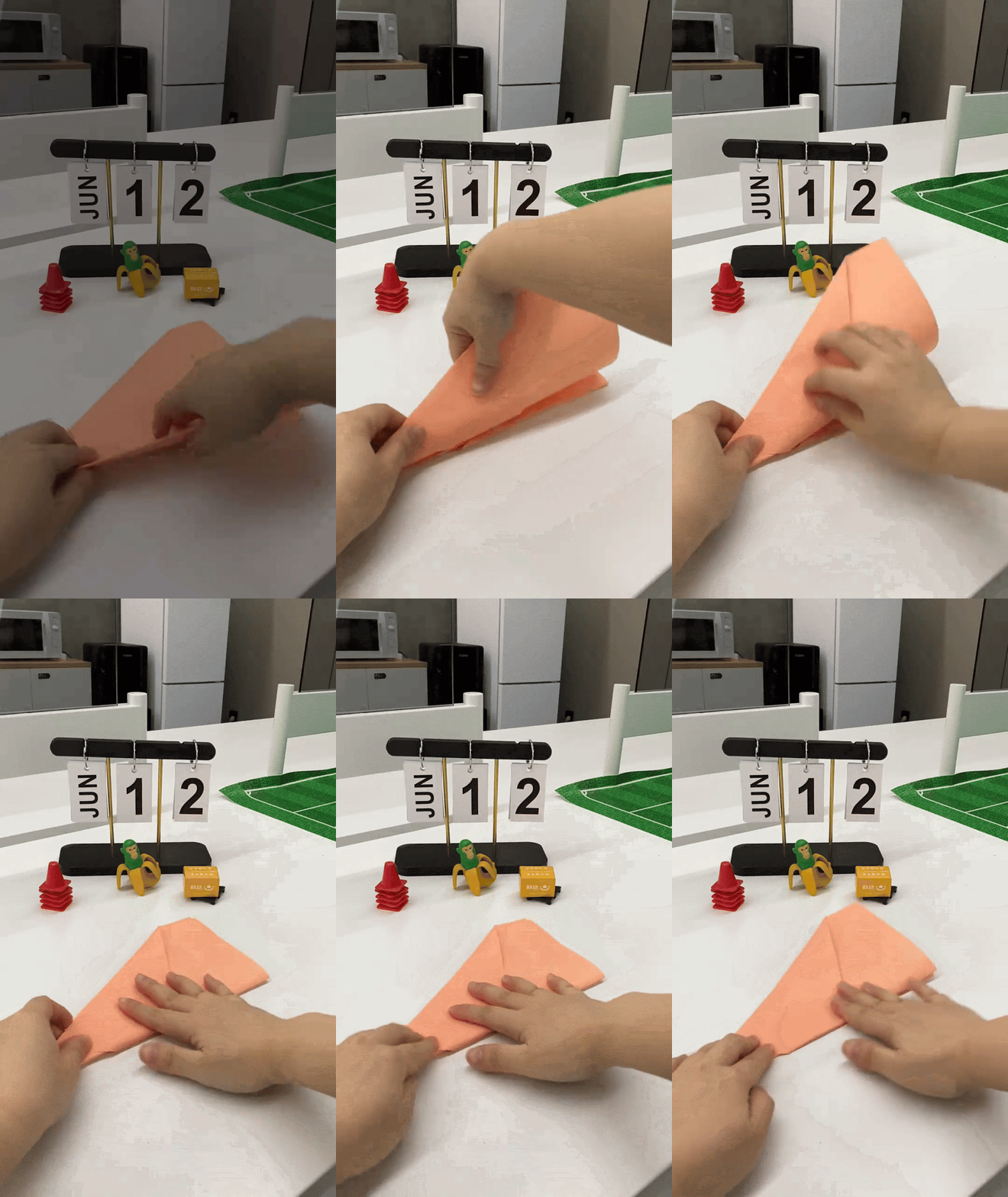
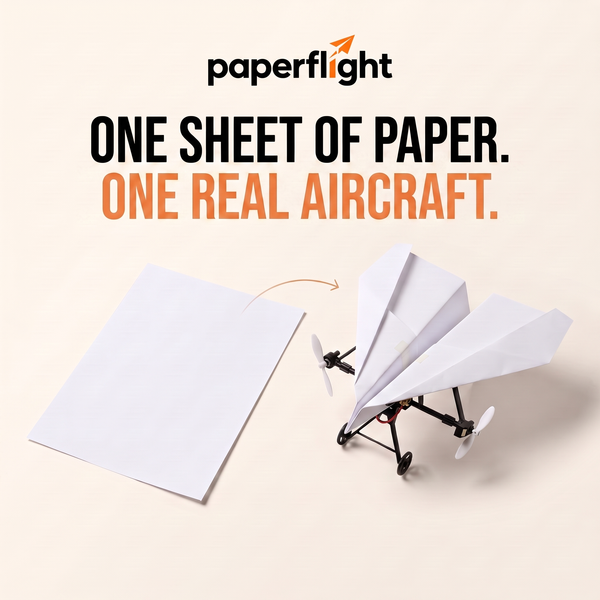
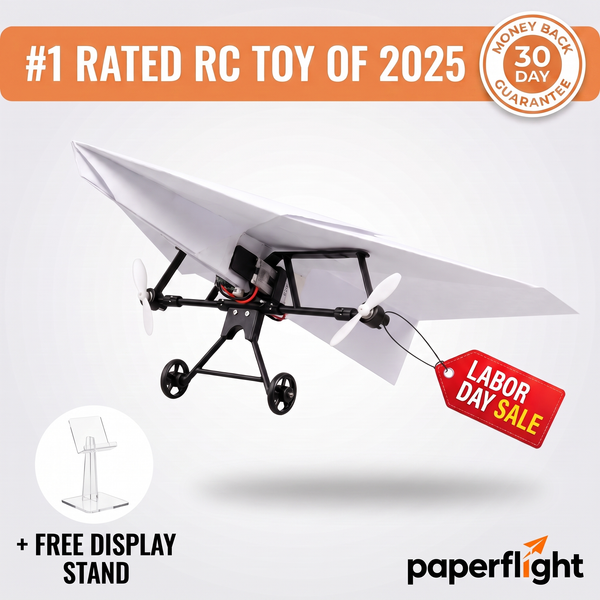
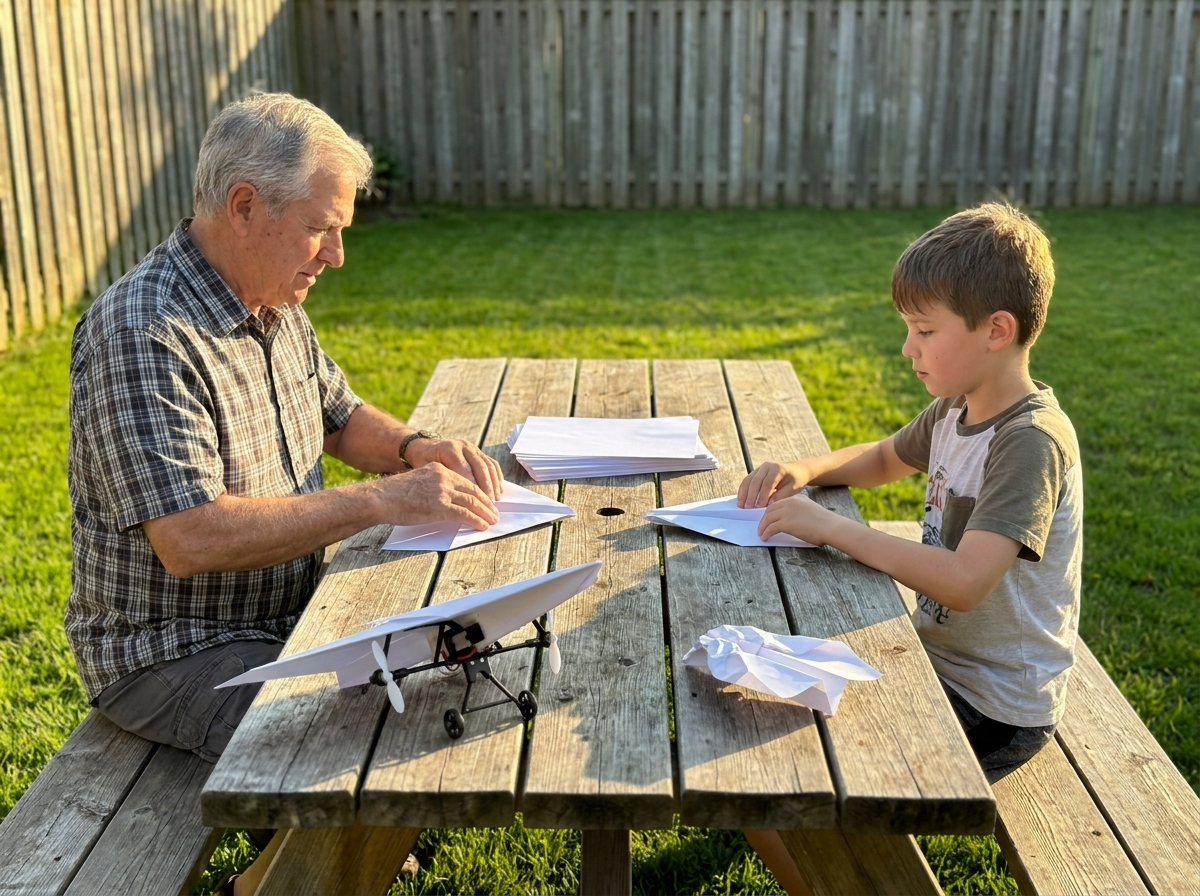
PaperFlight fixes the math. The airframe is a sheet of printer paper you fold in a minute. The motor, the gyro and the remote are the part you keep. Fly it into a tree, crumple it, fold another, go again. It's the hobby you had — with the part that ended it taken out.
Two Props Up Front. No Rudder. Here's How It Turns.
Look at it and the first question any man who's built a plane will ask is: where's the rudder? Fair question. Here's the honest answer.
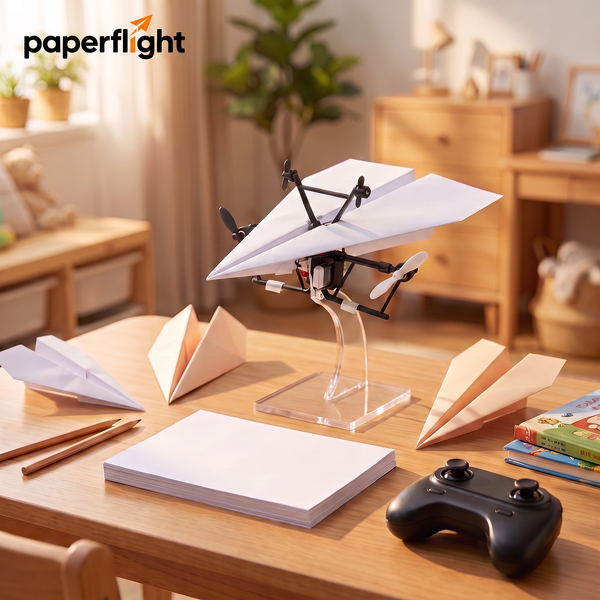
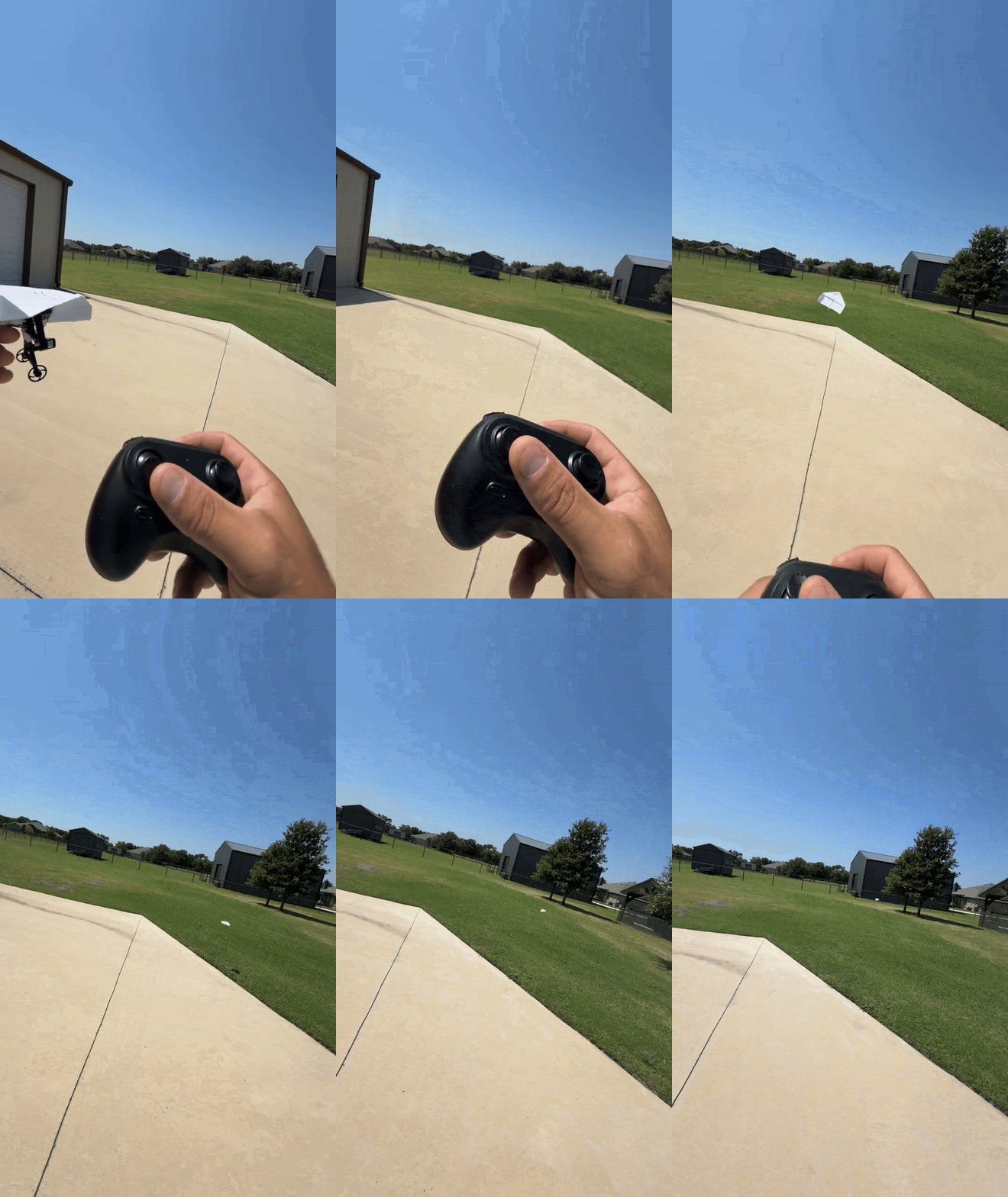
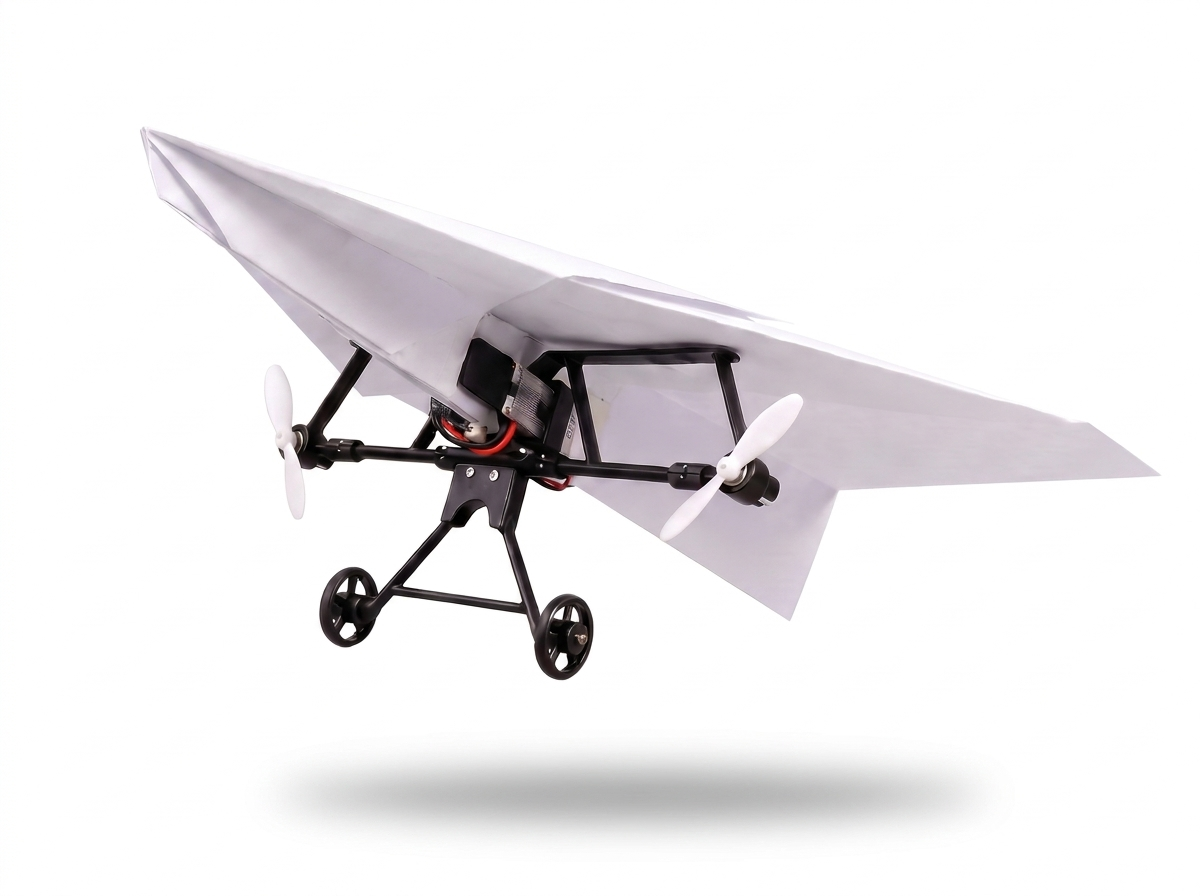
The module clips under the nose. A crossbar runs across the front with a propeller at each end, both pulling forward like a twin-engine. To turn, it spins one faster than the other — differential thrust, the same thing a twin pilot does with one throttle pulled back. Push the stick right and the left prop spins up, and the plane banks right. No rudder, no servo, no control surface to hinge and glue. An onboard gyro reads the wings and holds them level between your inputs, so it flies straight instead of corkscrewing the way a hand-thrown paper plane wants to.
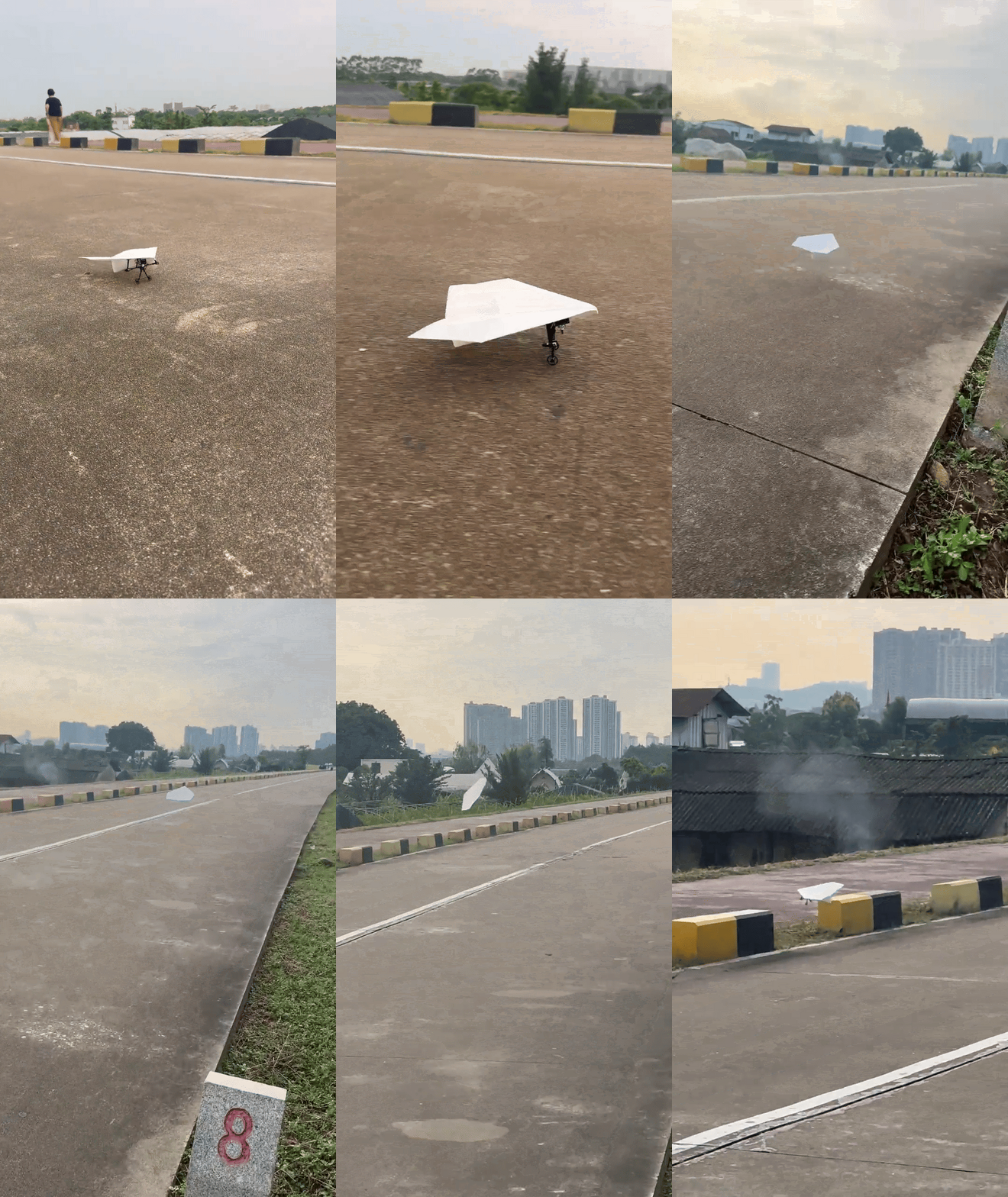
Push the throttle and it climbs. Ease off and it glides down like the paper plane it still is. Under the hood it's a rechargeable battery that tops up off any USB port — charge it while you fold the next airframe — and a real radio link to the remote, not Bluetooth to a phone. The landing gear clips on underneath so it rolls off a driveway; pull it off and hand-launch.
Two Sticks. Your Thumbs Haven't Forgotten.
The famous $90 paper plane is flown with a phone. You tilt the phone in the air to steer, drag a thumb across the glass for throttle, and pair it over Bluetooth before any of that. If you've ever handed a phone to a grandkid to "just set it up for me," you already know how that afternoon goes.
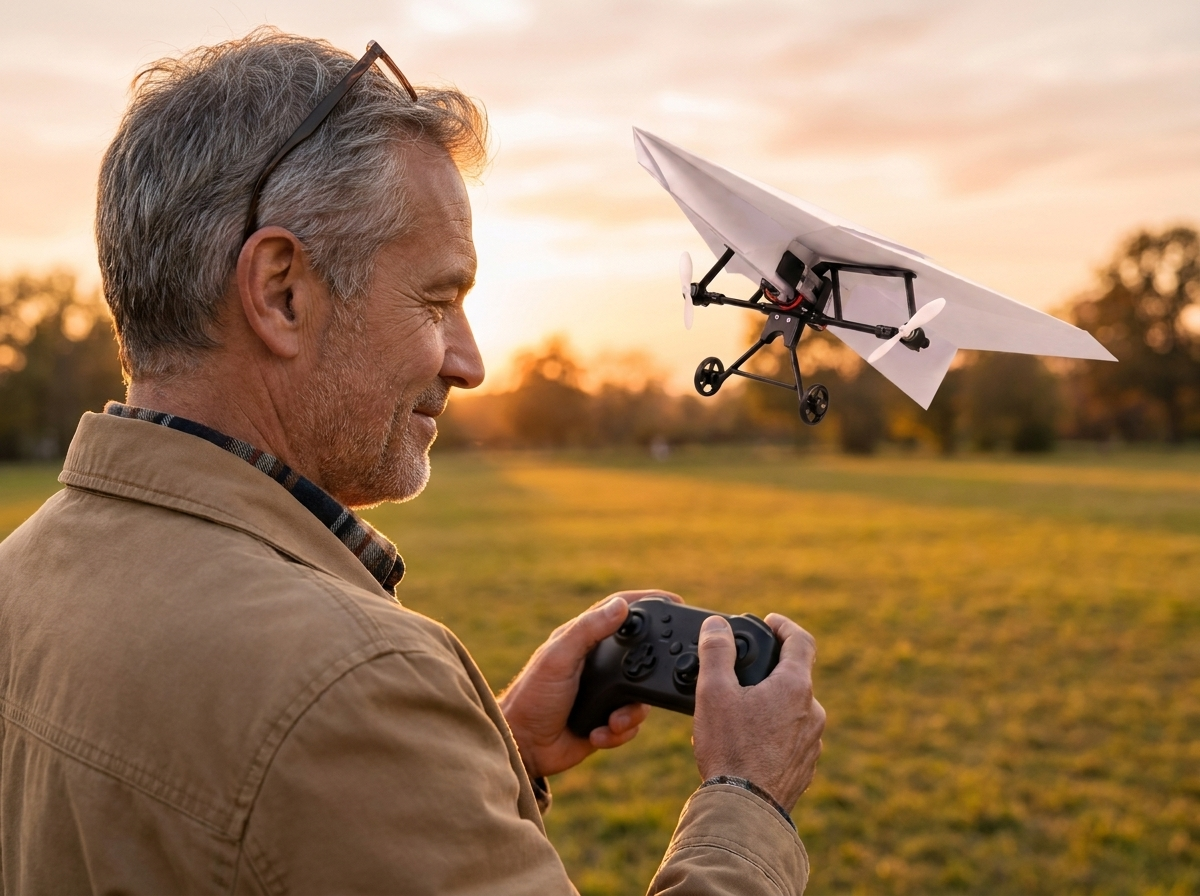
PaperFlight ships with a real two-stick controller in the box. Left stick is throttle. Right stick is steering. It's the layout of every transmitter you've ever held, shrunk to fit one hand. No app. No account. No pairing. No update waiting at the worst possible moment. Nothing to charge except the plane.
Turn it on and fly. If a grandkid wants a turn, hand it over. If he tells you you're doing it wrong, take it back. Nobody is teaching you an app.
The Crash Costs a Sheet of Paper. So Fly It Like You Mean It.
Here's what changes when the crash is free. You stop flying carefully. You try the loop. You bring it in lower over the fence than you should. You bend the wingtips up because a kid at the park swore it helps, and you find out. When the airframe costs nothing, you get to be the pilot you were too careful to be at fourteen.
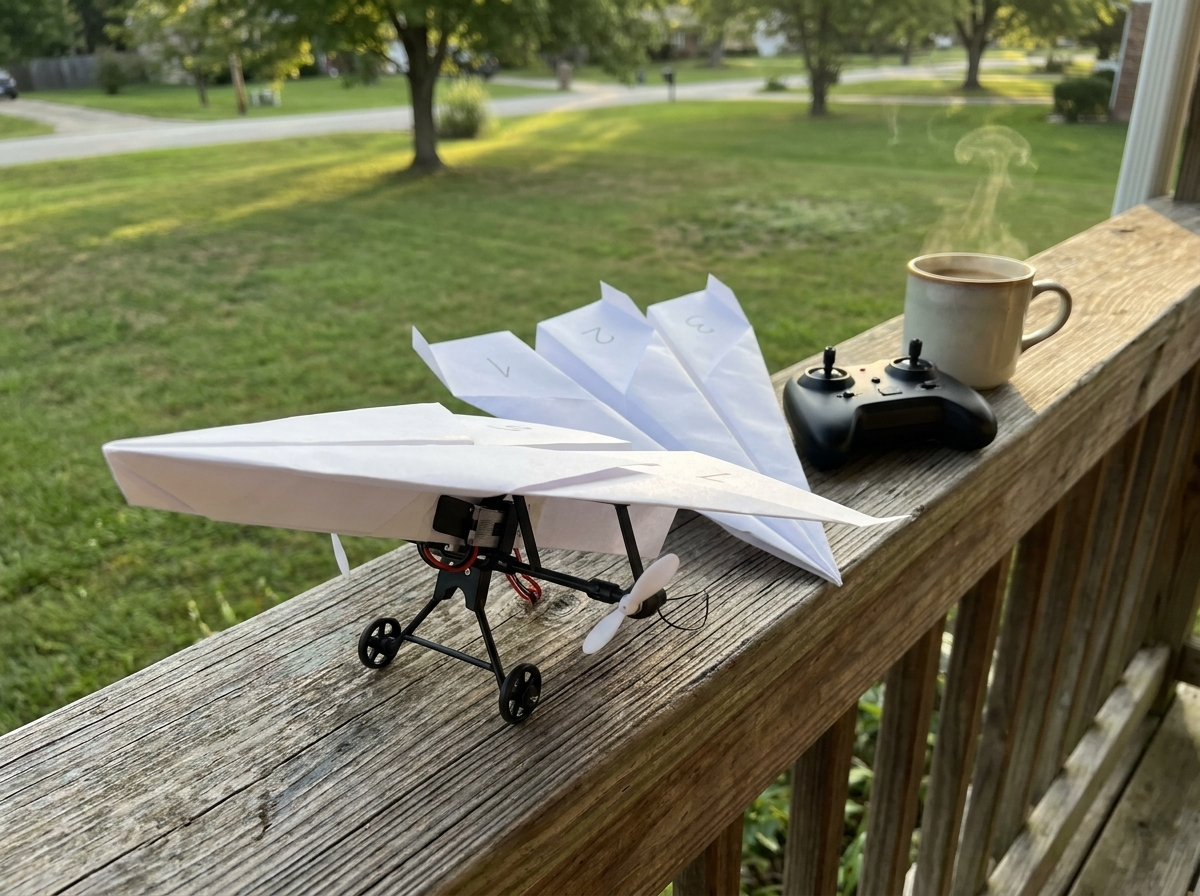
Most of the men flying these every weekend end up with a row of planes on the porch rail with numbers penciled on the wings. Wide wings for a slow floater. Long nose for a dart. One that came out of the printer drawer in red so the neighbor knows which one is yours. Nobody tells them to do that.
A ream of paper is 500 airframes. You will run out of daylight before you run out of planes. And once you're flying every weekend you'll find out what the regulars know: heavier paper glides longer and takes more hits. You'll see why that matters on the product page.
$31.95. Get One for You. Get Three and It Counts as a Gift.
"10-year-old??? I'm in my 60s and I'm ordering two." That's a real comment under our last ad, and it got more likes than the ad did. The box says Ages 8+. It doesn't say 8 only. Nearly half the orders on this site are for two or more kits, and the men writing "one for me, one for the grandson" in the order notes are not confused about who it's for.
$31.95 during the Early Fall Sale, half off with free shipping. In the box: the twin-prop power module, the two-stick remote, a rechargeable battery, USB charging cable, detachable landing gear with wheels, a small screwdriver, a display stand and the manual. Everything you need to fly is in there. The only thing you add is printer paper.
Get three. One for you, one per grandkid, and you're still under what a single app-controlled plane costs. Theirs are wrapped and in the closet weeks before December. Yours is in the field this weekend. And if you're shipping one straight to a grandson, you'll see a gift-ready option on the product page.
A twin-propeller power module with a gyro stabilizer that clips onto any paper plane you fold — flown with a real two-stick remote. Crash it, fold another, fly again. No app. No phone. Ages 8 to 80.
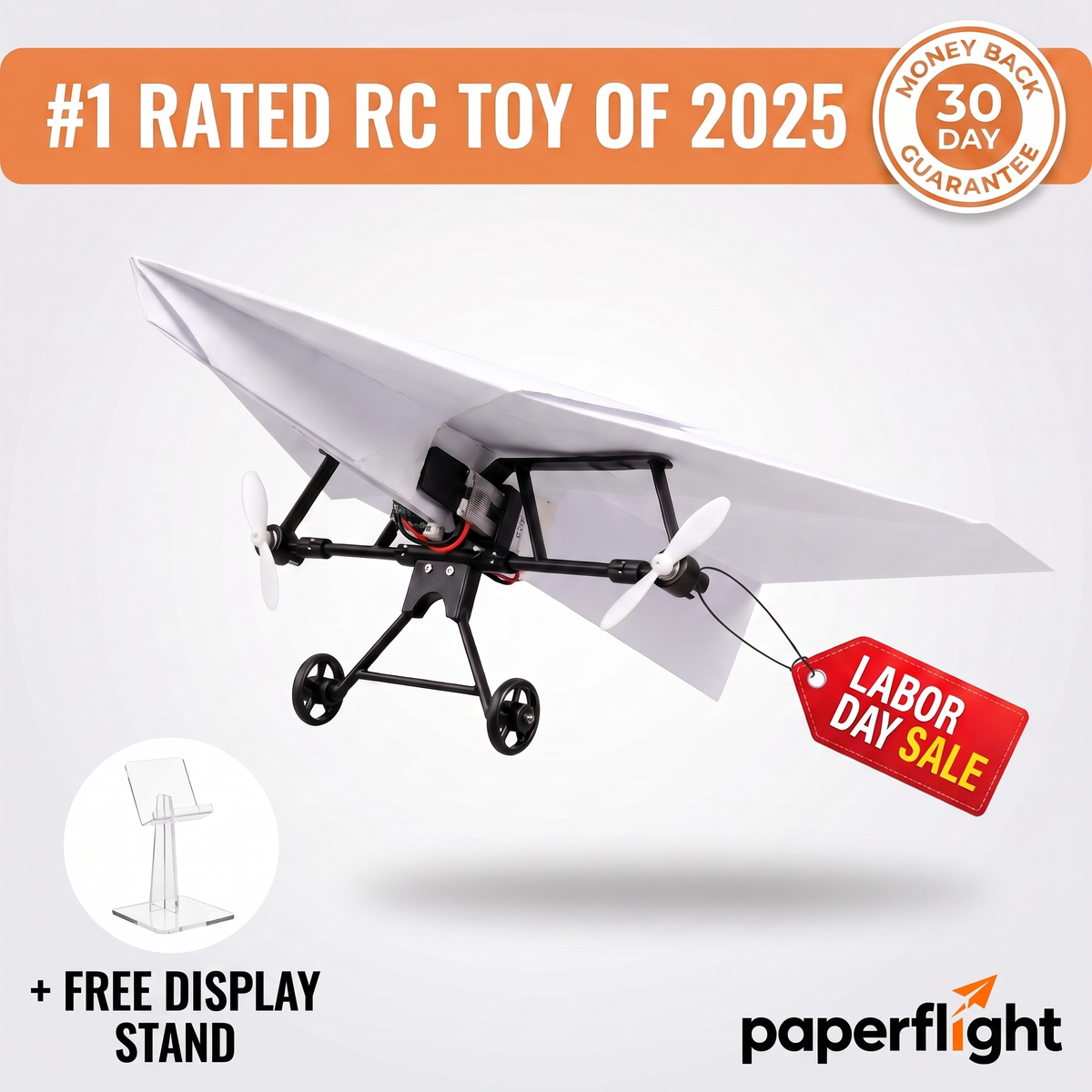
Why 50% off in September? Every kit that ships now is one we're not racing to deliver in the December crush. Early shoppers get the price. When the holiday rush starts, it goes back up — that's the whole story.
$31.95 during the Early Fall Sale — half off, free shipping, and 30 days to change your mind. Real sticks in your hands, a motor built to survive you, and an airframe that costs nothing every single time. The box says 8+. So are you.
Get PaperFlight — 50% Off →