You Know the World-Record Fold by Heart. You've Just Never Flown One With a Motor.
Five reasons the men who never stopped folding are clipping a motor to the plane they've made a thousand times — and why the fold you already know is the whole airframe.

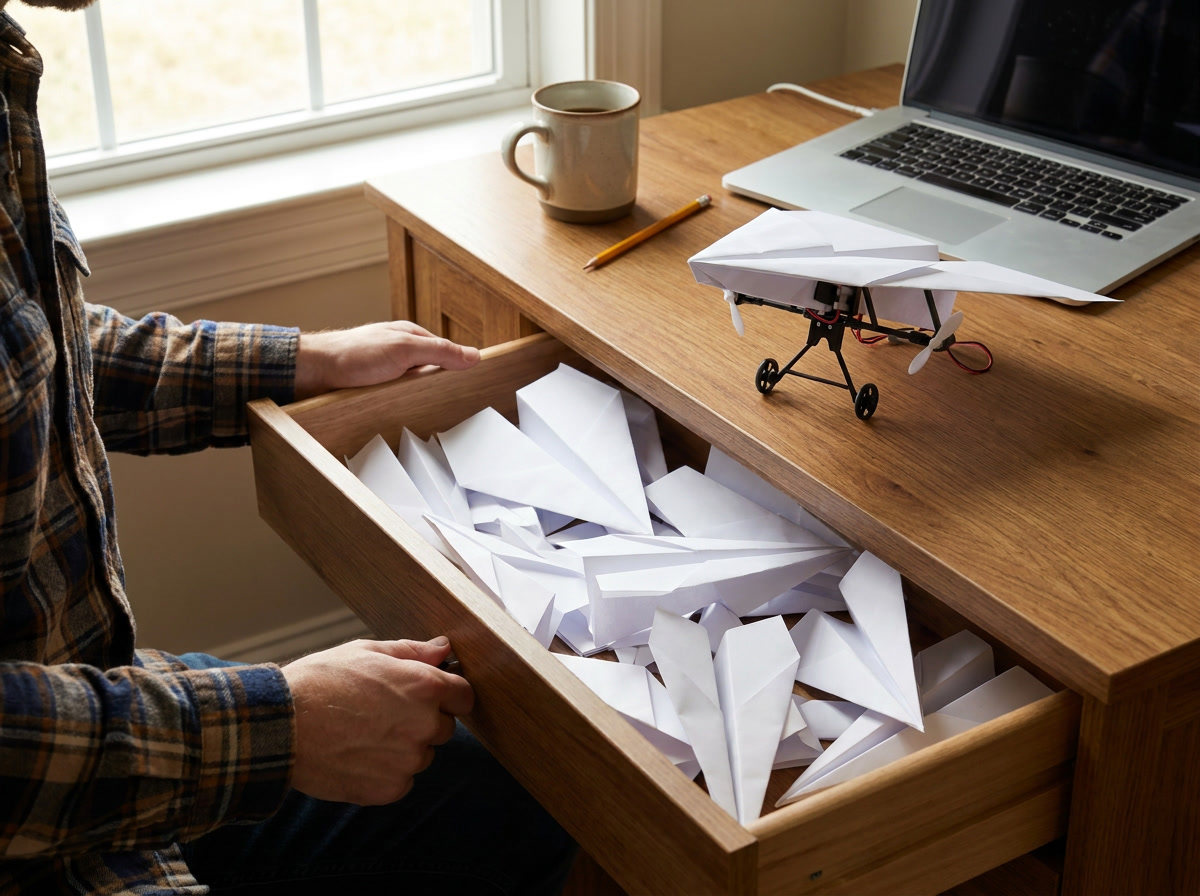
You've Been Folding These Since Third Grade. Now One of Them Turns When You Tell It To.
You never quit. There's a drawer at your desk with a dozen of them in it right now. You know the dart from the glider, you know what a little dihedral does, you know the nose-weight trick and the crease that makes the difference between a plane that flies and one that noses over. You've thrown one down every hallway you've ever worked in. And every single one of them did the same thing: went where physics said, in a straight line, until it stopped.
The part nobody says out loud: you never outgrew paper planes. They just never had a motor. Twenty years of folding, and not one of them has ever turned left because you told it to.
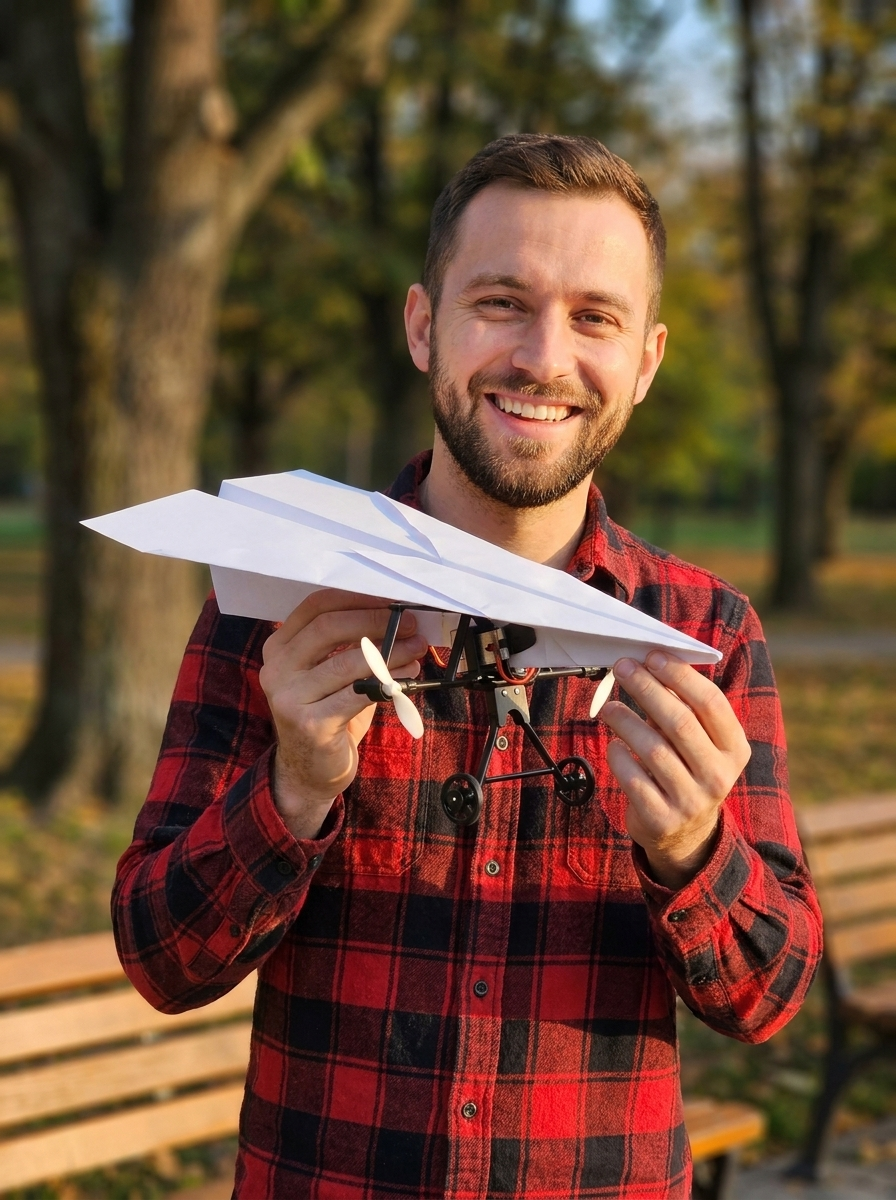
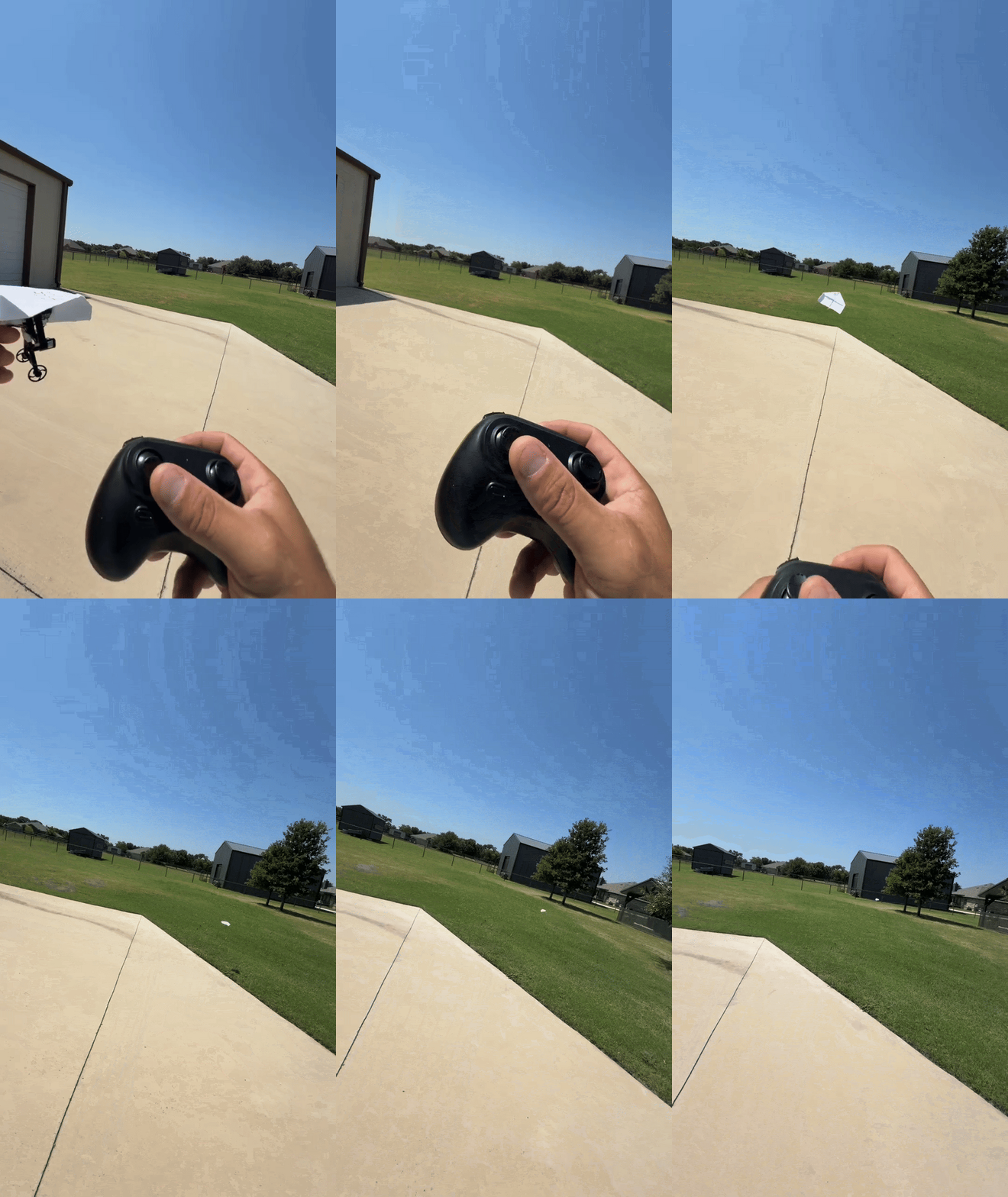
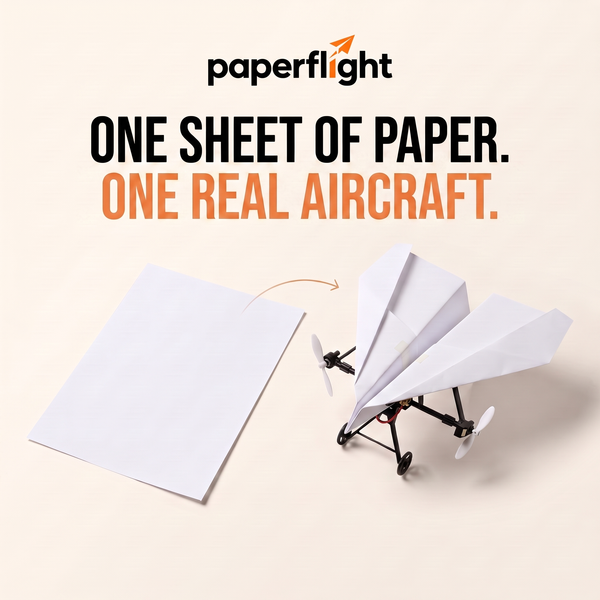
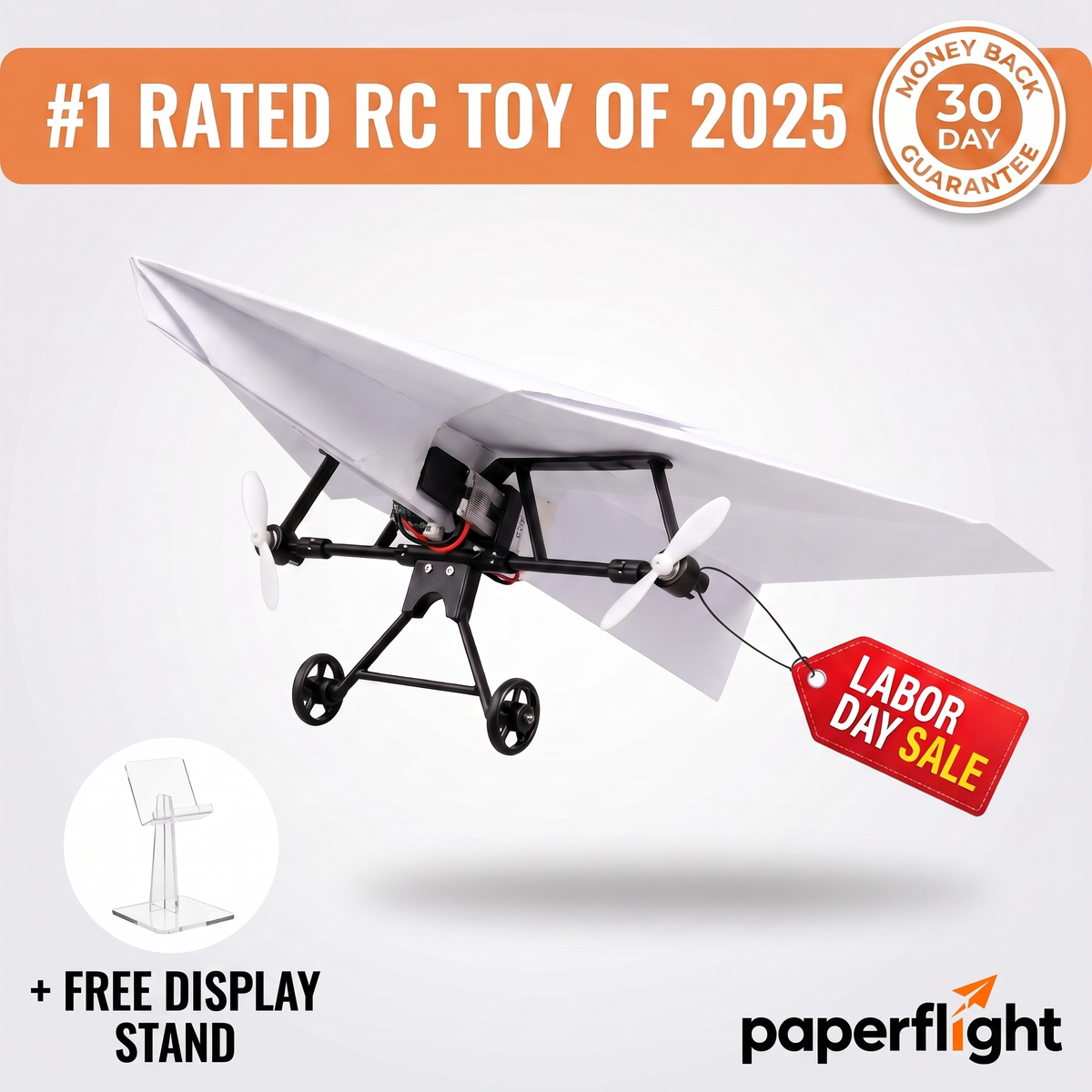
PaperFlight doesn't come with a plane. It comes with everything except the plane. A black power module with two props and a gyro clips under the nose of whatever you fold, a real two-stick remote flies it, and the airframe is the one you've been making since you were eight. Throttle up and it climbs. Push the stick and it banks. Twenty years of practice finally has somewhere to go.
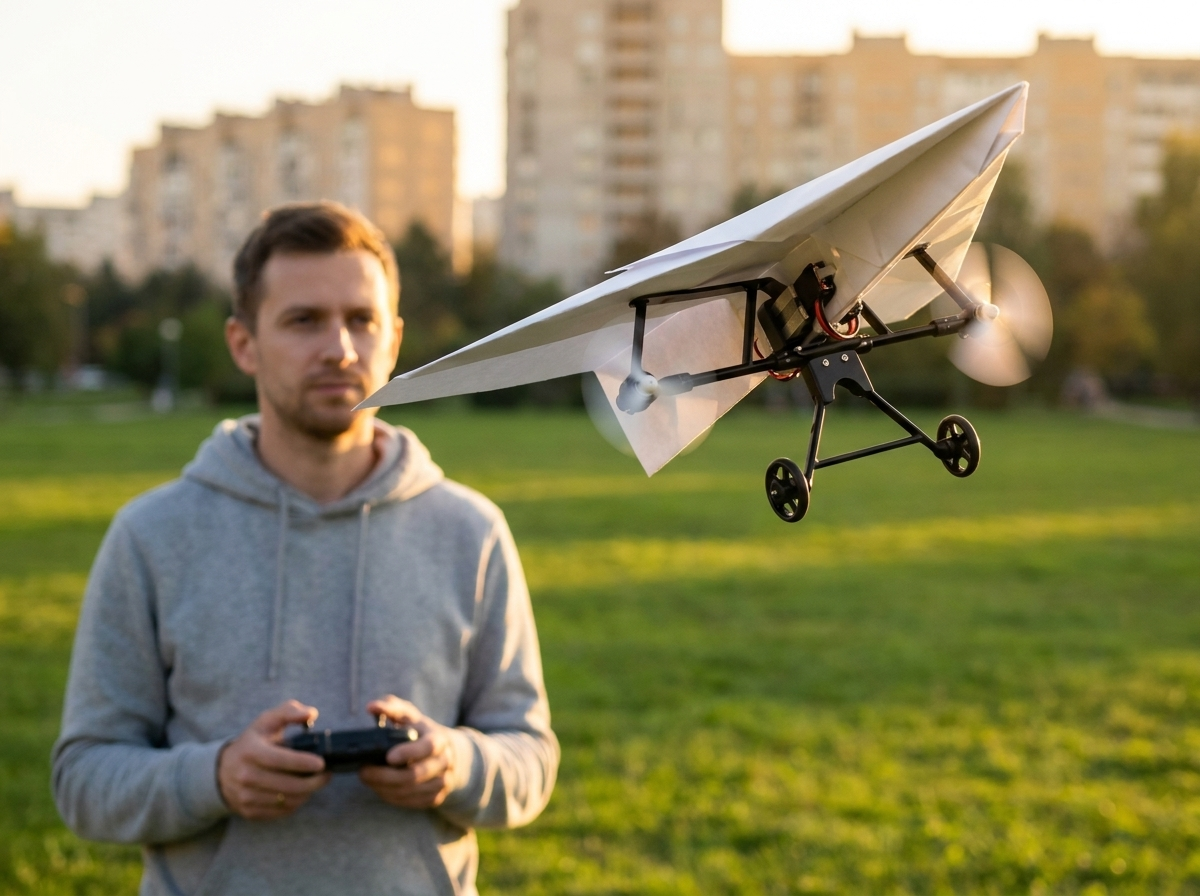
Two Props Up Front. No Rudder. Your Fold Is Still the Airframe.
You'll look at it and ask how it steers a plane with no moving surfaces. It doesn't need any. A crossbar across the nose carries a prop at each end, both pulling forward. To turn, the module spins one faster than the other — push the right stick and the plane banks. An onboard gyro reads the wings and holds them level between your inputs, so the plane that wants to roll off and dive flies straight instead.
What it doesn't do is replace your design. Your dihedral still matters. Your wing area still decides whether it's a floater or a dart. The module adds nose weight and thrust; the rest is the crease you put in it. Throttle up and your glider becomes a climber. Ease off and it glides down exactly the way you folded it to.
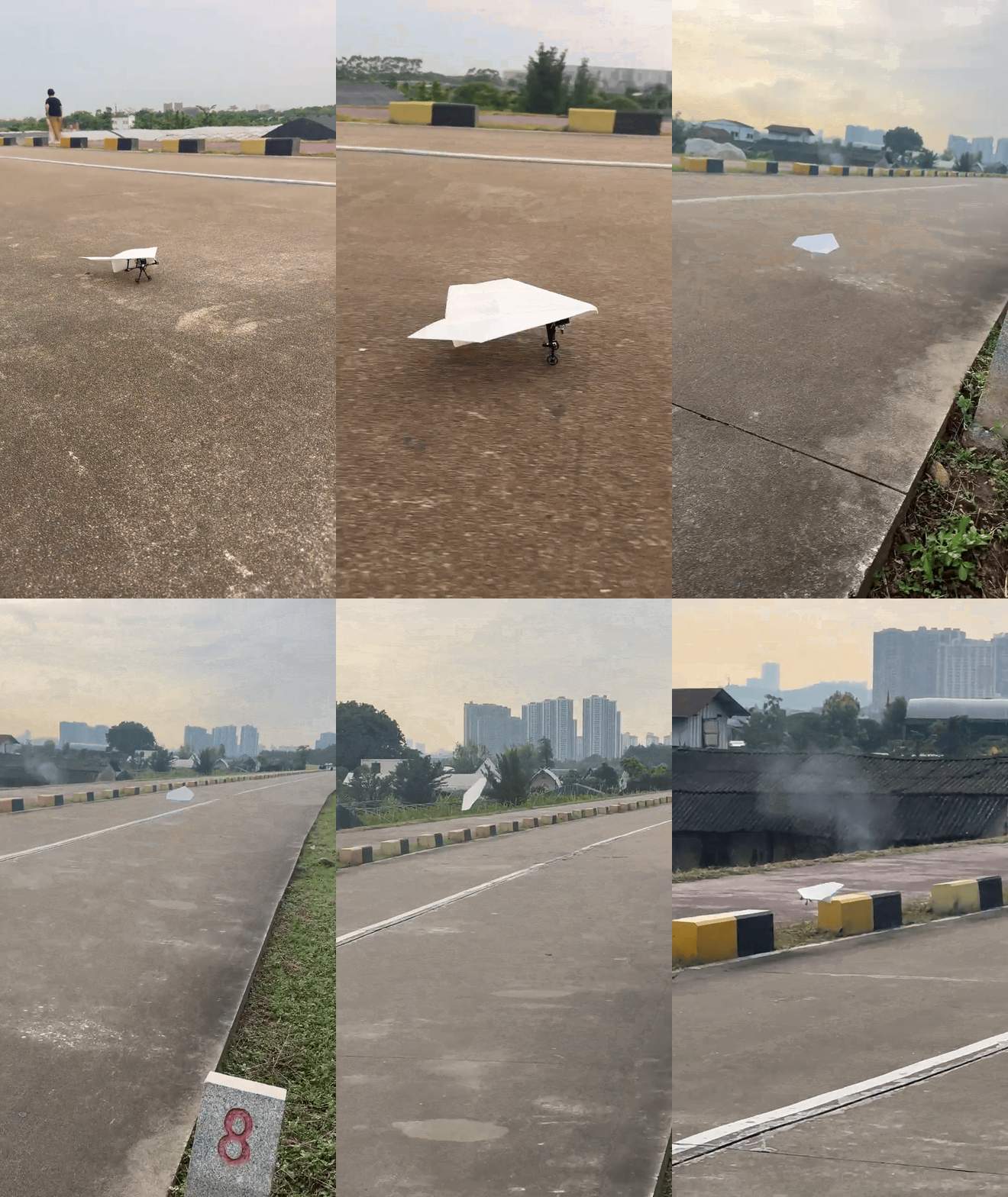
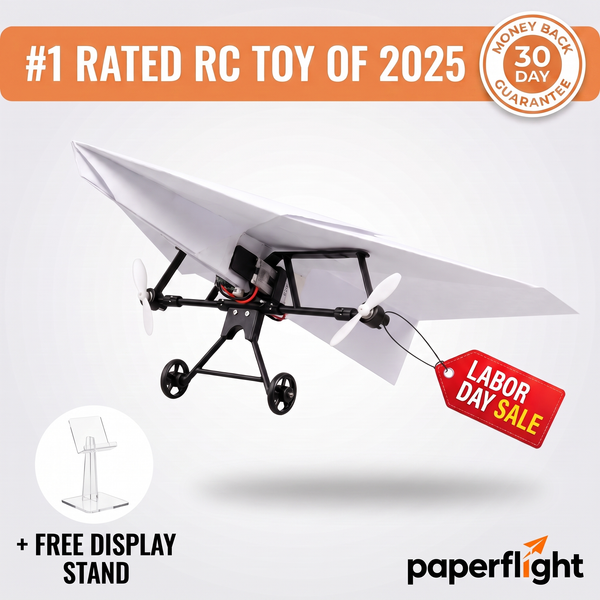
A rechargeable battery charges off any USB port — charge it while you fold the next one. Landing gear clips on underneath for a rolling takeoff off the parking lot; pull it and hand-launch the way you always have.
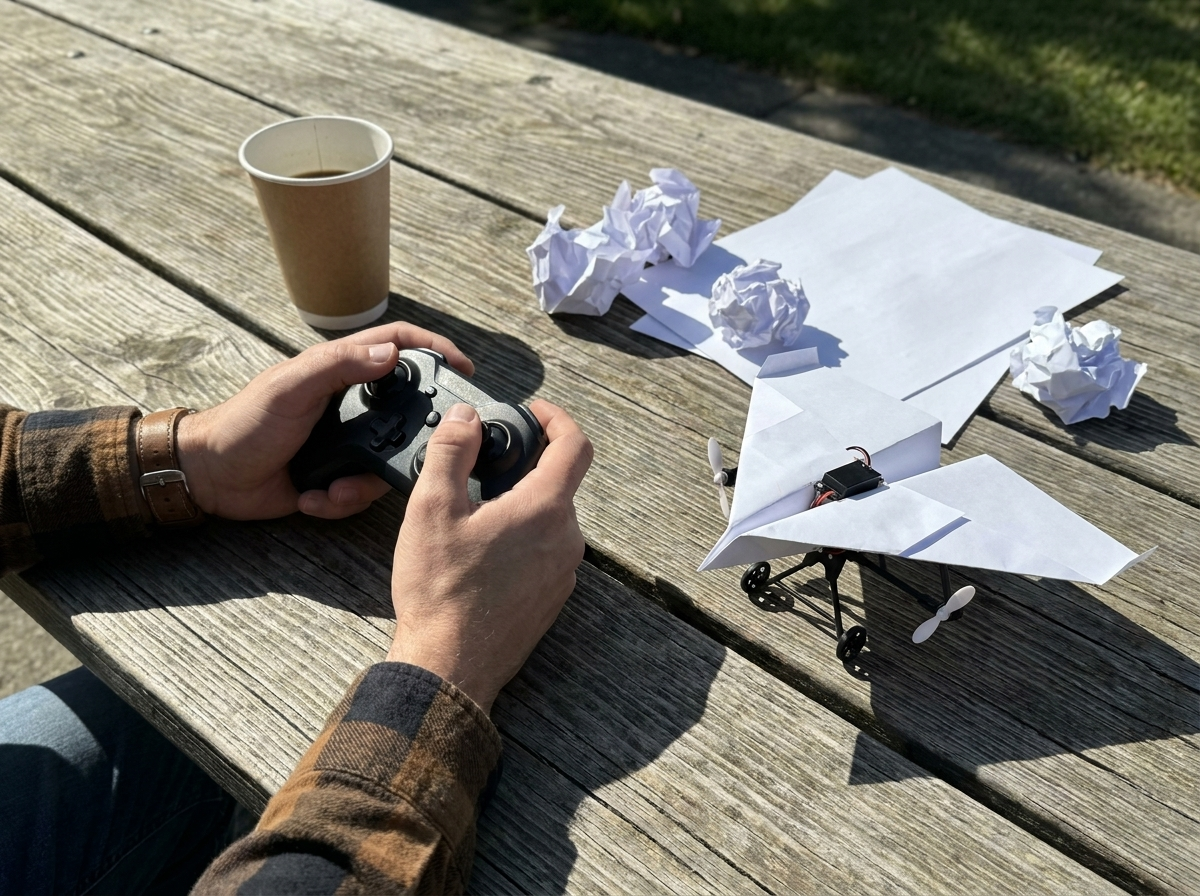
Two Sticks. Not a Phone Taped to a Paper Plane.
The famous $90 paper plane is flown with your phone. You pair it, you update the app, you make an account, and then you tilt the thing you already stare at nine hours a day to steer. You know exactly how long that lasts before it's in the closet.
PaperFlight ships with a real two-stick controller in the box. Throttle on the left, steering on the right. It isn't a hobby-grade transmitter — it's a compact two-stick unit — but it's the layout every controller since the one under your childhood TV has used. No app, no pairing, no login, no update at the park. Turn it on and fly.
And because there's nothing to set up, the coworker who's been on the receiving end of your hallway throws will have one turning on purpose by the second flight. That's usually when he asks where you got it.
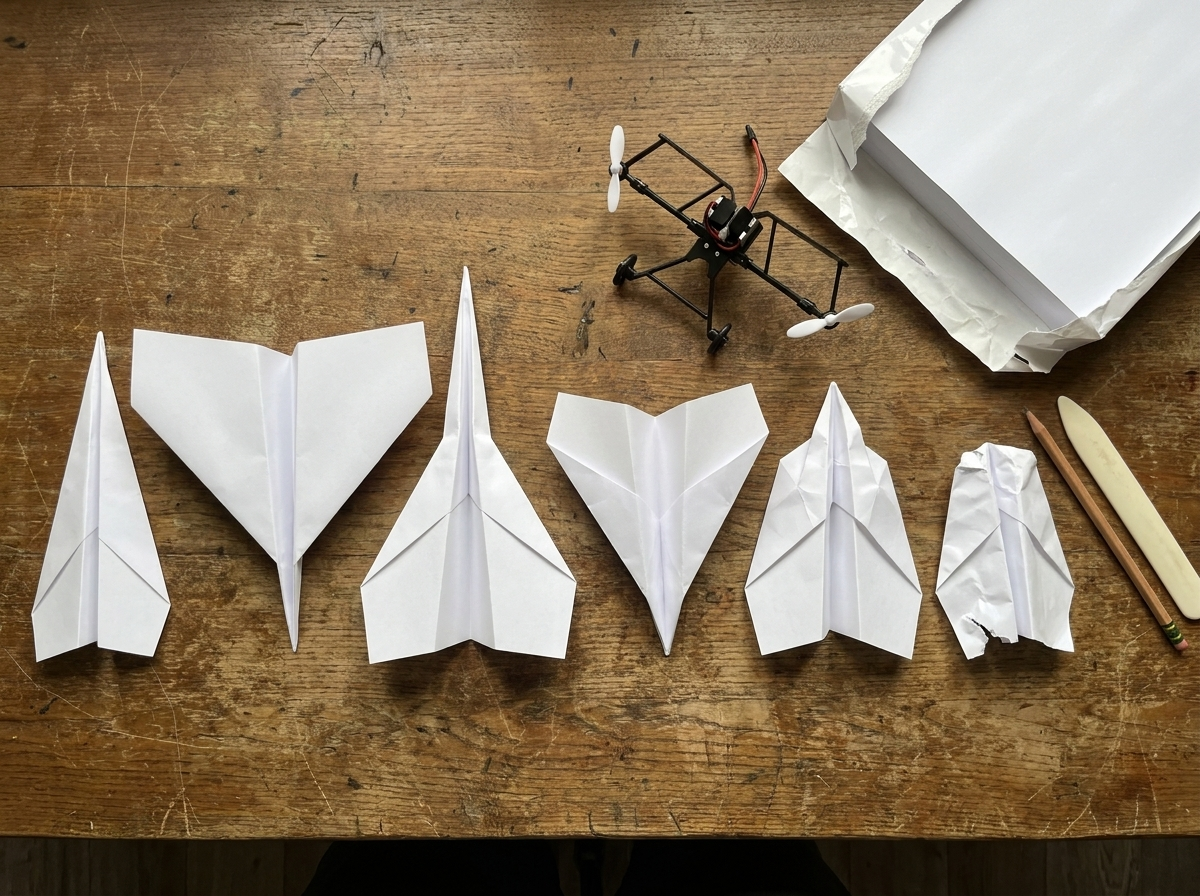
Crash It Into the Fence. You've Got a Ream at Your Desk.
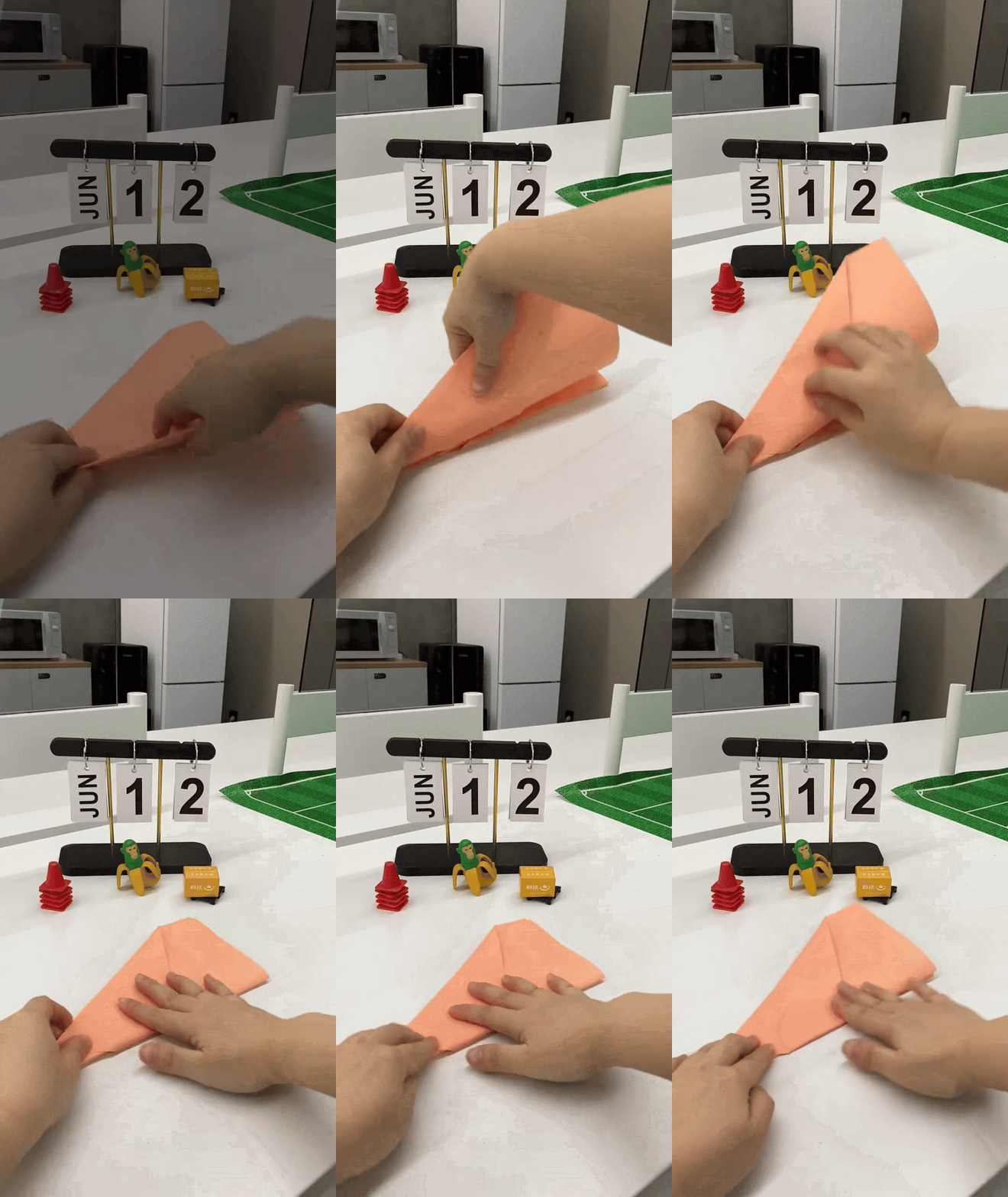
Here's the part built for you specifically. When it goes into the fence — and it will, the first afternoon — the crash costs a sheet of paper, and you have never once in your life been short on those. Nose crumples, module comes off, fresh sheet, new fold. You're not repairing anything. You're iterating.
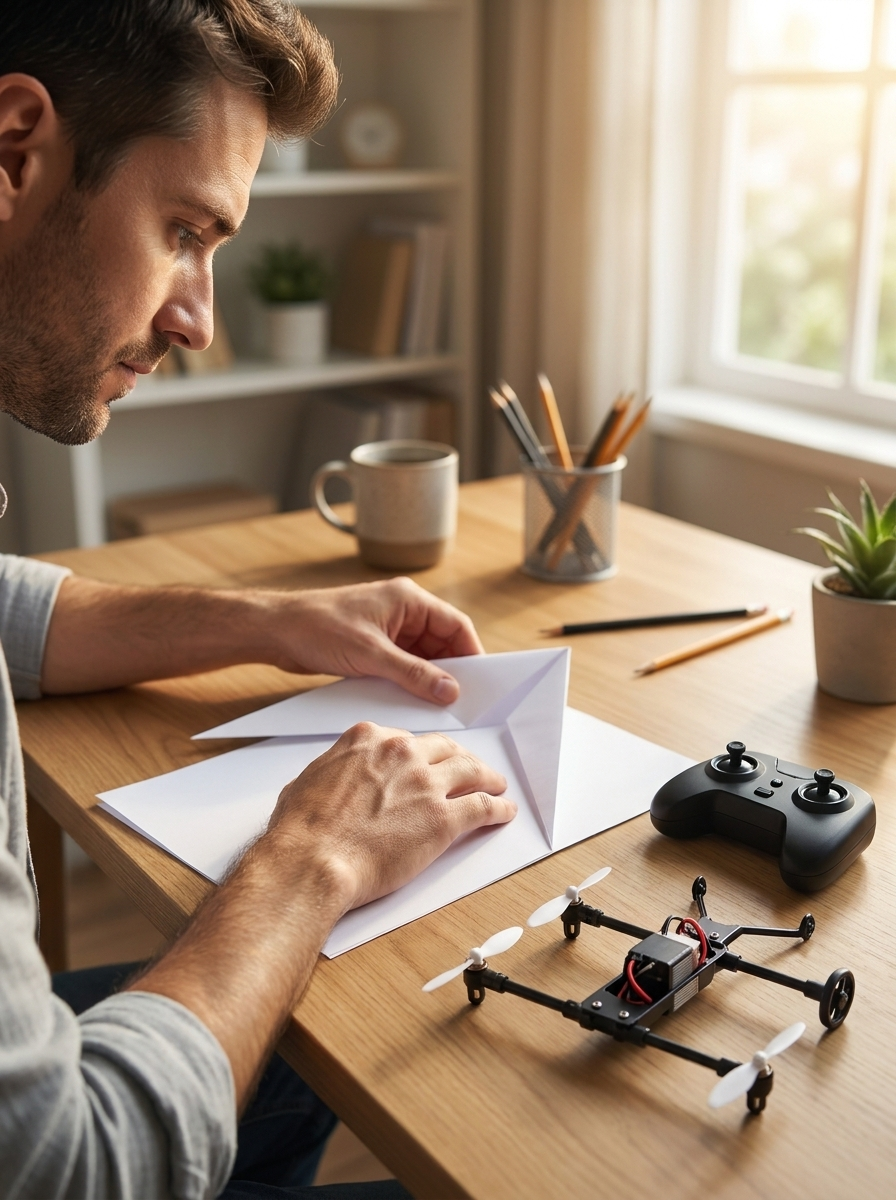
Fold one noses over under power. Fold two gets a wider wing. Fold three is the one that banks clean and comes back around, and by then there's a row of them on the desk that tells the whole story. It's the thing you've been doing at your desk for twenty years, except now each version gets a real flight instead of a hallway.
A ream of paper is 500 airframes. You'll run out of battery before you run out of planes. And once you're flying every lunch break you'll find out what the regulars know: you already know 20-lb copy from 24-lb, and the heavier stock glides longer and takes more hits. You'll see why that matters on the product page.
$31.95. For the Motor You've Been Missing Since Third Grade.
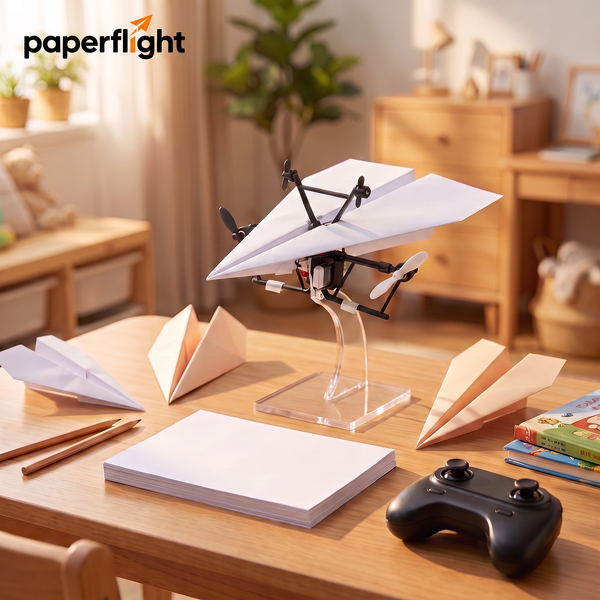
PaperFlight is $31.95 during the Early Fall Sale, half off with free shipping. That's the module, the two-stick remote, a rechargeable battery, USB charging cable, detachable landing gear with wheels, a small screwdriver, a display stand for the one on your desk, and the manual. Everything you need to fly is in there. The only thing you add is the thing you've already got a drawer full of.
The box says 8+. You were 8 once. It doesn't say 8 only.
Get two. One for you, one for the coworker on the other end of the hallway throw — two kits is $54.95 — and the first lunch break you both show up at the park with paper airplanes that turn is the best one you've had since recess.
The honest limits, because you'd rather hear them now: it needs open space, not the office. It won't fly in wind. The battery is short, so charge it while you fold the next one. And it wrecks planes constantly. Which, for you, is the whole point.
A twin-propeller power module with a gyro that clips under the nose of any paper plane you fold — flown with a real two-stick remote. Your fold is the airframe. No app, no rudder. Crash it, fold another, fly again.
Why 50% off in September? Every kit that ships now is one we're not racing to deliver in the December crush. Early shoppers get the price. When the holiday rush starts, it goes back up — that's the whole story.
$31.95 during the Early Fall Sale — half off, free shipping, and 30 days to change your mind. Two sticks in your hands, a motor built to hit the ground, and an airframe you've been practicing for twenty years. Empty the drawer.
Get PaperFlight — 50% Off →