
He's Going to Crash It 100 Times. That's the Whole Point.
Five reasons the only RC plane designed to be crashed is the one kids won't put down — because the airplane is a sheet of paper he folds himself, and the part that costs money is built to survive whatever he does to it.


The Crash Costs a Sheet of Paper. Not the Toy.
Here's what actually kills an RC toy. Not boredom — the first crash. A propeller snaps on day two, the replacement pack is $15 and a week away, and the whole thing goes on a shelf "until it's fixed." It never comes off the shelf.
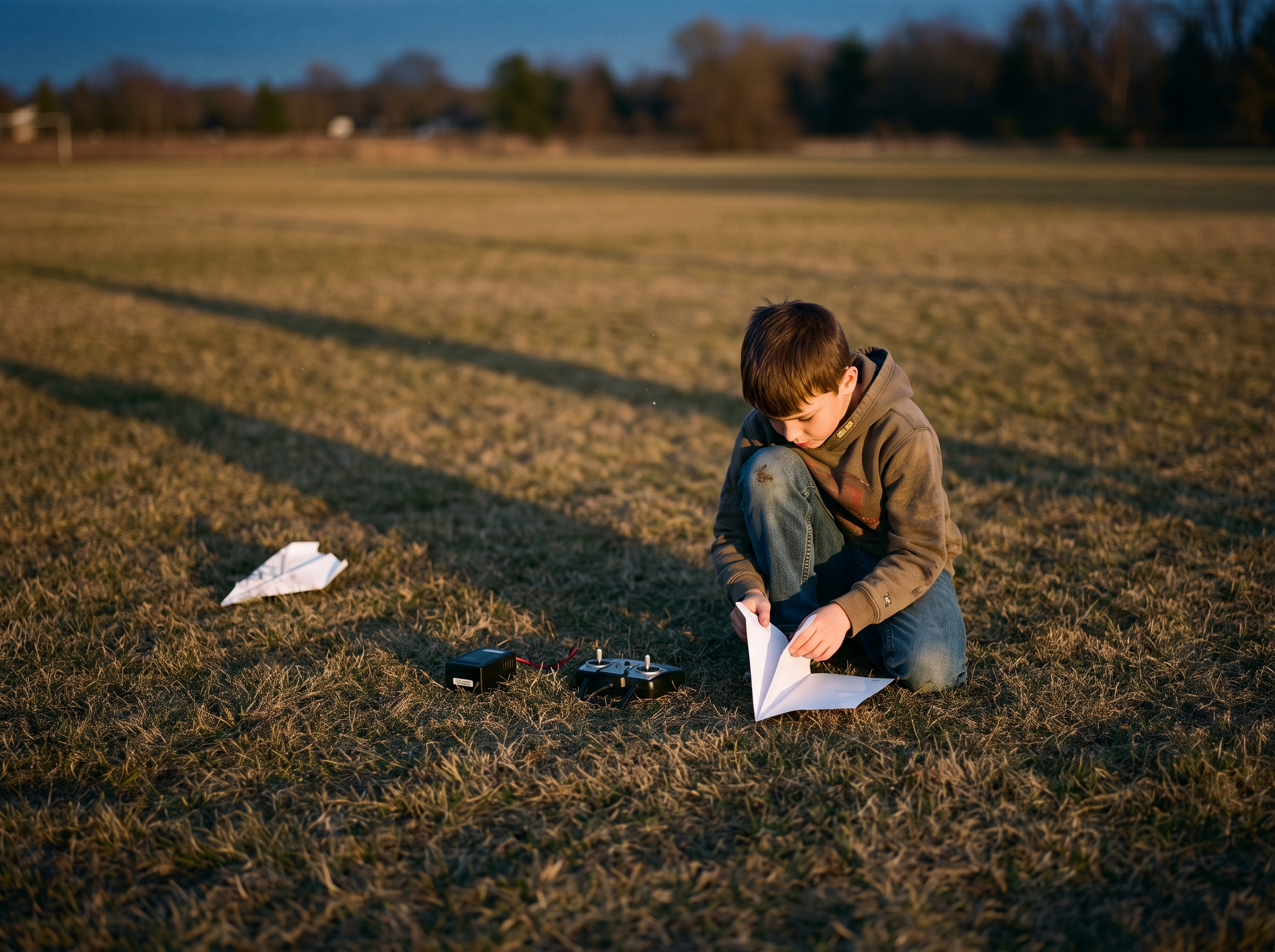
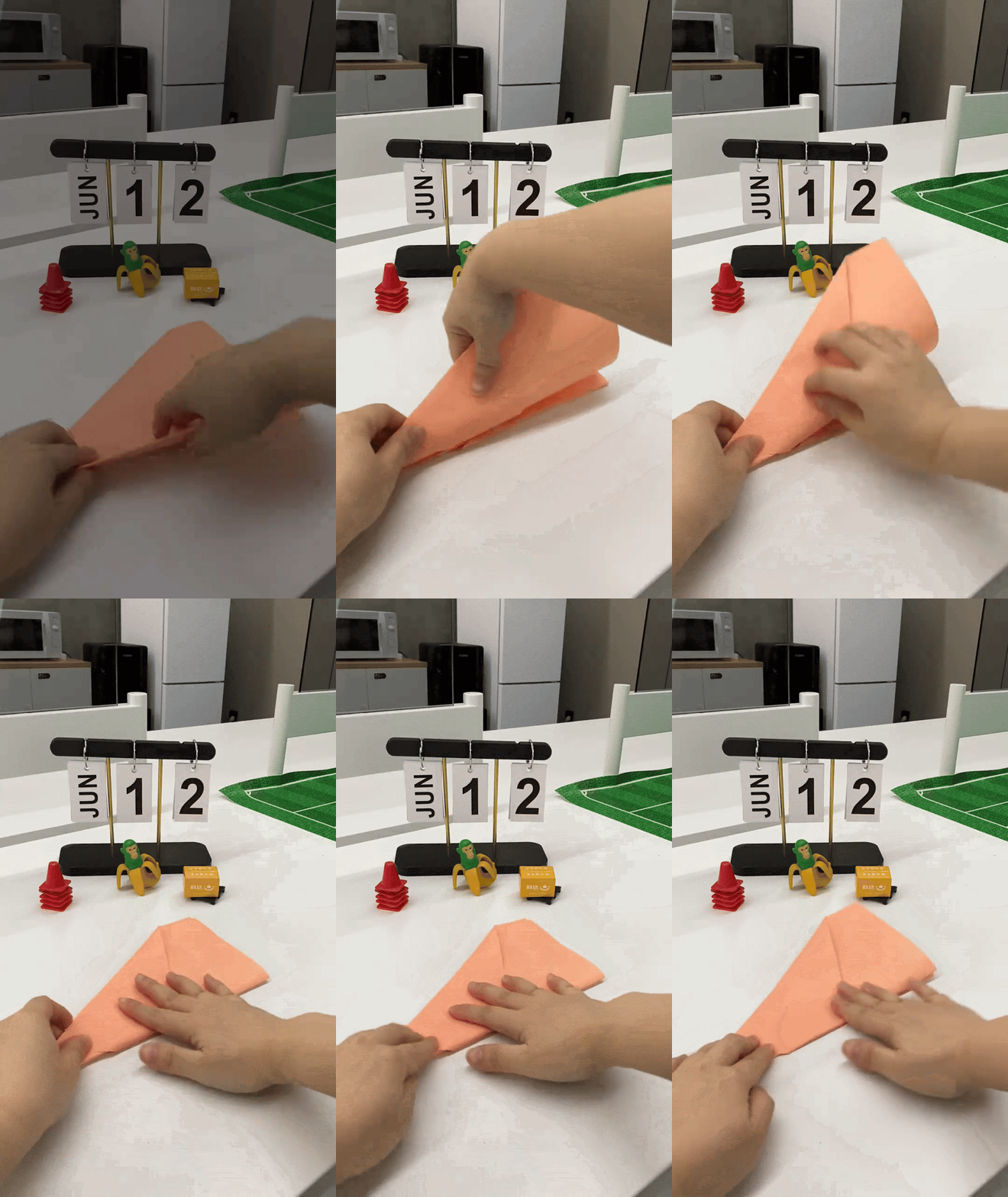
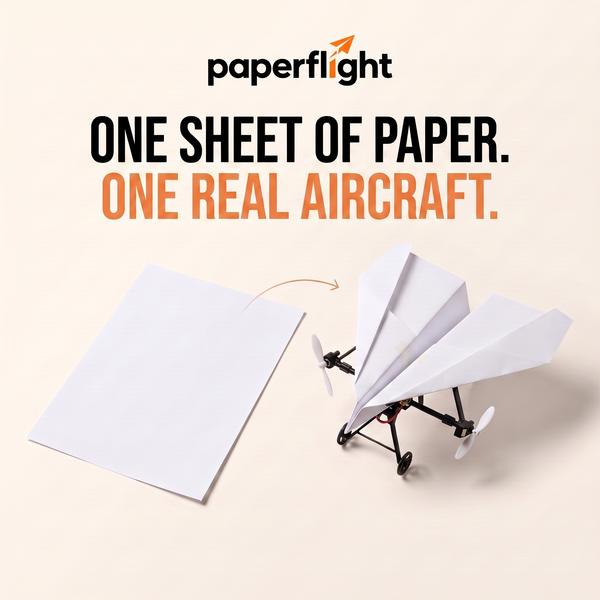
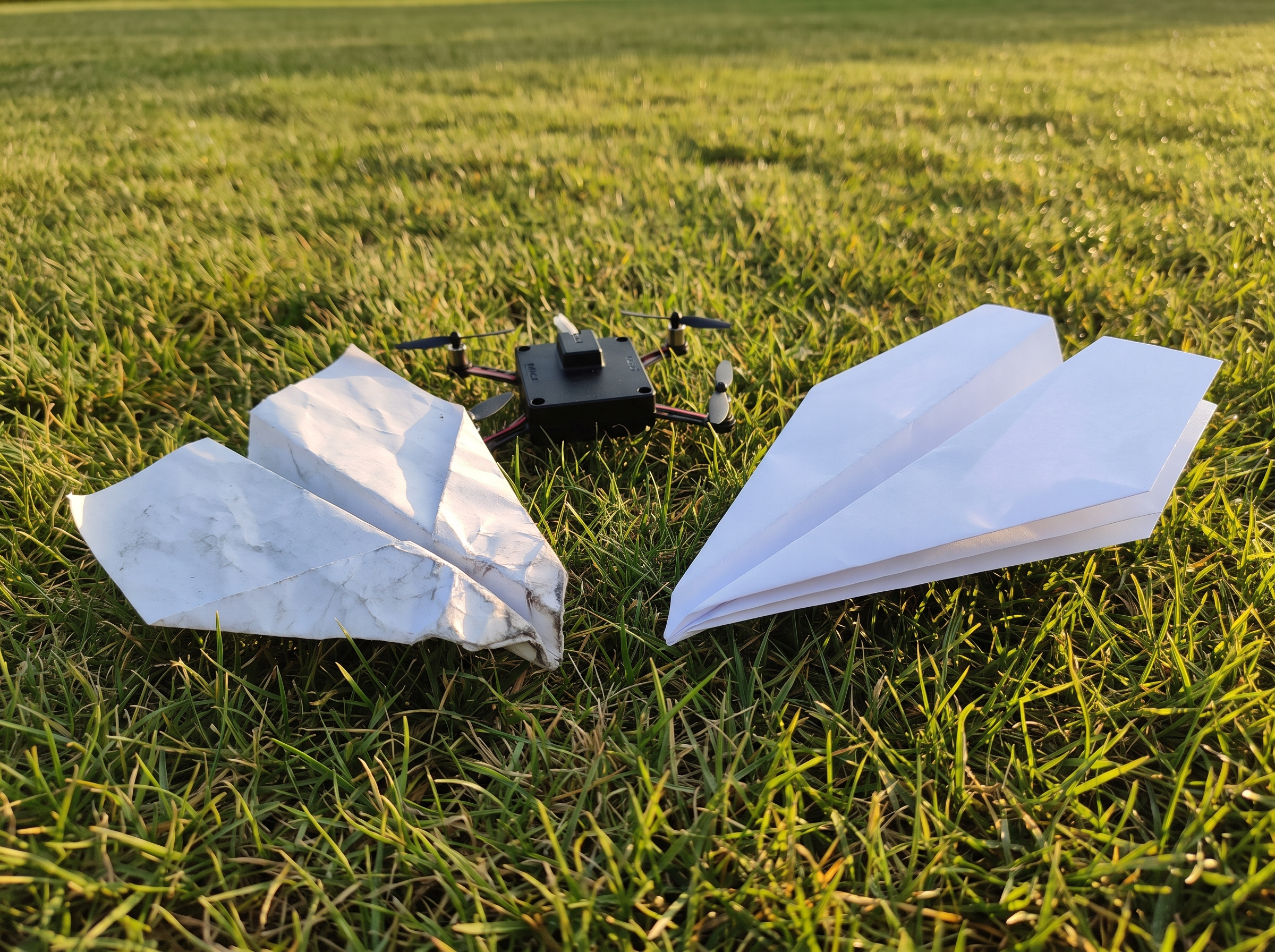
PaperFlight flips it. The airplane is a sheet of ordinary printer paper he folds himself. So when it goes nose-first into the fence — and it will, that's how he learns to fly — he crumples it, folds a fresh one in under a minute, and goes again. The motor, the remote and the landing gear are the parts you keep, and they're built for hard landings.
A ream of paper is 500 airplanes. He will run out of daylight before he runs out of planes. And once he's flying every weekend, most kids figure out what the serious flyers already know: heavier paper glides better and takes more crashes. You'll see why that matters on the product page.
One Kit. Unlimited Planes. Every Fold Is a New Design.
Most gifts are finished by lunchtime. Unboxed, figured out, done. This one is the opposite, because the plane isn't in the box — he makes it.
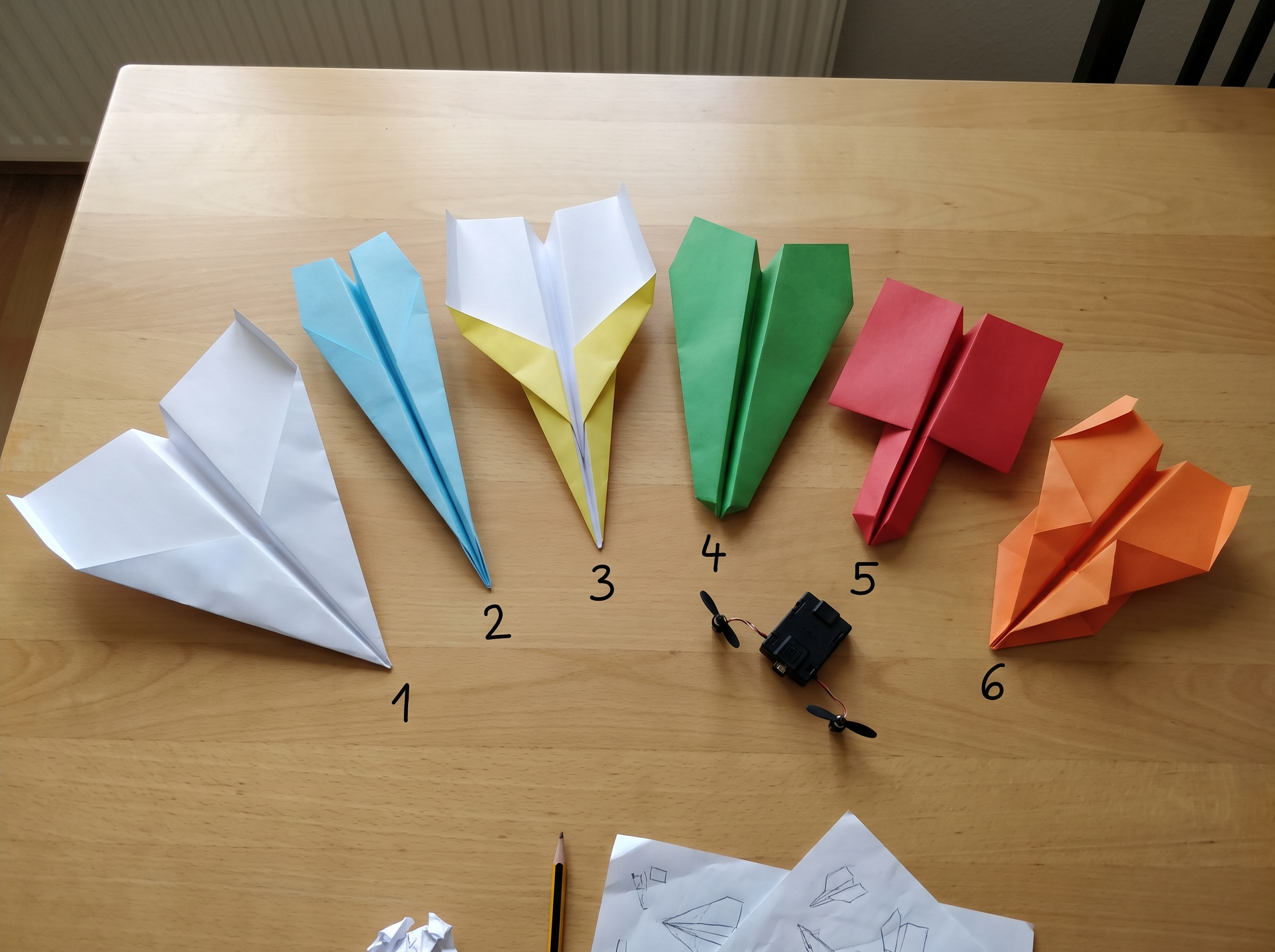
Wide wings for a slow glider. A long nose for a dart that climbs. Bent-up wingtips because a kid at school swore it helps. The module doesn't care what shape it's carrying. Clip it on, fly it, see what happens, change one fold and fly it again. By week two most kids have a row of planes on the porch with numbers written on the wings. Nobody tells them to do that.
And when the cousins are over, the fights over "whose plane is that" end the second someone folds theirs from red and someone else from blue. There's a fold-and-trick guide on the site for the kid who wants to go deeper — but the first ten designs he'll figure out on his own.
Two Thumbs, Two Sticks. He Already Knows How to Fly It.
The famous $90 paper plane doesn't come with a controller. It comes with an app. You steer by tilting a phone around in the air and control the speed with a slider under the same thumb. Kids can't do it, adults can't do it, and the kid decides he's "bad at it" and hands the phone back.
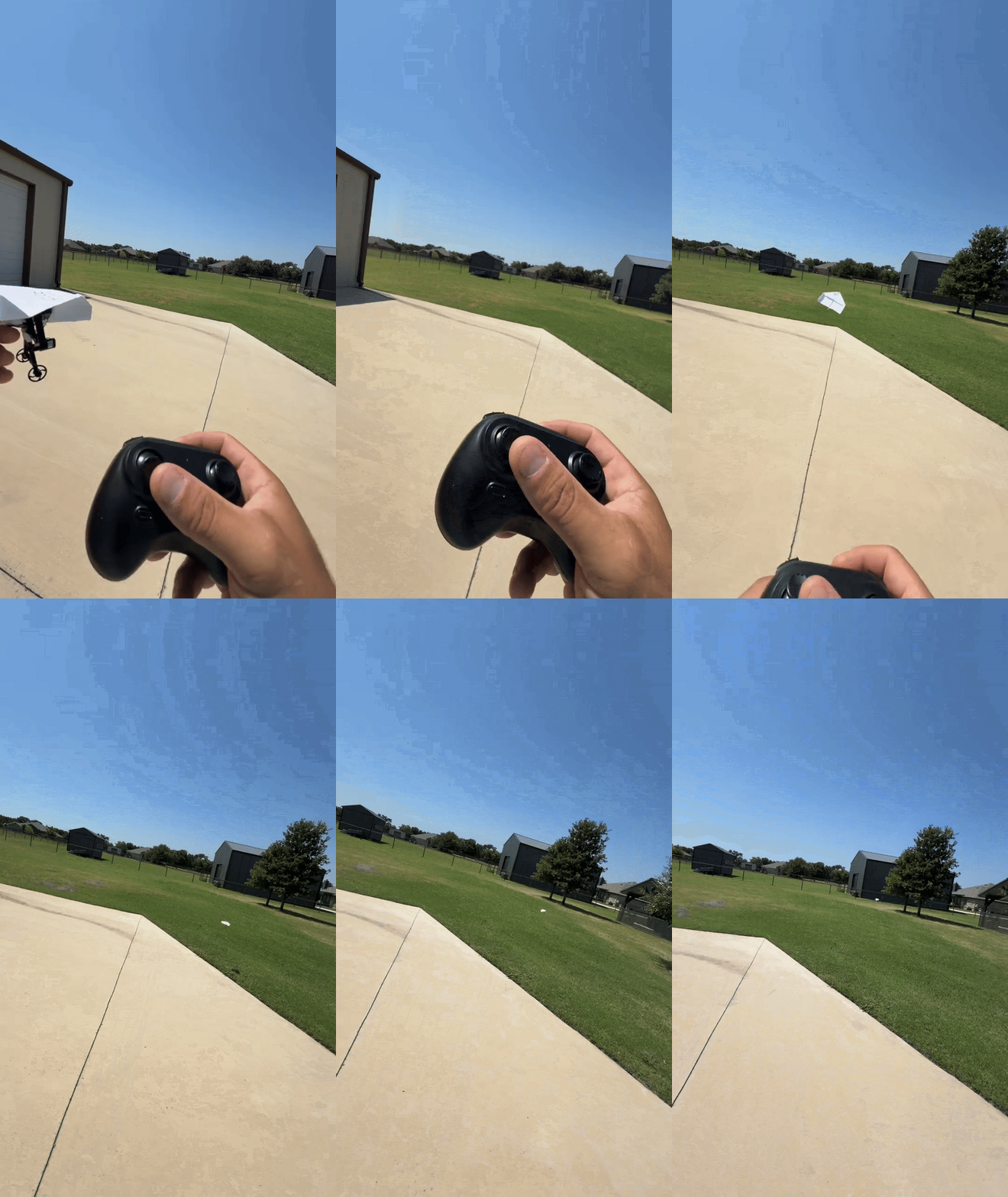
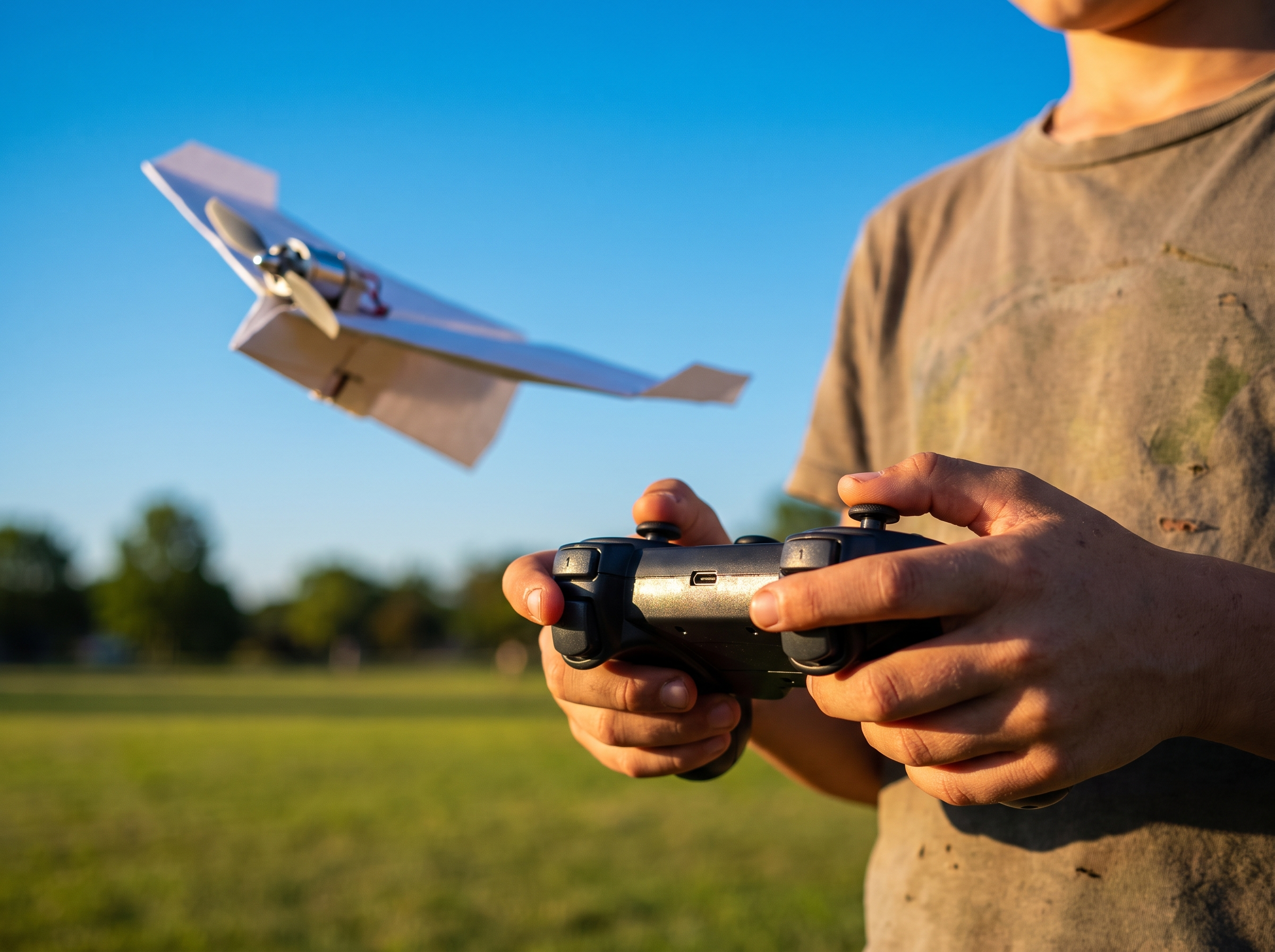
PaperFlight ships with a real two-stick remote in the box. Left stick is power. Right stick is steering. It's the exact layout his thumbs have known since he was four. No app, no account, no Bluetooth pairing, no parent standing there holding a phone.
Hand it over and step back. He'll be turning it on purpose by the second flight, and flying it at Grandma's in March without asking anyone for anything.
From Paper Airplane to RC Jet in About Four Minutes
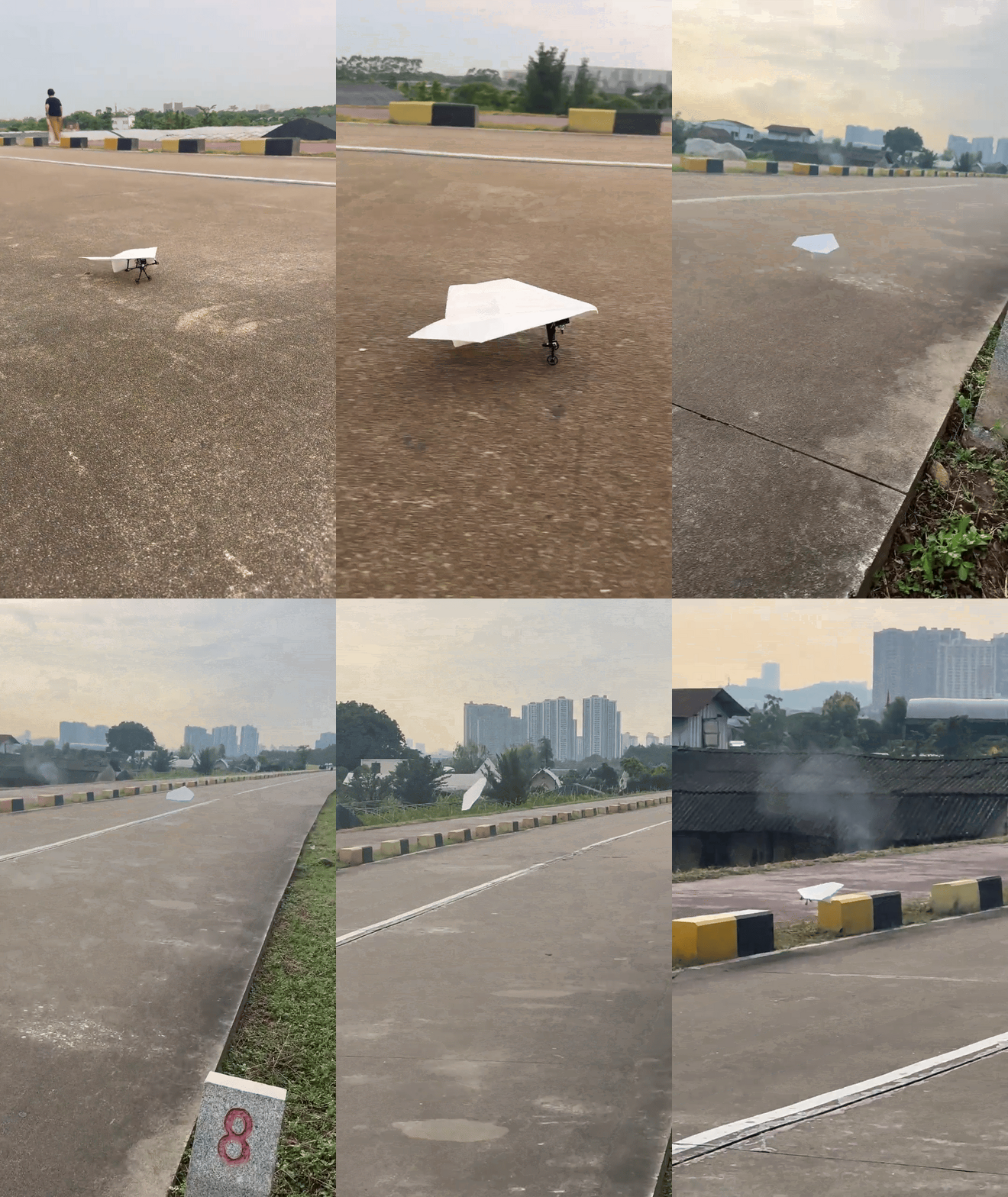
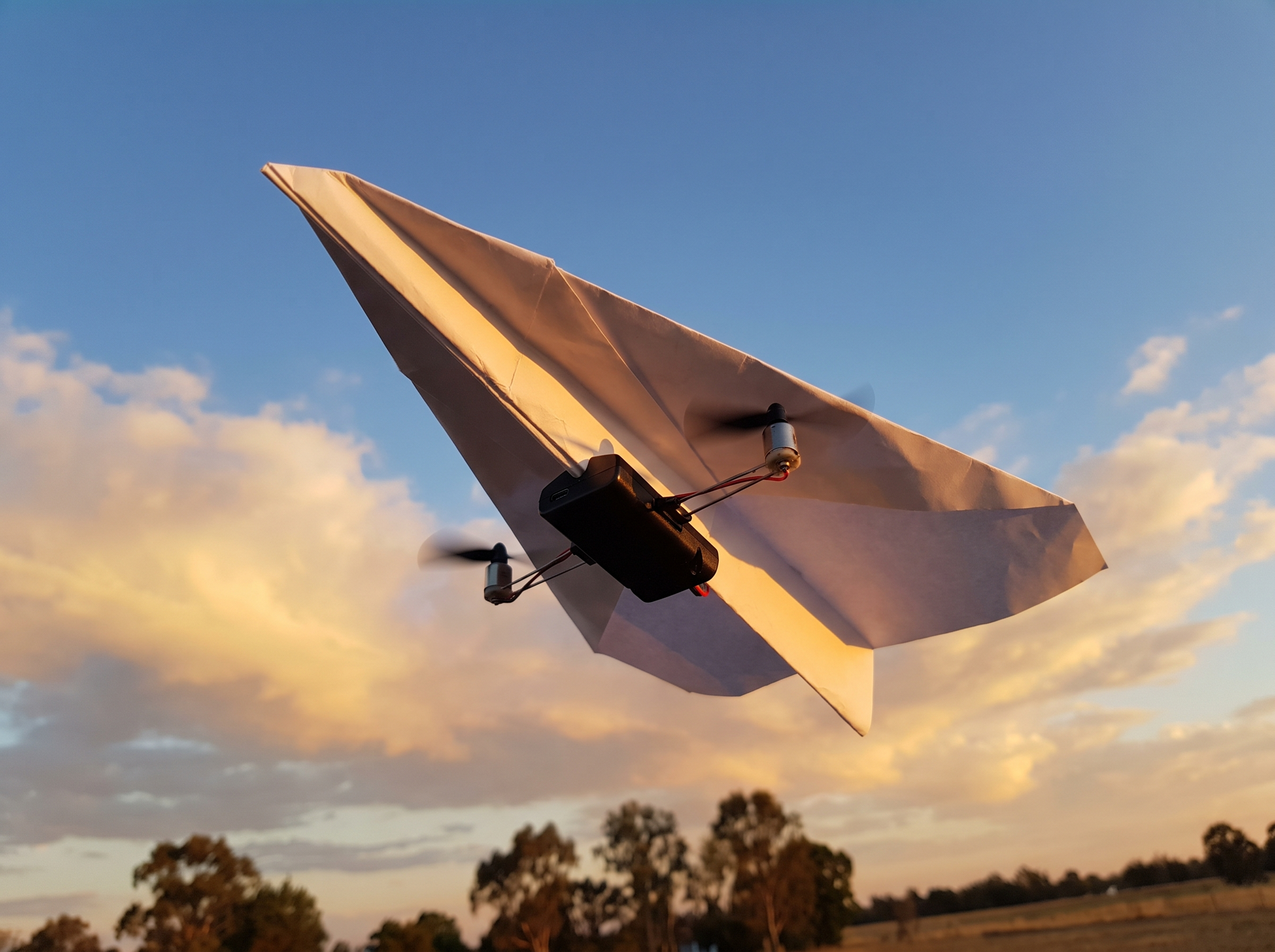
This is the part that makes kids stand still. A thing he's folded a thousand times climbs. It turns when he tells it to. It comes back around and lands in the grass six feet from him. The first time it happens, even the ten-year-old who "doesn't like toys" says "okay" — and then does it again.
The module does the hard part so nobody's frustrated on day one. Twin propellers on outriggers give it real thrust and real steering. An onboard gyro holds the wings level between his inputs, so it flies instead of corkscrewing. Push the throttle and it climbs. Move the stick and it turns. Let off and it glides down.
Straight answer on conditions: it's still paper. Fly it on a calm morning or evening in a school field or a park, not a gusty afternoon in a small backyard. That goes for every kit in this category, the $90 one included. Give it room and it's brilliant. And once it's dusk and he still won't come in — the regulars know what to clip on so it lights up. It's on the site.

$34.95 — and It Never Asks You for Another Dollar to Keep Flying
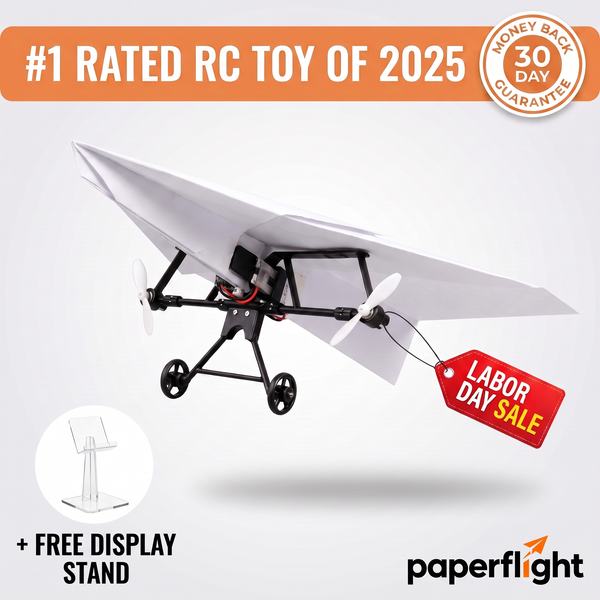
The famous app-controlled kit sits around $90, needs your phone, and sells you replacement propellers by the pack. PaperFlight is $34.95 during the Black Friday Sale, 60% off with free shipping, and the two things it never asks you for afterward are a smartphone and a spare-parts order.
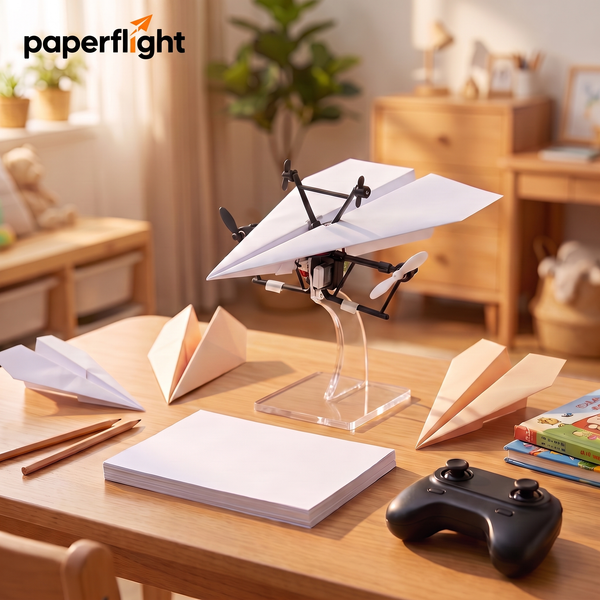
In the box: the twin-prop power module, the two-stick remote, a rechargeable battery, USB charging cable, detachable landing gear with wheels, a small screwdriver, a display stand and the manual. Everything he needs to fly is in there. The only thing you add is printer paper.
Order it now and it's wrapped and in the closet weeks before the December scramble. Get two — one for each boy, or one for the cousin who's going to want a turn — at $64.95, still under what a single app plane costs. And if it's a gift, you'll see a way to have it arrive already gift-ready. Handy if you're shipping it straight to a grandson.
A twin-propeller power module with a gyro stabilizer that clips onto any paper plane he folds — flown with a real two-stick remote. Crash it, fold another, fly again. No app. No phone. Nothing to replace.

Why 60% off for Black Friday? Every kit that ships now is one we're not racing to deliver in the December crush. Black Friday shoppers get the price. When it ends, it goes back up — that's the whole story.
That's the $90 kit — the one with the app and the spare-parts packs. PaperFlight gives him the exact same moment — a plane he folded, climbing — with two real sticks in his hands, half the price, and nothing to reorder when it hits the ground.
$34.95 during the Black Friday Sale — 60% off, free shipping, and 30 days to change your mind. A real remote in his hands, a motor built to survive him, and a wing that costs nothing every single time.
Get PaperFlight — 60% Off →